Event 1
Crew Devillier’s birth and abandonment by his mother

[Crew Devillier’s birth and abandonment by his mother](entity:event-recall-event-crew-devillier-5cef386d1d19) is the hidden origin of the family structure at the center of [Hayden Devillier](entity:character-recall-character-hayden-devillier-a8a68fda01ce)’s story. The event leaves [Crew](entity:character-recall-character-crew-c866b7e96031) without the woman who gave birth to him, while Hayden responds by making an uncompromising promise of presence: his son will come first, even at the cost of his music career, romantic life, and ordinary expectations of adulthood.
## The Circumstances of Crew’s Abandonment
Hayden describes Crew’s mother as someone who did not want the child and who manipulated Hayden into becoming a father. He does not present himself as entirely blameless; he acknowledges responsibility for his own actions while still calling the circumstances deeply damaging. The decisive rupture comes when the woman leaves the household and never returns. Because Crew never had a relationship with her, Hayden refuses to grant her the title of mother, treating biological birth as insufficient to establish parental legitimacy.
The abandonment is therefore both a personal loss and a structural fact of Crew’s childhood. Crew grows up knowing the absence of a mother without having memories of her to complicate that absence. Hayden’s language frames the woman as an absent biological parent rather than a continuing family member, while his own conduct fills the practical and emotional space she leaves behind.
## Hayden’s Parental Response
Hayden makes Crew his number-one priority from the moment the mother leaves. He quits touring not long after Crew is born, although he remains connected to music by writing for several bands and working as a studio musician at [13 Recordings](entity:location-recall-location-13-recordings-3b2b6850dced). That compromise allows him to provide a good life for himself and Crew, though not the wealth associated with his former rock-star career. His professional choices show that the abandonment is not treated as background information: it reorganizes his entire future.
Hayden and Crew initially live with [Ryan Powell](entity:character-recall-character-ryan-powell-3b917ec6ae55) and [Peri Powell](entity:character-recall-character-peri-powell-271745e9bb04), and they move out around the time Crew turns eight. The delay is partly caused by [Peri](entity:character-recall-character-peri-0bddec65ddf4)’s distress at losing them; [Ryan](entity:character-recall-character-ryan-9c6f1f1eaa2e) asks Hayden to postpone the move as long as possible. This arrangement demonstrates that Crew’s security is sustained not only by his father but also by the Powell family, which functions as an extended and chosen family. Even after establishing a separate home, Hayden recognizes that Ryan, Peri, and their children remain part of Crew’s support system.
## The Fear of Repeated Rejection
The abandonment also shapes Hayden’s refusal to pursue romantic relationships. He deliberately avoids bringing women home for twelve years because he fears that Crew might love a new partner and then suffer another departure if the relationship failed. Crew repeatedly asks for a mother when he is younger, but eventually stops asking after years of receiving no change. Hayden understands the child’s wish, yet he considers the risk of another emotional loss unacceptable: Crew has already been rejected once, even if he never met the woman who rejected him.
This protective logic places Hayden in a holding pattern. He does not regret choosing Crew, but he eventually concludes that it is time to reclaim some part of his own life. Crew has encouraged him to date for several years, suggesting that the father’s protective boundary is beginning to loosen without weakening his commitment to his son. The possibility of romance becomes acceptable only when Hayden can imagine it as compatible with, rather than threatening to, Crew’s security.
## The Event’s Continuing Consequences
The mother’s departure explains why Hayden introduces his parental status and priorities directly when a new relationship begins to take shape. He makes clear that Crew will always come first and that he has avoided relationships because he is all the boy has, apart from [Assured Distraction](entity:character-recall-character-assured-distraction-5c57863f5da2). This disclosure establishes the terms of intimacy before the relationship can develop: any partner must understand that dating Hayden also means entering a life organized around Crew.
The event also produces Hayden’s explicit moral instruction. When Crew begins discussing girls, Hayden stresses respect and the principle that no means no, making consent the most important rule he wants his son to carry into adulthood. The abandonment does not lead Hayden to treat Crew as damaged or helpless; instead, it intensifies his responsibility to teach him how to behave ethically toward others.
## Narrative Significance
As a recalled event, Crew’s birth and abandonment by his mother operates less as a single scene than as the foundational explanation for Hayden’s later decisions. It accounts for his withdrawal from touring, his work at 13 Recordings, his reliance on the Powell family, his long avoidance of romance, and his insistence that Crew remain his first priority. In conventional heroic terms, the event is not a call to adventure but a domestic severance that forces Hayden into an enduring caregiving role. Its aftermath becomes his ordinary world, and his eventual willingness to date represents not an abandonment of that duty but a cautious attempt to integrate personal desire with parental responsibility.
Event 2
Hayden quits touring and raises Crew alone
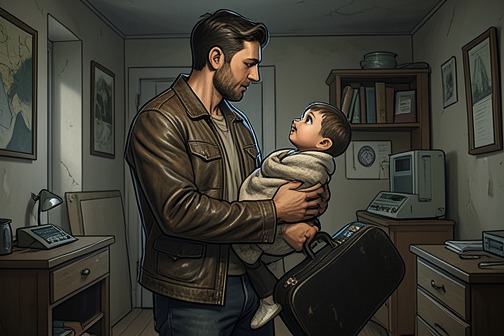
[Hayden quits touring and raises Crew alone](entity:event-recall-event-hayden-crew-e6779f162e99) is the foundational caregiving event that defines [Hayden Devillier](entity:character-recall-character-hayden-devillier-a8a68fda01ce)’s adult life. After [Crew](entity:character-recall-character-crew-c866b7e96031)’s mother abandons him, Hayden makes his son his first responsibility, relinquishing the mobility and professional momentum of touring in favor of a stable home, paid work, and constant care. The choice is not presented as passive loss: it becomes the moral framework through which Hayden approaches dating, friendship, family, and the possibility of reclaiming a life beyond parenthood.
## Causes and Background
Crew’s arrival follows a damaging relationship with [Krissy Thompson](entity:character-recall-character-krissy-thompson-702f2809f8a4). Hayden later explains that [Krissy](entity:character-recall-character-krissy-a3a78bbcbd43) lied to and manipulated him, then left after Crew was born without looking back. He accepts responsibility for his own actions while describing the circumstances as deeply unfair, refusing to turn his son’s origin into a reason to love him less. The mother’s departure creates the central condition of the event: Crew has one dependable parent, and Hayden decides that he must be present rather than preserve his previous career.
Hayden’s commitment is also shaped by fear of further abandonment. He avoids bringing women home for twelve years because he does not want Crew to attach to a possible mother figure only to lose her if the relationship ends. Crew has wanted a mother for a long time, but Hayden treats that desire as a vulnerability to protect rather than an invitation to experiment. His isolation therefore has two sources: the practical demands of single parenthood and the emotional risk he associates with intimacy.
## The Decision and Its Practical Form
Hayden and Crew initially live with [Ryan Powell](entity:character-recall-character-ryan-powell-3b917ec6ae55) and [Peri Powell](entity:character-recall-character-peri-powell-271745e9bb04), but they move out around Crew’s eighth birthday. Hayden had wanted to leave earlier, while [Peri](entity:character-recall-character-peri-0bddec65ddf4)’s distress and [Ryan](entity:character-recall-character-ryan-9c6f1f1eaa2e)’s pleas persuaded him to postpone the move. By then, his life has entered what he calls a holding pattern. He has quit touring, written music for several bands, and worked as a studio musician at [13 Recordings](entity:location-recall-location-13-recordings-3b2b6850dced). The substitute career does not provide rock-star money, but it gives Hayden and Crew enough income to live well.
The arrangement makes parental priority visible in daily scheduling. Hayden later struggles to date [Timbre Simons](entity:character-recall-character-timbre-simons-d6633368e2e1) because her best-paid shifts at [The Bar](entity:location-recall-location-the-bar-026ed80f6df7) fall on [Friday and Saturday nights](entity:time-recall-time-friday-and-saturday-nigh-187c8181bd0e), while his and Crew’s schedules make weeknight dates equally difficult. He dislikes sending Crew to the [Powell family home](entity:location-recall-location-powell-family-home-8d184159b025) on a weeknight unless necessary, even though Ryan and Peri insist that Crew is always welcome. The problem is not a lack of affection or support; it is Hayden’s insistence that his relationship with his son must not be displaced by a new romance.
## Family System and Relationships
Hayden’s parenting does not occur in isolation. [Assured Distraction](entity:character-recall-character-assured-distraction-5c57863f5da2) functions as an [Austin](entity:location-recall-location-austin-208e01a2a58e) family around him, and its members regard Hayden as a younger brother whose welfare they will defend. The group’s loyalty extends to Crew and later helps make room for [Timbre](entity:character-recall-character-timbre-519069393105). This expanded network allows Hayden to remain devoted to his son without treating self-reliance as the only legitimate form of care.
Crew eventually becomes an active participant in that family-making process. When Hayden worries that Timbre may reject their efforts to include her, Crew argues that she needs to learn what real friends are and that failing to try could hurt more than the possibility of her leaving. The child who once required Hayden’s protection thus becomes someone capable of recognizing another person’s loneliness and advocating for her inclusion.
The household’s domestic life also shows how the original sacrifice develops into shared belonging. Timbre returns to the pool house to find Hayden, Crew, and [Tucker Powell](entity:character-recall-character-tucker-powell-8b6a519d06f1) gathered around a table covered with homework while food cooks on the stove. The scene replaces the image of a father choosing between parenting and romance with a more integrated family arrangement: care, education, food, and companionship occupy the same space.
## Consequences and Later Reassessment
Hayden does not regret doing what was right for Crew, but he eventually acknowledges that the decision has left his own life suspended. By the time Crew is old enough to encourage him to date, Hayden feels it is time to get his life back. This is not a rejection of fatherhood. It is a recalibration in which the son’s security remains the condition for, rather than the enemy of, the father’s renewed intimacy.
Timbre’s response confirms the emotional significance of Hayden’s choice. His disclosure that Crew has always been his number-one priority, and that he has deliberately avoided relationships since becoming a father, initially makes him fear that she will withdraw. Instead, Timbre accepts parenting as a full-time responsibility and recognizes his openness, loyalty, and concern for Crew as reasons to trust him. Their relationship therefore begins not by bypassing Hayden’s obligations but by confronting them directly.
The past eventually resurfaces when Crew asks Hayden about his mother and why Ryan is upset. Hayden has tried to shield him from the truth, but the family must finally explain that Krissy manipulated the situation while Hayden remained responsible for his own part in it. Ryan supplies the history of Hayden’s care: Hayden moved into the hospital room, fed Crew every bottle, changed every diaper, rocked him when he cried, and brought him home to Ryan and Peri, where they learned to parent him together before [Tucker](entity:character-recall-character-tucker-a14ba8644b14) arrived. The revelation reframes Hayden’s sacrifice as a sustained practice of care rather than a single heroic gesture.
## Ending and Narrative Significance
The event culminates not in Hayden’s return to touring but in the expansion of the family he built through years of parental priority. Hayden and Crew jointly ask Timbre to become Hayden’s wife and Crew’s mother. Crew presents the ring box, Hayden removes the platinum band with its emerald-cut diamond, and Timbre accepts. The proposal converts the original structure of abandonment into a chosen household formed through trust, responsibility, and mutual commitment.
Hayden’s decision is therefore the narrative’s governing pattern. It explains why he works outside the spotlight, why dating feels logistically difficult, why Assured Distraction becomes family, why Crew can participate in caring for Timbre, and why the eventual engagement carries more weight than a conventional romantic resolution. Hayden does not recover his former life by abandoning the role that interrupted it; he enlarges that role until fatherhood, partnership, friendship, and family belong to the same future.
Event 3
Hayden and Timbre’s first meeting in a splash of rainwater

[Hayden and Timbre’s first meeting in a splash of rainwater](entity:event-recall-event-hayden-timbre-85ae7abb522c) is the accidental encounter that turns an ordinary commute into the opening movement of their relationship. Hayden’s black [Ford](entity:character-recall-character-ford-5ccf5db0365c) pickup sends a wall of curb water over [Timbre](entity:character-recall-character-timbre-519069393105) just as she is already struggling with work, rent, and a life that has remained precarious far longer than she intended. The accident humiliates her, but Hayden’s immediate responsibility and persistence transform the scene from public embarrassment into an unexpected offer of care.
## Causes and Background
Timbre begins the day expecting an ordinary trip to work. She leaves her apartment with no sign of rain despite her roommate’s warning, then finds herself racing through a crowd toward the bus stop as the weather changes. By the time the bus arrives, she is soaked to the skin, and the wind makes the stop’s awning nearly useless. There are no open seats, and she expects to travel only a couple of miles downtown before reaching the workplace where she must repair the damage to her hair and clothes and slip into her cubicle.
The commute becomes more consequential because Timbre cannot afford to lose the day. Her job is already insecure, her boss is unfair, and being docked eight hours of pay could threaten her ability to pay the month’s rent. The rain therefore strikes a person whose practical margin for error has already disappeared. The accident does not create her hardship; it makes an existing crisis suddenly visible. Her later acknowledgment that her problems began before Hayden and the water arrived prevents the scene from becoming a simple story of a stranger causing all her trouble.
## What Happens
Timbre steps off the bus when the light changes and waits to cross the street. Hayden’s black Ford pickup screeches to a halt beside her, and a wall of water covers her from head to toe. Mud coats her clothes, while water drips from her nose. Her shouted frustration is directed at no one in particular, but the driver immediately opens his door and gets out with a large beach towel.
Hayden apologizes, explaining that he did not realize how deep the water was at the curb. He begins wiping Timbre dry, then wraps the towel around her shoulders and offers to take her somewhere to change or clean up. The gesture is physically awkward as well as protective: the towel holds her arms against her body, and he uses its ends to wipe her face. Timbre is so struck by his presence that she cannot answer him. She simply stares while he asks questions, comments on her appearance, and speaks directly to her face, leaving him to wonder whether the shock has robbed her of speech or hearing.
The value of the encounter shifts twice. At first, Timbre’s dignity, appearance, and access to a day’s wages move sharply from ordinary security to immediate jeopardy. Hayden’s apology and willingness to help then move the scene toward repair, even though he cannot repair the deeper circumstances surrounding her employment. When he offers to take her home, clean her clothes, and return her to work, he distinguishes between what he caused and what he cannot control. His sincerity gives Timbre a reason to recognize him as more than the careless driver who drenched her.
Timbre rejects his suggestion that he accompany her into the workplace and instead asks to be taken home. She imagines spending the day watching bad television and eating ice cream, but the lost pay remains the real issue. Hayden insists on carrying her soaked bag upstairs because it weighs twice as much after the rain. Timbre lives barefoot in a second-floor garage apartment behind her landlord, a temporary arrangement that was supposed to last six months but has already lasted two years. The physical climb therefore carries the weight of her stalled plans as well as her drenched belongings.
## Recognition and First Contact
Hayden tries to compensate her for the immediate loss. Timbre refuses the money because she does not know him and does not accept money from strangers. Hayden answers that they are no longer strangers, extends his hand, and identifies himself as [Hayden Devillier](entity:character-recall-character-hayden-devillier-a8a68fda01ce). Timbre gives her name as [Timbre Simons](entity:character-recall-character-timbre-simons-d6633368e2e1), and the handshake turns an anonymous accident into a personal meeting.
The handshake is brief but charged. Timbre notices Hayden’s large, warm hand, strong fingers, and calloused fingertips, wondering what kind of work has shaped them. She also reads danger in his face, sensing that Hayden Devillier represents the kind of trouble she has already experienced and learned to avoid. Attraction and self-protection therefore arrive together: the physical contact feels good, but its pleasure strengthens rather than dissolves her caution.
Hayden continues to offer help, but Timbre declines. She closes and locks the door after him, leaning against it while she listens to him descend the stairs. His conduct has been considerate, yet her history makes the possibility of intimacy threatening. The scene’s first meeting consequently establishes a pattern that will matter beyond the accident: Hayden moves toward repair and connection, while Timbre accepts the evidence of his concern only up to the point where it might require trust.
## Immediate Consequences
Once Hayden has gone, Timbre slides down against the locked door and asks why she cannot catch a break. The question gathers the rainstorm, the lost wages, the hostile boss, the unstable housing, and her longer sense of abandonment into a single exhausted moment. She wants to cry, but she knows tears cannot solve the material problems facing her. The heavens may appear to be crying around her, yet the scene gives no comparable assurance that her own appeals will be answered.
The final discovery makes Hayden’s attempted compensation impossible to dismiss as empty courtesy. Something protruding from Timbre’s oversized bag catches her attention: two crisp hundred-dollar bills wrapped around Hayden’s business card. He has left money despite her refusal, placing both practical assistance and a means of future contact inside the object she carries. The money cannot solve the history of her hardship, but it can temporarily relieve the immediate pressure created by the missed workday. The business card preserves the encounter as an open possibility rather than allowing the locked door to end it.
## Narrative Significance
The meeting works as both a rain-soaked accident and a compact introduction to the story’s central tensions. Timbre’s economic vulnerability is conveyed through the threatened day’s pay, the rent she does not know how to cover, the mud on her clothes, and the garage apartment where a six-month plan has stretched into two years. Hayden enters not through a deliberate romantic approach but through an act of failure followed by accountability. His first meaningful action is not seduction; it is an attempt to make amends.
The scene also joins bodily immediacy to withheld speech. Timbre’s soaked clothes, immobilized arms, silent staring, and awareness of Hayden’s eyes and hands register an attraction that precedes explanation. Yet the scene does not treat attraction as sufficient grounds for trust. Hayden’s towel, apology, offer of transportation, attempt to restore her wages, and assistance with the heavy bag all create a pattern of care, while Timbre’s refusal of his money and decision to lock the door preserve her independence and boundaries.
By the time the business card and cash emerge from the monster bag, the encounter has changed from an unwanted interruption into a consequential first contact. Hayden cannot fix Timbre’s job or the conditions that preceded the rain, but he can respond to the damage he helped cause. Timbre cannot yet accept his help without fear of inviting further trouble, but she keeps the evidence of his intervention in her possession. The accident thus plants the relationship in the space between dependence and self-reliance, where a practical gesture becomes the first reason either person might meet the other again.
Event 4
Timbre is fired from her office job

[Timbre is fired from her office job](entity:event-recall-event-timbre-52711603a8b6) after the rainwater accident involving [Hayden Devillier](entity:character-recall-character-hayden-devillier-a8a68fda01ce) prevents her from arriving at work. The incident is decisive not because the absence is presented as a serious failure, but because an inflexible employer converts one unavoidable missed shift into dismissal, beginning [Timbre](entity:character-recall-character-timbre-519069393105)’s rapid descent from ordinary financial independence into unemployment, homelessness, and reliance on others.
## Causes and Immediate Circumstances
Timbre’s employment crisis begins when Hayden Devillier’s truck sprays curb water over her as she is outside work. Although Hayden offers to take her home, wait while she changes, and return her to the workplace, Timbre first tries to protect her job. She calls the office from outside, explains that a “crazy truck driver” soaked her, and says she is going home to change. The call does not preserve her employment. Her boss docks her a day’s pay and tells her not to come in that day, leaving her angry because the lost eight hours matter directly to her ability to pay rent.
The episode exposes the precariousness beneath Timbre’s apparently stable life. She has no umbrella in her oversized purse, and the practical inconvenience of being drenched becomes an economic emergency because she cannot absorb even one unpaid day comfortably. Hayden recognizes the punishment as unfair and offers to accompany her into the office so the employer can see what happened, but Timbre rejects that intervention and asks only to be taken home. Her plan to watch bad television and eat ice cream masks a more serious calculation: she must find a way to cover the rent before the due date.
## The Firing and Its Retrospective Explanation
The dismissal itself is initially withheld from Hayden and is later disclosed by Timbre after he repeatedly asks what happened to her job. She explains that she lost the position the day after she failed to report for work. Her employer had already been looking for reasons to dismiss people after the company lost much of its business; her unplanned absence supplied the “ammunition” needed to fire her. Timbre insists that her performance had been excellent and that dismissing her over one missed day was unjust.
This retrospective account changes the meaning of the first encounter. Hayden had offered help when the damage still seemed limited to wet clothing and a single day’s pay, but Timbre’s refusal to explain herself concealed the much larger consequence. Her silence is not evidence that the event was trivial; it delays Hayden’s understanding of how completely the workplace had penalized her. When the truth emerges, the accident becomes the first visible point in a longer chain of economic harm.
## Economic Consequences and Housing Loss
Four months later, Timbre sits on a twin bed in a shelter and measures the distance between her former life and her present condition. She had possessed a job, an apartment shared with [Caylor](entity:character-recall-character-caylor-54029630275d), a car, and a recognizable daily routine. After the firing, she finds a decent replacement job impossible to obtain while working retail, and Caylor’s immediate decision to move to [Los Angeles](entity:location-recall-location-los-angeles-11eff639bdf5) destabilizes the shared housing arrangement. Timbre had paid what she could toward both rents, but she could not sustain the burden alone.
The material consequences accumulate in a sharply concrete order. Timbre sells her car to pay the last of the month’s bills, leaving her with almost nothing. Her cell phone will remain active for only one more month unless she finds work paying more than minimum wage. The firing therefore removes more than a title or workplace: it strips away transportation, housing security, and communication, each loss narrowing the next available choice. Timbre describes the process as a free fall that she cannot stop, while hoping that the shelter will be only a temporary stage she will scarcely remember once she is employed again.
## Hayden’s Response and Later Work
Hayden eventually learns that the firing followed the day he took Timbre home. When he visits her former office building, a receptionist tells him that Timbre was permitted to return only four months earlier to collect her belongings from her desk. Hayden realizes that the job loss was connected to the encounter and blames himself for having helped trigger the circumstances, even though the employer made the final decision. He thinks he must make the situation right and considers contacting Timbre, but hesitates after she has brushed him off.
His response is constrained by his parental priority. He cannot return to the bar to pursue an explanation on the night of [Crew Devillier](entity:character-recall-character-crew-devillier-dd172bb70e81)’s ballgame, because he does not miss [Crew](entity:character-recall-character-crew-c866b7e96031)’s games for anyone. The schedule on Hayden’s refrigerator therefore becomes a practical boundary between romantic concern and parental responsibility. When he later asks Timbre why she is working at a bar, the question forces her to recount the firing and allows the hidden economic consequence to enter their developing relationship.
## Narrative Significance
Timbre’s firing is the novel’s central hinge between a precarious but conventional working life and the homelessness and housing insecurity that define her next phase. The event is narrated first as an immediate workplace punishment and only later as a remembered explanation, so its full significance arrives retrospectively: the reader learns that the soaked clothing, missed shift, and docked pay were not isolated inconveniences but the opening blows of a prolonged financial collapse.
The episode also creates the conditions for Timbre’s later employment at [The Bar](entity:location-recall-location-the-bar-026ed80f6df7) and her renewed contact with Hayden and [Assured Distraction](entity:character-recall-character-assured-distraction-5c57863f5da2). Its conflict has a clear structure: an employer seeking grounds for dismissal acts against Timbre, Timbre bears the consequences, and economic stability is the objective she can no longer secure through her former job. The event’s value shift moves her from nominal independence to acute vulnerability, while also revealing the limits of self-reliance. Timbre’s insistence that her performance was excellent preserves her dignity even as the firing removes the institutional security on which that dignity had rested.
Event 5
Timbre moves into a homeless shelter
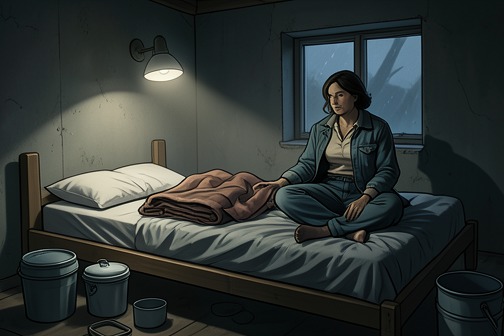
[Timbre moves into a homeless shelter](entity:event-recall-event-timbre-633bbc2fd34c) after a rapid collapse in housing, employment, transportation, and financial security. The move is not presented as an isolated choice but as the consequence of several losses converging: [Caylor](entity:character-recall-character-caylor-54029630275d) leaves for [Los Angeles](entity:location-recall-location-los-angeles-11eff639bdf5) sooner than she expected, her retail income cannot cover both rents, a former employer has fired her, and selling her car to pay the month’s remaining bills leaves her nearly without resources. The shelter therefore marks a decisive negative turn in her circumstances, while also becoming the setting from which paid work, new relationships, and a possible recovery begin.
## Causes and Circumstances
Four months after her life appeared ordinary, [Timbre](entity:character-recall-character-timbre-519069393105) sits on a twin bed in the shelter and inventories what has disappeared: a job, an apartment shared with a roommate, a car, and the life attached to them. The losses have arrived so quickly that she experiences them as a single downward spiral. Caylor’s decision to move to Los Angeles immediately catches her by surprise. She understands that he has grown tired of paying both his rent and hers, even though she contributed what she could from her retail job, but she cannot find another decent position after being fired. Her college degree has not protected her from unemployment; instead, its student loans continue accumulating while the qualification itself seems to have led nowhere.
Selling her car is the practical threshold of the move. The sale pays the last of her bills for the month but leaves her with almost nothing, and her cell phone will remain active for only one more month unless she finds work paying more than minimum wage. Housing insecurity is thus tied to transportation, debt, communications, and employment rather than to rent alone. Timbre hopes the shelter will be temporary enough to become barely memorable within a few months, but that hope rests on an urgent need to find a better-paying job and rebuild savings.
## Life Inside the Shelter
The shelter initially represents how low Timbre believes she has fallen. She watches another resident collect her few belongings from beneath a bed, and later treats her own possessions as vulnerable: when she needs a shower after work, she carries her clothes, toiletries, and purse with her because leaving money unattended among the occupied beds feels unsafe. Even routine bodily care must be organized around protecting the limited property on which her survival depends.
The shelter also imposes a punishing work-and-sleep rhythm once Timbre begins working at [The Bar](entity:location-recall-location-the-bar-026ed80f6df7). She returns between three and four in the morning, showers, and collapses into bed after standing through each shift; she sleeps so deeply that ordinary activity around her cannot wake her until late morning. Her shared days off with [Jenna](entity:character-recall-character-jenna-65f88e27192a) become valuable because they permit companionship and a rare real meal. With virtually no food budget, Timbre saves nearly every dollar toward obtaining a place of her own, prioritizing sturdy tennis shoes for work while relying on shelter food and [Ford](entity:character-recall-character-ford-5ccf5db0365c)’s occasional shift meals. The shelter’s material support keeps her working, but it does not erase the exhaustion or insecurity that make each day possible only through carefully rationed labor, food, money, and rest.
## Work and Rebuilding
The shelter becomes the starting point for Timbre’s economic reconstruction rather than the endpoint of the plot. Ford hires her at The Bar, where she begins earning immediate cash despite having little prior confidence in the crowded workroom. On her first Tuesday night, she expects more customers and is unsettled to discover that Jenna could manage the room alone, leaving her unsure why she has been brought in. Ford warns her that older male customers may use wandering hands and tells her to report anyone who becomes too aggressive; he will intervene, and the regulars understand that boundary. The job offers money and a route back into independence, but it also exposes how gender and poverty place her in situations where safety depends on workplace enforcement.
After her first shift, Timbre regards the clean bed, new job, and instant earnings as the possible beginning of a new life. She repeatedly tells herself that conditions can only improve, even while admitting that she may need time before she believes it. The contrast is central: the shelter is degrading because it records her losses, yet it also provides the stable sleeping place and daily structure that allow her to earn, save, and plan for independent housing.
## Secrecy, Exposure, and Protection
Timbre hides the shelter from Caylor, who calls almost every day to ask how she is doing. She lies because he has finally obtained a modeling contract in Los Angeles and she does not want her crisis to pull him back from the life he has worked toward. Her secrecy preserves his opportunity but isolates her further, showing how self-reliance can become a refusal of needed help.
Her residence also becomes a source of danger. After a late-night bus ride back to the shelter, Timbre chooses a seat near the driver but is surrounded by older teenage boys who laugh, stare, speak in broken English and Spanish, and make a sexual remark. One sits beside her and crowds her against the wall while the driver appears not to notice. The shelter is supposed to be a destination of refuge, but reaching it requires navigating public transportation at the most vulnerable hour of the night. The episode makes her housing status inseparable from exposure to harassment, inadequate protection, and fear.
## From Temporary Refuge to Chosen Home
Timbre’s shelter residence later stands in sharp contrast to the domestic care she finds through [Hayden Devillier](entity:character-recall-character-hayden-devillier-a8a68fda01ce) and the Powell family. Hayden struggles to arrange dates around her [Friday](entity:time-recall-time-friday-6b74f72aeb7a) and Saturday shifts at The Bar and his responsibilities toward [Crew Devillier](entity:character-recall-character-crew-devillier-dd172bb70e81), while [Peri Powell](entity:character-recall-character-peri-powell-271745e9bb04) emphasizes that [Crew](entity:character-recall-character-crew-c866b7e96031) is always welcome with her family. The problem is not simply romantic inconvenience: work schedules, childcare, and housing determine whether intimacy can occur at all.
When Timbre eventually reaches the [Powell family pool house](entity:location-recall-location-powell-family-pool-h-e5b64ae2bac7), she finds Hayden, Crew, and [Tucker Powell](entity:character-recall-character-tucker-powell-8b6a519d06f1) at her table with homework spread across it and food cooking on her stove. The scene reverses the emotional meaning of the earlier twin bed. The shelter had been a place where she guarded her purse and concealed her address; the pool house is a place entered by a group that has already begun treating her living space as part of a shared household. [Peri](entity:character-recall-character-peri-0bddec65ddf4)’s fierce warning that anyone who hurts Hayden will face the protection of [Assured Distraction](entity:character-recall-character-assured-distraction-5c57863f5da2) further establishes the [Austin](entity:location-recall-location-austin-208e01a2a58e) network as a chosen family that extends care beyond biological ties.
The shelter’s importance becomes clearer in retrospect when [Krissy Thompson](entity:character-recall-character-krissy-thompson-702f2809f8a4) breaks into Timbre’s life and demands that she leave, calling her a homeless woman who has intruded upon [Krissy](entity:character-recall-character-krissy-a3a78bbcbd43)’s friends, former partner, and child. Krissy’s insult turns Timbre’s period of housing insecurity into a weapon, attempting to define her by the condition she has been fighting to escape. Yet the later household scenes show that the shelter does not determine her permanent identity. It marks the beginning of a passage from economic dispossession toward work, trust, protection, and a home made possible through reciprocal relationships.
Event 6
Timbre starts working at The Bar
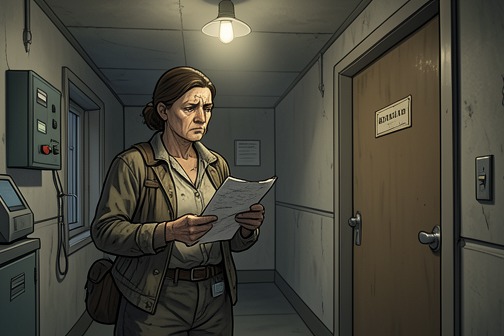
[Timbre starts working at The Bar](entity:event-recall-event-timbre-the-bar-f1be39948e0c) at the point when economic collapse has reduced her choices to survival. After losing her office job, watching her roommate [Caylor](entity:character-recall-character-caylor-54029630275d) leave for [Los Angeles](entity:location-recall-location-los-angeles-11eff639bdf5), and selling her car to pay the last of her monthly bills, she lives in a shelter with almost no money and only one month of phone service remaining. The bar job therefore matters not as a career ambition but as an immediate means of staying housed, fed, mobile, and capable of rebuilding a life.
## Causes and Background
[Timbre](entity:character-recall-character-timbre-519069393105)’s entry into [The Bar](entity:location-recall-location-the-bar-026ed80f6df7) follows a rapid downward spiral. She once had a job, an apartment with a roommate, a car, and an ordinary degree of independence; after being fired, she could find nothing better than minimum-wage work. Caylor’s sudden move to Los Angeles removes the housing arrangement that had kept her afloat, while selling the car leaves her dependent on public transportation. In the shelter, Timbre hopes that the situation will be temporary, but her need is concrete rather than abstract: she must find work that pays more than minimum wage and begin saving for a place of her own.
[Jenna](entity:character-recall-character-jenna-65f88e27192a) becomes the practical bridge between homelessness and employment. When Timbre asks whether The Bar is hiring, Jenna says that employees are always leaving and promises to recommend her, then writes down the address. The location is reachable by a bus running directly in front of the establishment, making the job possible even after Timbre has sold her car. That detail gives the employment a wider significance: transportation, housing, food, and wages are interdependent conditions of survival, and the shelter’s support helps Timbre turn a precarious opportunity into an actual application.
## Applying and Being Hired
The Bar initially appeals to Timbre through its distinctive atmosphere. In the middle of the afternoon, only a few patrons are drinking, but the dark room is decorated with signed T-shirts, flags, and dollar bills that preserve traces of earlier customers. She reads the place as a bar with attitude and likes it before learning what the work will demand. She introduces herself to [Ford Turner](entity:character-recall-character-ford-turner-c756a2b884d1), the manager, and explains that she has waitressing experience, along with experience handling food, bussing tables, and washing dishes, although she has never worked in a bar.
[Ford](entity:character-recall-character-ford-5ccf5db0365c) offers her a cocktail-waitress position after the previous waitress quits. His attention to her breasts makes the interview uncomfortable, and the employment terms make the bar’s gendered economy explicit. She must wear shorts and a tight T-shirt supplied by The Bar; Ford tells her she may tie, split, or cut the shirt and openly connects the amount of visible skin with the size of her tips. Timbre recognizes that the arrangement makes her body part of the product being sold and compares it uneasily to prostitution. Nevertheless, bills take precedence over her preferred career, and she decides that maximizing each night’s earnings is the short-term goal.
The immediate trial shift changes her prospects from uncertainty to income. Ford asks whether she can work that night, and Timbre accepts because she will have money in her pocket the following morning. He tells her to return at five, with Jenna there to train her, and says the job will be hers if the evening goes well. She leaves with two new shirts and the knowledge that she has secured instant cash as well as a small paycheck twice a month. Her mood improves immediately, not because the work is comfortable, but because a wage restores a measure of agency.
## Work at The Bar
Timbre’s first shift exposes the gap between the quiet afternoon interview and the labor demanded by the establishment. She does not expect the room to be crowded on a Tuesday and is puzzled that Ford has scheduled another waitress when Jenna could apparently handle the sparse clientele alone. The apparent slack is deceptive. Jenna instructs her to stop worrying about the band members and concentrate on the customers, then assigns her a section as patrons begin arriving. Timbre takes orders, carries drinks, and delivers them through a steady flow of people for the rest of the night.
The work converts her body and time into income but leaves her physically depleted. By last call, her feet are screaming, and one of her first intended purchases is a better pair of tennis shoes. She wipes down tables and throws empty containers into recycling bins, taking some relief from the fact that The Bar serves only nuts and pretzels rather than a larger menu requiring more food handling. The shift ends with cleaning, not simply serving, and the exhausted body records the hidden cost of the money she needs.
Her schedule reorganizes her entire life. She regularly goes to bed around three in the morning, returns to the shelter between three and four depending on closing crowds, showers, and sleeps until late morning or noon. Working on her feet makes her sleep so deeply that ordinary disturbances would not wake her. Jenna shares her days off, giving Timbre a reliable companion after other so-called friends withdraw upon learning that she lives in a shelter. The two women plan outings around a food budget that is nearly zero; Timbre saves almost everything toward independent housing, buys practical work shoes first, and depends on shelter meals and Ford’s habit of paying for a meal during each shift.
## Connections and Consequences
The Bar supplies more than wages. Jenna’s recommendation gives Timbre employment, friendship, and a social foothold at a moment when her former network has largely disappeared. The workplace also becomes a recurring point of contact with [Hayden Devillier](entity:character-recall-character-hayden-devillier-a8a68fda01ce) and [Assured Distraction](entity:character-recall-character-assured-distraction-5c57863f5da2), whose performances make [Friday and Saturday nights](entity:time-recall-time-friday-and-saturday-nigh-187c8181bd0e) the bar’s most profitable but least available shifts for Timbre. Her need to work those nights later makes dating Hayden difficult: he understands that she earns the most money on weekends, while his responsibilities to [Crew Devillier](entity:character-recall-character-crew-devillier-dd172bb70e81) make weeknight plans difficult as well. Their romance is therefore shaped by the labor schedule rather than existing outside it.
The job eventually becomes part of Timbre’s route toward greater stability. When she later interviews at [13 Recordings](entity:location-recall-location-13-recordings-3b2b6850dced), Hayden supports her before she enters, and [Peri Powell](entity:character-recall-character-peri-powell-271745e9bb04) and Cash offer her the position on the spot. She learns computer systems and office routines under Johnna’s guidance, finding the new work easier in some respects than learning the names and faces of everyone who passes through the company. The contrast does not erase The Bar’s importance: bar work is the transitional labor that keeps Timbre moving until a job better suited to her skills becomes available.
The workplace also places her within the protective and domestic network surrounding Hayden, [Crew](entity:character-recall-character-crew-c866b7e96031), and the Powell family. After Timbre moves into the [Powell family pool house](entity:location-recall-location-powell-family-pool-h-e5b64ae2bac7), Hayden, Crew, and [Tucker Powell](entity:character-recall-character-tucker-powell-8b6a519d06f1) appear at her table with homework spread across it and food cooking on her stove, an image that contrasts sharply with the shelter and the bar’s transactional atmosphere. Yet the security remains vulnerable. [Krissy Thompson](entity:character-recall-character-krissy-thompson-702f2809f8a4) later abducts Timbre, renders her helpless, and threatens to force her out of [Austin](entity:location-recall-location-austin-208e01a2a58e) and [Texas](entity:location-recall-location-texas-f19b16f8e87c), using Crew and Hayden as leverage. The threat reveals how far Timbre has traveled from the precarious independence represented by her first paycheck: her survival is no longer only an economic problem but also a matter of bodily safety and attachment.
## Narrative Significance
Timbre’s work at The Bar is a hinge between collapse and reconstruction. It presents employment as both exploitation and rescue: Ford’s dress code turns female appearance into a revenue mechanism, while the same job provides cash, a schedule, a friendship, and access to the social world in which Timbre’s future relationships take shape. Her labor is not romanticized; the sore feet, late nights, limited food, transportation constraints, and careful savings make its material demands visible.
The event also establishes Timbre’s defining capacity for practical endurance. She does not treat accepting help or taking undesirable work as proof that her life has ended. She uses the bus, the shelter, Jenna’s recommendation, Ford’s trial shift, and every available wage to create a next step. Later, the Powell family’s support and her job at 13 Recordings expand that foundation, but The Bar remains the first institution to offer her a concrete route out of homelessness. In that sense, starting there is not a minor employment detail: it is the first durable movement from free fall toward chosen stability, even as the job’s schedule and objectifying conditions continue to shape what stability costs.
Event 7
Assured Distraction reunites with Timbre at The Bar
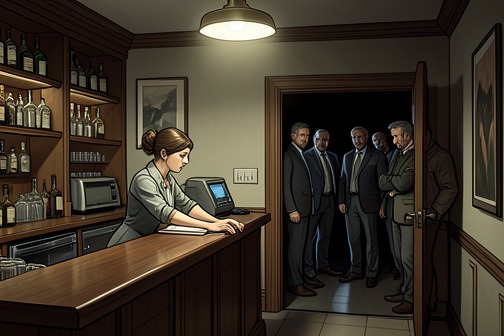
[Assured Distraction reunites with Timbre at The Bar](entity:event-recall-event-assured-distraction-the-fc4460d259ae) when the band enters during her first day working there, transforming a routine service shift into a charged encounter with people she recognizes and with [Hayden Devillier](entity:character-recall-character-hayden-devillier-a8a68fda01ce), whose unexpected presence unsettles her. The event is decisive because it joins [Timbre](entity:character-recall-character-timbre-519069393105)’s economic struggle, her growing connection to Hayden, and the public world of the band in a single setting where admiration, embarrassment, and personal danger overlap.
## Arrival and Recognition
Timbre is wiping down the bar and looking for her next potential tip when five men crowd through the dark doorway. Their appearance immediately dominates her attention: they seem familiar, striking, and unusually conspicuous as a group. [Jenna](entity:character-recall-character-jenna-65f88e27192a) identifies them as returning customers and says they usually arrive with women, but Timbre recognizes the larger significance of their presence. The men are [Assured Distraction](entity:character-recall-character-assured-distraction-5c57863f5da2), a band she knows well enough to “fangirl” over, while Jenna remains indifferent and tells her to wait on them.
The contrast between the two women establishes the scene’s social split. For Jenna, the band is simply a group of customers occupying a large booth near the pool tables. For Timbre, the arrival is almost paralyzing. At twenty-four, she feels foolish for reacting so intensely, lowers her face, and struggles to speak while Jenna handles the approach. The bar therefore becomes more than a workplace: it is the place where Timbre’s private fascination collides with the practical demands of earning tips on her first shift.
## The Band and Hayden Devillier
The group orders five Shiner Bocks, and Timbre’s attention settles on a blond man she recognizes as someone who had never told her he was in a band. The recognition works in both directions. He looks at her, returns his attention to his phone, then looks back more intently before quietly asking, “Timbre?” The moment confirms that the apparently glamorous band encounter also contains a personal reunion. The man is Hayden Devillier, whose earlier contact with Timbre has already left her uncertain about his intentions.
[Keeton MacDonald](entity:character-recall-character-keeton-macdonald-414ed7a59a93), the lead singer of Assured Distraction, stands and towers over Timbre before teasing Hayden about being shy around women. Hayden rejects the teasing, calls himself a grown man, and pulls Timbre away from the pool tables so they can speak privately. His immediate concern is not the band’s performance or her excitement but the reason she is working at [The Bar](entity:location-recall-location-the-bar-026ed80f6df7). Timbre explains that she needs a job and that it is her first day, then asks to return to work even as his attention remains fixed on her.
The encounter thus shifts from public spectacle to private confrontation. Timbre expects service work, tips, and the manageable anonymity of a bar; instead, Hayden’s presence makes her financial circumstances visible to someone who already knows her. The band’s celebrity supplies the scene’s surface glamour, but Hayden’s recognition supplies its emotional pressure.
## Work, Vulnerability, and Protection
After the encounter, [Ford](entity:character-recall-character-ford-5ccf5db0365c) notices that Timbre had been so overwhelmed by the band that she could barely form a complete sentence. He also learns that one of the men spoke with her privately and asks whether the conversation was connected to her earlier time in the office. Timbre distinguishes Hayden from the band, explaining that she does not know Assured Distraction but has met the other man before and felt unsettled by his wish to speak with her.
Ford responds as the manager of a workplace with a duty to protect its staff. He says he will not tolerate anyone harassing them and asks Timbre to report anything inappropriate. His response gives the reunion a second consequence: Hayden’s appearance is not merely romantic or embarrassing, because it occurs alongside a credible threat to Timbre’s sense of safety. The scene repeatedly moves between being seen and being exposed. Timbre is visible as a worker, as a fan, and as a woman already entangled in a troubling personal situation, while Ford tries to restore a boundary between customer access and staff safety.
## The Shelter and the Cost of Independence
At the end of the shift, Jenna offers to help Timbre shop for better shoes, since her old shoes do not provide enough cushioning for long hours standing. Timbre has earned enough in tips to make the purchase possible, but her circumstances remain unstable. Jenna drives her to the shelter and warns her not to linger outside because the surrounding street is unsafe. Timbre answers that it is not the worst place she has seen recently, a restrained response that places the new job within a broader pattern of homelessness, insecurity, and forced self-reliance.
As Timbre leaves The Bar, she looks across the parking lot expecting to see [Hayden’s black Ford pickup truck](entity:object-recall-object-hayden-d0562150f869). She is relieved not to find it because she believes he may want to continue their earlier conversation and she is prepared to confront him over the trouble he has caused her. Yet his absence also disappoints her. She remembers that he did not return her call and that the two hundred dollars he gave her did not last long, even though she privately remains grateful that he had slipped it to her. The conflicting response—resentment, relief, disappointment, and gratitude—shows that the reunion has intensified rather than resolved her dependence on Hayden.
## Foreshadowing Later Danger
The event’s danger is not limited to the uneasy private conversation at the bar. Later scenes make Timbre’s vulnerability concrete: Hayden angrily rebukes her for taking a bus alone in the middle of the night after police officers remove threatening men from it, then apologizes and admits that the possibility of her being harmed terrified him. He reacts similarly when she takes a bus and walks along Mountain Grove to reach him, warning that the busy road could have exposed her to an abduction. These later confrontations clarify the protective impulse already latent in their reunion, while also showing how easily protection becomes anger and attempted control.
The same pattern escalates when [Krissy Thompson](entity:character-recall-character-krissy-thompson-702f2809f8a4) and [Ella Sullivan](entity:character-recall-character-ella-sullivan-0d614f3af0e0) abduct Timbre. Ella threatens her with a knife and proposes carving her face, while [Krissy](entity:character-recall-character-krissy-a3a78bbcbd43) rejects that specific injury only because she wants to remove Timbre from Hayden Devillier’s life and reclaim access to [Crew Devillier](entity:character-recall-character-crew-devillier-dd172bb70e81). They later threaten to mark [Crew](entity:character-recall-character-crew-c866b7e96031)’s forehead if Timbre returns or contacts the family. In the Powell household, Krissy insists that Crew remain within her sight and produces a gun, declaring that she wants to know her son. Read against these later scenes, the bar reunion is an early crossing of private and public danger: Timbre’s need for work brings her into contact with Hayden’s world, but it also places her within conflicts over intimacy, family, access, and control.
The reunion therefore functions as both a romantic recognition scene and a structural turning point. A band’s entrance briefly makes Timbre feel like an awestruck outsider, yet the scene ends by returning her to the shelter, unsafe streets, inadequate shoes, and an uncertain relationship with Hayden. Its value shift runs from ordinary employment toward exposure and from celebrity fantasy toward real stakes. Assured Distraction’s presence makes Hayden visible, but Timbre’s precarious position gives the meeting its lasting significance: the people entering The Bar are not simply famous customers, but participants in a network that will draw her closer to affection, protection, and escalating conflict.
Event 8
Hayden discovers Timbre lives in a shelter

Hayden discovers that [Timbre](entity:character-recall-character-timbre-519069393105) lives in a shelter during the drive home after she has cried on his shoulder and he has promised that she can rely on him. The disclosure changes the emotional direction of the encounter: what began with Hayden worrying that Timbre might still be concealing the truth becomes a moment of difficult honesty, shared vulnerability, and renewed trust. Her residence reveals the material severity behind her guarded behavior, while Hayden’s response shows him learning to replace judgment and anger with restraint and support.
## Causes and Background
The discovery follows Hayden’s attempt to take Timbre home after she has needed emotional comfort. He tells her that he is “here for whatever you need” and describes himself as reliable, but he also recognizes that the return journey will be difficult because she may either trust him enough to tell the truth or lie again. His earlier uncertainty is tied to the fact that Timbre does not easily trust people, so he deliberately decides to take the situation slowly rather than repeat the anger that damaged their previous exchange.
Timbre first admits that she does not live in the apartments where Hayden had previously taken her. Hayden’s immediate relief exposes how misleading his assumptions have been: he had considered those apartments dangerously inadequate and had imagined troubling possibilities after she left him there. When Timbre warns him that the place they are actually going is worse, her hesitant humor softens the revelation without removing its seriousness. Hayden follows her directions through the streets until they reach the same building he had seen on the night he followed her, realizing that his investigation has finally brought him to the truth of her circumstances.
## What Happens
When Hayden stops in front of the building, Timbre identifies it as a shelter for homeless people. The streetlight catches her hesitant expression as she says this, making the confession a visible act of shame and risk rather than a casual explanation. Hayden struggles to conceal his judgment and shock. He takes a quiet breath, loses his words, and recognizes that Timbre should not have to live in a shelter, while also admitting that he had failed to understand what he had seen when he came there before.
Timbre explains that the shelter is safe because a guard sits at the door and unlocks it only for people who belong there. She describes its residents as mostly homeless women who cannot earn enough to support themselves and receive limited help while trying to get back on their feet. Many of the women live there with children, a fact she calls terribly sad. The shelter therefore becomes more than Timbre’s private address: it is a shared environment of economic insecurity, temporary protection, and interrupted family life.
Hayden responds by accepting the explanation instead of pressing her to defend herself. He asks about the previous night, then stops himself and first apologizes for the things he said. He acknowledges that his anger was undeserved and that Timbre should have told him the truth from the beginning only in the sense that honesty might have prevented the conflict; he does not treat her poverty as a moral failure. Timbre answers that embarrassment kept her from telling him. Hayden counters that there is no reason for her to be ashamed and connects his understanding to the difficult places he lived with his mother as a child.
## Consequences and Aftermath
The value at stake shifts from suspicion to trust. At the beginning of the drive, Hayden is braced for another lie and worries that concealed information will make him angry. By the time Timbre identifies the shelter, her admission has given a concrete shape to the insecurity she has been hiding, and his restraint allows the conversation to continue rather than collapse into accusation. Their hands remain joined, turning the discovery into a gesture of solidarity rather than a confrontation over deception.
Hayden also places Timbre’s hardship within his own history. He explains that coming to [Austin](entity:location-recall-location-austin-208e01a2a58e) has brought him extraordinary luck: many musicians arrive and never succeed, whereas [Ryan](entity:character-recall-character-ryan-9c6f1f1eaa2e) and the rest of [Assured Distraction](entity:character-recall-character-assured-distraction-5c57863f5da2) took him in and treated him as a project worth supporting. He has worked hard to prove that he deserved their kindness, but he knows that his life has not been effortless. This comparison does not erase the difference between their situations; it gives Hayden a reason to recognize dependence, opportunity, and assistance as realities rather than sources of shame.
The immediate practical consequence is Hayden’s offer of continuing access to him. Before Timbre goes inside, he tells her to call if she needs anything and expresses relief that she has managed to keep her phone, which she says was the last possession she could afford to lose because she badly needs it. The phone becomes a small but crucial link to safety and support. Hayden’s promise does not remove the shelter, her financial hardship, or the danger of instability, but it establishes that she no longer has to face those conditions without a dependable person willing to answer.
## Narrative Significance
The event converts a hidden living arrangement into shared knowledge and makes Timbre’s self-reliance visibly fragile without reducing her to helplessness. She remains the person who gives Hayden directions, decides when to tell him, explains the shelter’s security, and chooses to enter it; Hayden’s role is not to rescue her through a grand gesture but to listen, apologize, and offer reliable help. The scene thus treats trust as something built through consent and patience rather than demanded as proof of affection.
The shelter also clarifies why Timbre has guarded her private life. Her silence is rooted in embarrassment about poverty and housing insecurity, while Hayden’s first reaction shows how easily concern can become judgment. Their conversation produces a more mature form of intimacy: he learns the truth, she survives the moment of disclosure, and neither person is forced to pretend that the material conditions are less severe than they are. In the larger relationship, the discovery marks a movement from pursuit and suspicion toward honest disclosure, mutual recognition, and the possibility of a chosen support network.
Event 9
Timbre is harassed on a night bus

[Timbre is harassed on a night bus](entity:event-recall-event-timbre-b355ab00945c) after leaving an apartment complex where she has allowed [Hayden Devillier](entity:character-recall-character-hayden-devillier-a8a68fda01ce) to believe she lives. The journey is not merely an uncomfortable commute: it becomes a near-assault that reveals how homelessness, secrecy, and late-night public transportation combine to place her in immediate danger. The event exposes the material vulnerability behind [Timbre](entity:character-recall-character-timbre-519069393105)’s guarded independence and becomes a turning point in her relationship with Hayden Devillier, who later learns what happened and insists that she use his phone number when she needs help.
## Causes and Circumstances
Timbre chooses the apartment complex because a bus stop stands just outside its gate, allowing her to return to the shelter without letting Hayden Devillier discover that she does not live there. After Hayden Devillier drives away, she waits in the complex’s poorly lit shadows until his truck disappears, then walks along the center of the internal road toward the gate. The darkness makes her uneasy, but the location seems preferable to revealing her actual residence. Her decision is therefore shaped by concealment as much as by transportation: she is protecting a lie because she fears the consequences of being known as homeless.
The bus ride begins under conditions Timbre already recognizes as unsafe. She chooses a seat near the driver, hoping proximity will offer protection, but the middle-of-the-night bus provides little real security. At the next stop, several older teenage boys board and sit directly behind her. They speak in a mixture of broken English and Spanish, laugh while looking toward her, and create an atmosphere in which she cannot understand every word but understands that she is being targeted. Her uncertainty about their language compounds her helplessness rather than relieving it.
## Harassment on the Bus
The boys’ conduct escalates from staring and laughing to direct sexual intimidation. One leans close to Timbre’s head and addresses her as “babe,” asking whether she is worried that they will do something she might like. Timbre refuses to answer because she recognizes that a response could give them another opening to provoke her. She keeps her eyes on the back of the driver’s balding head rather than looking toward the men, concentrating on remaining unnoticed while the driver appears not to intervene.
The most immediate threat comes when a tall boy sits beside her and crowds her against the wall, trapping her in the seat. Timbre’s fear becomes physical: her sweat glands go into overdrive, and she draws a breath when he runs a finger down her arm, hoping that the touching will go no further. He then leans closer and calls her “puta,” offering a “real sweet ride” while the other boys laugh. Their remarks make the bus a confined space in which the men control the social atmosphere, her movement, and the terms of the encounter. Timbre’s silence is not passivity but a survival strategy within a situation where confrontation could intensify the danger.
The immediate interruption arrives when the bus stops again and two police officers board. Timbre looks at the door with dread, fearing that more passengers will join the group, but instead the officers speak briefly with the driver and appear ready to remain aboard. The young men leave through the other doors halfway down the bus. Only then can Timbre lean toward the railing separating her from the driver and take a deep breath. The officers do not directly narrate or resolve the encounter; their presence changes the boys’ behavior and gives Timbre a narrow opportunity to escape.
## Return to the Shelter and Revelation
The danger does not end when the boys leave. Timbre must change buses twice because she initially misunderstands which stop connects with the area near the shelter. By the time she reaches her destination, the night she had hoped to manage through stubborn self-reliance has become a disaster. She enters the shelter as quietly as possible, removes only her shoes, and collapses onto the bed; sleep overtakes her before she can do more. When she wakes around noon, the shelter has emptied, and she must move quickly to cover her work shift despite having slept fitfully after the near-disaster.
The next conversation with Hayden Devillier reframes the event as a consequence of her secrecy. When he asks what happened and how she reached the shelter, Timbre explains that she rode the bus because a stop was outside the apartment complex’s gate. Hayden Devillier’s sarcastic response immediately signals that he understands the choice as reckless. After she explains that the boys mixed Spanish and English and that two police officers boarded, forcing the boys to get off, Hayden Devillier reacts with anger rooted in fear. He tells her that the officers saved her and that the men could have taken her from the bus, threatened her with a gun or knife, or forced her off without the driver noticing.
Hayden Devillier’s response also makes the concealed housing arrangement impossible to treat as a harmless deception. Timbre had endangered herself in order to preserve the appearance of having an apartment, while Hayden Devillier had been left unaware of the actual route she was taking. The event thus reveals not only the bus harassment but the larger conditions that produced it: a shelter resident trying to pass through a safer-looking world without admitting that she has no stable home.
## Consequences and Significance
The incident changes the practical terms of Timbre’s connection with Hayden Devillier. He gives her his phone number and makes her promise to use it when she needs him, help, a ride, or anything else. Timbre agrees and promises there will be no more dangerous situations like the previous night. This exchange converts concern into an explicit support arrangement, challenging the self-reliance that led her to travel alone after dark and conceal the shelter.
The emotional force of the aftermath comes from the contrast between Hayden Devillier’s shouting and his physical response once he recognizes that anger cannot solve the problem. He crosses around the truck, pulls Timbre from it, and holds her tightly. His protectiveness does not erase the danger she experienced, and it does not make her prior choices irrational; instead, it reveals how quickly her independence can become exposure when she lacks secure transportation and housing. The event’s decisive significance lies in that exposure. A short trip from a false address to a real shelter becomes a test of who can safely move through the city, who is believed, and whether accepting help can be a form of survival rather than failure.
Event 10
Hayden and Timbre's dancing and disclosure at Stubbs

[Hayden and Timbre's dancing and disclosure at Stubbs](entity:event-recall-event-hayden-timbre-stubbs-50d8d68fb6c6) is a turning-point encounter in which public pleasure becomes private confession. What begins as [Timbre](entity:character-recall-character-timbre-519069393105)'s rare night away from work and shelter life ends with Hayden learning the circumstances behind her unemployment and unstable housing, while Timbre discovers that his attraction is accompanied by persistent concern rather than casual curiosity.
## Causes and Setting
Timbre goes to [Stubbs](entity:location-recall-location-stubbs-cb302f20ee41) with [Jenna](entity:character-recall-character-jenna-65f88e27192a) after changing jobs, losing her roommate, and discovering which acquaintances were only fair-weather friends. Their shared day off offers a small but meaningful release from an existence organized around survival. Timbre's food budget is nearly nonexistent because she is saving for a place of her own; the shelter supplies some food, [Ford](entity:character-recall-character-ford-5ccf5db0365c) often pays for a meal during each shift, and a necessary pair of work shoes takes priority over almost every other expense. The outing therefore carries more weight than an ordinary dinner: it is a deliberately purchased fragment of normal life.
Stubbs, located downtown near the [South Congress](entity:location-recall-location-south-congress-afeb72ef92de) bar where Timbre works, provides both food and live music. Timbre and Jenna choose it because [Halo](entity:character-recall-character-halo-4042ec9b5503)'s Car, a band they have heard on the local radio station, is headlining. The performance is identified with traditional country music rather than the more commercially common “Bro Country,” and the band's popularity is immediately visible in the applause, whistles, and shouted reactions from the crowd. Timbre is initially absorbed in the evening's simple pleasure, describing the date as exactly what she needs after too long without doing something merely for fun.
## The Unexpected Encounter
The evening changes when Timbre notices the two singers from the stage at the end of the bar with two other men. One of them turns toward her, and she nearly spits out her drink: the man is Hayden, whom she already knows from the bar. Her immediate response is not excitement but alarm, expressed in the terse admission, “Damn, there went my night.” The encounter collapses the distance she had maintained between her working life and her personal vulnerability. Jenna recognizes Hayden as the man who spoke to Timbre at the bar and, despite Timbre's evident reluctance, leaves the possibility of further contact open.
Hayden approaches with conversation that Timbre finds difficult to sustain. When he asks whether she comes to Stubbs often, she can produce only the answer “First time.” Her awkwardness shows how quickly the unexpected meeting turns a safe evening with a friend into an emotionally charged encounter. Hayden then shifts from small talk to direct invitation, asking Timbre to dance and taking the glass from her hand so she can join him on the floor.
## Dancing and the Shift Toward Intimacy
The dance transforms the encounter's emotional charge. Hayden leads Timbre through a two-step, while she experiences the movement less as a performance of her own skill than as a sensation of being carried: she feels as though she floats on a cloud with him leading. With her cheek against his chest, she breathes in his scent and realizes that she could dance with him all night. The scene's physical closeness makes attraction unmistakable, but it also creates the conditions for a more difficult exchange.
Hayden breaks the spell before the song ends by asking about the loss of Timbre's job. His question is pointed rather than casual. He reminds her that she avoided his earlier questioning at the bar and frames the dance as the moment in which she has been “captured” and must explain what happened. Timbre initially refuses, saying that she does not want to discuss it and that the event occurred long ago. Hayden continues to press, and her resistance gradually gives way because postponing the subject can no longer protect her from the past.
## Disclosure of Economic Hardship
Timbre finally explains that she lost her job the day after she failed to report for work. Her absence was unplanned, but it occurred within a company already looking for reasons to dismiss employees after losing much of its business. Her boss used the missed day as ammunition and fired her. The explanation clarifies that her unemployment was not the result of a simple personal choice: a precarious workplace and deteriorating business conditions turned one missed day into the loss of her primary livelihood.
Hayden then asks what happened afterward and whether she still had a roommate. Timbre explains that the roommate moved to [Los Angeles](entity:location-recall-location-los-angeles-11eff639bdf5) to pursue a career. She could not afford to keep their former arrangement, although he paid for her to remain there for the three months after her firing. She found part-time retail work, but it paid almost nothing. These details reveal the chain by which one disruption produced another: dismissal undermined her housing, the roommate's departure removed the arrangement that had temporarily sustained her, and low-paid work failed to restore financial independence.
When Hayden asks where she moved, Timbre refuses to say. She rests her head against his chest and hopes the questioning will end, yet she knows he will not simply let the matter go. The refusal preserves an important boundary even as the disclosure deepens their connection. Timbre tells Hayden enough to expose the scale of her hardship but withholds the location that would reveal her current shelter residence. The scene thus advances intimacy through partial honesty rather than complete surrender of privacy.
## Consequences and Narrative Significance
The dance and confession change what Hayden can understand about Timbre. He is no longer responding only to the woman he met at the bar or to the attraction between them; he now knows that her life has been shaped by job loss, unaffordable housing, a departed roommate, and inadequate wages. His concern is already visible in his insistence that she contact him if problems arise and in his refusal to treat the accident that initiated their acquaintance as entirely unrelated to her welfare. The disclosure gives that concern a concrete social and economic context.
For Timbre, the encounter is both an advance and a retreat. She allows Hayden close enough to dance with her and hear the history of her unemployment, but she still conceals where she lives. Her body communicates trust more readily than her words: she leans against him, lets him lead, and remains with him after the questions begin, while verbally resisting the point at which disclosure might expose her full vulnerability. That tension makes the scene a genuine relational shift rather than a simple romantic interlude.
The sequence also contrasts the temporary freedom of Stubbs with the material insecurity waiting beyond it. Music, dinner, dancing, and Jenna's companionship give Timbre a night that resembles ordinary social life; Hayden's questions return her to the economic facts she has been trying to survive. When the song ends, the band returns to the stage and Hayden and Timbre go back to her table, where Jenna invites him to join them. Timbre responds with daggers from her eyes because she believes Hayden should return to his friends, but the invitation confirms that the encounter has already crossed the boundary between an accidental sighting and a shared social moment. Stubbs becomes the place where attraction acquires history, and where the concealed conditions of Timbre's life first become part of Hayden's understanding of her.
Event 11
Hayden and Timbre's first kiss outside the shelter

[Hayden and Timbre's first kiss outside the shelter](entity:event-recall-event-hayden-timbre-930d5960183b) is a decisive early turn in their relationship: a frightening night of danger becomes the first openly shared expression of attraction, but only after Hayden recognizes that fear and anger cannot replace respect. The scene establishes the pattern that will govern their romance—intense desire held in check by explicit attention to safety, consent, and [Timbre](entity:character-recall-character-timbre-519069393105)'s circumstances.
## Causes and Background
The kiss follows Hayden's discovery that Timbre had been traveling alone on a bus in the middle of the night. She tells him that police officers eventually boarded the bus and made the threatening passengers get off, but Hayden immediately understands how narrowly the situation might have ended. He reminds her that the men could have forced her off the bus with a gun or knife without the driver realizing what was happening, and he condemns her decision to put herself in danger. His reaction is rooted in genuine fear, yet his first response is to yell at her, making the scene emotionally unstable rather than conventionally romantic.
Timbre's own explanation clarifies the vulnerability behind the incident. She admits that she made a bad decision and asks why she did not acknowledge her problems and let Hayden take her home. Her halting speech and tears show that the argument has reached her as shame and distress, not merely as a disagreement about transportation. The immediate problem is therefore larger than a missed ride: the encounter brings together her precarious living situation, her habit of managing hardship alone, and Hayden's growing sense of responsibility toward her.
## What Happens
Hayden's anger changes when he sees how upset Timbre is. He gets out of his truck, comes around to her side, pulls her close, and holds her tightly. He then apologizes for yelling, explaining that the thought of what could have happened scared him to death. The physical movement from confrontation to an embrace is the scene's central reversal. Protection is no longer expressed as control over her choices; it becomes an attempt to comfort her while acknowledging that his method of expressing fear was wrong.
Once the crisis has eased, their conversation turns into lighthearted banter. Hayden jokes about spanking her if she puts her life in danger again, but the flirtation remains framed by the fact that he is still trying to restrain himself. He tells her that they should leave before they get carried away, and he prepares to go because he has an early morning commitment. The erotic charge is present, but the scene does not allow it to erase the practical boundary imposed by the shelter, the late hour, or the emotional intensity of what has just happened.
Before Timbre enters, Hayden stops her by holding her hand and asks whether he may kiss her instead of spanking her. Timbre answers with a single nod. Hayden barely presses his lips to hers in an easy kiss, then pulls back because he knows that doing more might lead him to take her home with him, which he considers something for another time. He wants to kiss her again, but decides to wait and hopes that she will want the same future possibility. Timbre keeps her eyes closed for several seconds after the kiss, then opens them with a smile and thanks him for the ride. Her wink as she goes through the door leaves Hayden thinking that Timbre could be trouble and that he is comfortable with trouble of her kind.
## Consent, Danger, and Restraint
The scene is especially important because Hayden's behavior follows the consent principle he has taught [Crew Devillier](entity:character-recall-character-crew-devillier-dd172bb70e81): respect is essential, and no means no. Elsewhere, Hayden explains to [Crew](entity:character-recall-character-crew-c866b7e96031) that a refusal applies to anything a girl is uncomfortable with and should function like a big red light. At the shelter, that principle becomes action rather than instruction. Hayden asks before kissing Timbre, waits for her nod, keeps the kiss brief, and stops despite wanting more. The kiss therefore carries erotic significance without being presented as an entitlement.
The contrast with the surrounding danger sharpens this meaning. Timbre has just been exposed to men whose possible weapons could have turned harassment into abduction, while Hayden's own desire is deliberately made answerable to her choice. His earlier anger is imperfect and forceful, but the scene requires him to correct himself: he moves from shouting, to recognizing her tears, to apologizing, and finally to requesting permission. The romance advances not because danger makes Timbre dependent on him, but because the two of them establish a form of closeness that distinguishes care from coercion.
## Place in the Relationship Arc
The shelter doorway functions as both a literal threshold and a narrative one. Timbre is still living in an unstable and vulnerable situation, and Hayden does not yet take her away from it. He leaves her at the entrance after the kiss, preserving the boundary between the life she is trying to endure and the relationship beginning outside it. Their attraction is thus not a completed romance but a promise of direction: Hayden acknowledges that fate seems to keep bringing them together, while Timbre's smile and wink show that she is not merely receiving his attention but answering it.
The moment also anticipates the later physical and emotional development of the relationship. Hayden and Timbre subsequently discuss pursuing their attraction privately, negotiate the limits of intimacy, and eventually have sex only after mutual desire is plainly expressed. Their later relationship becomes official and grows into a shared family life, but the first kiss remains the small, controlled beginning from which that larger commitment develops. Its restraint is as consequential as its passion: Hayden's decision to stop gives Timbre room to enter the relationship by choice.
## Consequences and Significance
The kiss changes the value of the night from fear and accusation to mutual possibility. Hayden's fear does not disappear, and Timbre's housing insecurity is not solved at the shelter door, but the encounter gives both characters a new relational fact: their connection is openly romantic, and its next step will depend on continued honesty and consent. Hayden's final judgment that Timbre's kind of trouble appeals to him captures the shift in tone from crisis to anticipation.
In the wider narrative, the scene serves as an early model for the book's contrast between chosen intimacy and forced control. Later, Timbre is drugged, abducted, threatened with a knife, ordered to leave [Texas](entity:location-recall-location-texas-f19b16f8e87c), and compelled to board a bus under threats against Crew Devillier. She eventually contacts emergency services in [Amarillo](entity:location-recall-location-amarillo-5421c18aef47), is found at a police station, and is brought home by the Powell family's plane, where Hayden reunites with her and calls their destination home. Against that later captivity, the shelter kiss gains retrospective force: here, Hayden asks; later, [Krissy Thompson](entity:character-recall-character-krissy-thompson-702f2809f8a4) and [Ella Sullivan](entity:character-recall-character-ella-sullivan-0d614f3af0e0) threaten, bind, injure, and relocate. The first kiss is therefore not only a romantic milestone but an early declaration of the ethical difference between desire governed by respect and power exercised through coercion.
Event 12
Hayden and Timbre's doughnut date and intimate contact in the truck

[Hayden and Timbre's doughnut date and intimate contact in the truck](entity:event-recall-event-hayden-timbre-6e2f952cb027) is the turning point at which their growing attraction becomes an explicitly negotiated romantic connection. What begins with an extravagant doughnut at Voodoo Doughnuts develops into mutual sexual intensity, then pauses when Hayden draws a boundary around public behavior and asks whether they should discover where their connection might lead. The scene therefore joins appetite, physical desire, consent, and emotional vulnerability in one movement: pleasure brings them closer, while restraint gives that closeness a form they can both accept.
## From Casual Outing to Charged Encounter
Hayden takes [Timbre](entity:character-recall-character-timbre-519069393105) to a newly opened Voodoo Doughnuts location, a place she has never seen before. The doughnuts immediately make the outing feel unlike an ordinary snack stop: they are described as enormous round sweets covered with every imaginable topping, and even the voodoo-doll doughnut appears too large for one person to eat. Timbre worries that she cannot finish it, so Hayden suggests sharing one, buys the voodoo doll, and sits with her at a patio table. His manners also register as part of the date's emotional texture. He opens the truck door for her and offers his hand, gestures that impress Timbre because no man has previously opened a door for her except when it was convenient.
The shared doughnut becomes the material focus of the encounter. Icing, chocolate, strawberry filling, and Timbre's fingers create an intimate chain of contact when Hayden takes her hand and sucks the sweetness from her finger while maintaining eye contact. The dessert is no longer merely food; it becomes the immediate occasion through which attraction moves from glances and conversation into deliberate touch. Hayden's remark, “That’s damn good chocolate, Timbre,” functions as a compliment to the confection while carrying a plainly broader charge, and the kiss that follows confirms that the date has crossed into physical intimacy.
## Desire and the Boundary of Public Space
The kiss at the patio table intensifies until both recognize that the public setting cannot contain what is happening between them. Hayden tells Timbre, “Babe, I think we need to end this party or move it somewhere else.” The decision is mutual rather than coercive: Timbre agrees, Hayden stands, and he takes the recognizable pink doughnut box with them as they return to his truck. The object carries the scene's earlier playfulness into its more private phase, preserving the date's ordinary surface even as their actions have become unmistakably sexual.
During the drive, Hayden does not need to speak to sustain the tension. He places Timbre's hand on his thigh and repeatedly runs his thumb over the back of it, a small, continuous movement that keeps the earlier spark alive. The truck eventually stops away from the door of the center, where the parking lot's light does not reach the cab. In that secluded but still deliberate pause, Hayden explains that although he wants to continue, he does not want their intimacy to happen in a public place or to put either of them in a position that could cause trouble. He kisses her palm and tells her she is intelligent and beautiful, observes that fate keeps bringing them together, and asks whether she wants to see where that connection will take them. Desire thus produces a value shift: what began as spontaneous erotic momentum becomes a stated plan grounded in respect, privacy, and mutual choice.
## Disclosure, Vulnerability, and Physical Intimacy
Timbre answers that she agrees, while also explaining the practical limits imposed by her circumstances: she cannot invite Hayden inside the center, hopes to leave soon, and is saving every penny for a deposit. Her response keeps the romance tied to housing insecurity and financial hardship. The private space of the truck offers temporary shelter from public exposure, but it does not erase the material instability surrounding her life. Hayden's attention to her circumstances, followed by the progression of their physical contact, allows the scene to hold tenderness and precarity together rather than treating desire as separate from survival.
Their intimacy becomes explicit. Hayden pulls Timbre across his lap, and she asks him to kiss her. The encounter develops through sustained kissing and touching before Timbre reaches orgasm while pressed against him. Afterward, Hayden holds her against his naked body and checks whether she is all right. The sequence is important not simply because it consummates their attraction, but because it retains reciprocal responsiveness: the scene moves from shared food to touch, from touch to kissing, from kissing to sexual release, and then from release to care.
## Emotional Aftermath and Relationship Significance
The physical climax exposes an emotional vulnerability that Timbre cannot immediately explain. She clings to Hayden as tears come, and he responds by holding her rather than forcing her to speak. When she apologizes and says she does not know what to say, Hayden reassures her: “Nothing, Timbre. You don’t have to say anything to me about what happened. I hope I didn’t cause you to cry, though. That was never my intention.” His response separates her distress from blame and gives her permission not to translate the experience into an immediate explanation.
Timbre identifies the source as her insecurities about everything happening in her life, alongside the overwhelming physical aftermath of the encounter. The scene consequently refuses a simple progression from date to sex to uncomplicated happiness. The doughnut outing establishes play and novelty; the truck creates privacy; the sexual encounter confirms powerful mutual attraction; and the tears reveal that intimacy also threatens the defenses Timbre has built around instability and dependence. Hayden's restraint before the encounter and his care afterward make the event a foundation for trust, not merely a moment of erotic escalation. In the larger romantic trajectory, the date is the point where attraction becomes an acknowledged relationship possibility while the characters' unequal circumstances, emotional fears, and need for respectful boundaries remain fully present.
## Narrative Function and Thematic Significance
The event’s narrative power lies in the way it converts attraction into a relationship governed by explicit choice. Hayden does not treat sexual desire as permission to disregard circumstance: he recognizes that the patio table is a public setting, stops the escalation, and proposes privacy without withdrawing affection. That pause distinguishes mutual intimacy from impulsive possession. His hand on Timbre’s hand during the drive, the kiss to her palm, and his acknowledgment that she is saving for a deposit place physical desire inside a larger recognition of her life. The scene’s setting therefore matters materially as well as romantically: Voodoo Doughnuts offers an extravagant, brightly public beginning, while the unlit cab of the truck becomes a temporary private space in which desire can be discussed and consent can be reaffirmed.
The sequence also follows a romance-plot movement from approach to transformation. The shared voodoo-doll doughnut supplies a playful object around which unfamiliarity becomes ease; the finger-sucking gesture changes food into erotic contact; the kiss makes the attraction unmistakable; and the conversation in the truck changes an improvised encounter into an intention to continue seeing one another. The scene’s value shifts from uncertainty to mutual possibility, but not to uncomplicated security. Timbre’s tears after orgasm reveal that closeness has consequences beyond pleasure, exposing insecurities connected to the instability already surrounding her. Hayden’s response—holding her, asking whether she is all right, and telling her that she owes him no explanation—makes emotional safety part of the encounter’s outcome. The event thus establishes a recurring pattern for their relationship: intimacy advances through desire, yet its lasting significance depends on Hayden’s restraint and on Timbre’s ability to accept care without surrendering her own agency.
## Narrative Function and Thematic Significance
The event’s narrative power lies in the way it converts attraction into a relationship governed by explicit choice. Hayden does not treat sexual desire as permission to disregard circumstance: he recognizes that the patio table is a public setting, stops the escalation, and proposes privacy without withdrawing affection. That pause distinguishes mutual intimacy from impulsive possession. His hand on Timbre’s hand during the drive, the kiss to her palm, and his acknowledgment that she is saving for a deposit place physical desire inside a larger recognition of her life. The scene’s setting therefore matters materially as well as romantically: Voodoo Doughnuts offers an extravagant, brightly public beginning, while the unlit cab of the truck becomes a temporary private space in which desire can be discussed and consent can be reaffirmed.
The event also establishes a contrast between appetite and accountability. The oversized voodoo-doll doughnut, with its chocolate and strawberry filling, makes desire visible as something excessive, shared, and difficult to contain; yet Hayden’s conduct repeatedly interrupts the possibility that intensity will become carelessness. He opens the door, offers his hand, shares the food, stops the public encounter before it creates trouble, and later responds to Timbre’s tears without demanding an explanation. The scene’s deepest change is therefore relational rather than merely sexual. Timbre begins the outing as a woman accustomed to managing scarcity and protecting herself, including saving every penny for a deposit, but the encounter gives her a provisional experience of being courted, desired, and emotionally held. Hayden, meanwhile, moves from attraction expressed through touch to responsibility expressed through boundaries and reassurance. The date leaves their future unresolved, but it makes continuation an explicit mutual possibility: desire has become trust in progress, and physical closeness has exposed the insecurities that their developing relationship will have to meet.
Event 13
Hayden reveals he has a son to Timbre
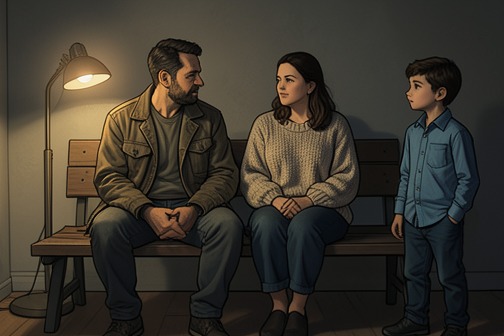
[Hayden reveals he has a son to Timbre](entity:event-recall-event-hayden-timbre-002de6fa697e) in a conversation that replaces romantic uncertainty with the concrete responsibilities of parenthood. He tells [Timbre](entity:character-recall-character-timbre-519069393105) that he has a twelve-year-old son, [Crew Devillier](entity:character-recall-character-crew-devillier-dd172bb70e81), and that [Crew](entity:character-recall-character-crew-c866b7e96031) is, and will remain, his number-one priority. The disclosure explains why Hayden has kept relationships outside his home for twelve years, while also establishing the principle that any future relationship must be measured against Crew’s security and well-being.
## Causes and Background
The revelation follows Hayden’s warning that aspects of his life make seeing Timbre difficult. Timbre initially suspects that he may be married, but Hayden’s actual obstacle is not a hidden spouse; it is the single-parent life he has built around Crew. He explains that he deliberately avoided relationships after Crew came along because he believed he was all the boy had, apart from his band, [Assured Distraction](entity:character-recall-character-assured-distraction-5c57863f5da2). His decision has therefore been less a rejection of intimacy than an attempt to protect a child whose family situation began in abandonment and deception.
Hayden describes Crew’s mother as someone who did not want the child and tricked Hayden into becoming a father. He does not reduce the history to a simple accusation: he acknowledges responsibility for his own actions even while calling the circumstances deeply troubled. When Crew’s mother left and never returned, Hayden made a firm decision to remain present for his son. That promise became the organizing rule of his adult life, taking precedence over dating and making every new relationship carry consequences beyond the two people involved.
## What Happens
Hayden presents the truth directly rather than allowing Timbre to discover it later. He tells her that Crew has always been first in his thoughts and that he has never brought a woman home. The admission surprises Timbre because it means Hayden has spent twelve years without introducing a girlfriend or potential wife into the household. His honesty also reveals the emotional cost of that arrangement: Crew once wanted a mother, but Hayden feared that bringing someone into their lives and then losing her would damage the boy.
The central conflict is therefore prospective rather than immediate. Hayden worries about the harm caused by a failed relationship, while Timbre must decide whether his parental priority makes a relationship impossible. She answers by proposing that they take things slowly and see where their connection leads before she meets Crew. Her response respects Hayden’s boundary while preserving the possibility of a future together. It also reflects her own precarious circumstances: she wants time to leave the homeless shelter before meeting his son because she does not want Crew to encounter her as a homeless woman.
Hayden rejects the assumption that Crew would judge her by her housing situation. He characterizes Crew as a boy focused on enjoyment, football, friends, and a constantly changing series of girlfriends. Timbre responds with laughter and treats this description as evidence of a lively, appealing child rather than a threat. She agrees that, when the time is right, she will meet him and discover what he thinks of her. The conversation consequently moves from disclosure to tentative consent: Hayden has stated the condition governing his life, and Timbre has accepted a slower path toward becoming part of it.
## Consequences and Aftermath
The disclosure changes Timbre’s understanding of Hayden. What could have appeared to be emotional distance becomes evidence of parental vigilance, and his reluctance to bring her home becomes a boundary shaped by Crew’s vulnerability. Timbre also recognizes that Hayden has told her the difficult truth at the outset, giving her the information needed to decide whether to continue. His candor makes the relationship more demanding, but it also makes it more trustworthy.
For Hayden, Timbre’s response is significant because she does not ask him to choose between romance and fatherhood. She accepts that Crew will remain first, agrees not to meet him prematurely, and understands that her own situation must change before the relationship is folded into the family sphere. The event thus establishes a practical sequence: intimacy between the adults can continue, but integration into Crew’s life must be gradual and responsible.
The conversation ends not with withdrawal but with renewed physical closeness. After Timbre jokes about eventually meeting the “great kid,” she leans across the truck’s center console, and Hayden pulls her onto his lap. At her request, he kisses her with an intensity that turns the difficult disclosure into a deeper moment of mutual attraction. The sequence links emotional honesty and erotic connection: the relationship advances not because Hayden minimizes his obligations, but because Timbre understands them and chooses to remain engaged.
## Narrative Significance
This event makes Crew Devillier the unseen center of Hayden and Timbre’s romance before Timbre has even met him. Hayden’s love for his son defines the limits of his availability, his domestic boundaries, and his fear of emotional risk. The revelation also reframes romance as an act of inclusion: Timbre is not simply becoming Hayden’s partner, but approaching an already established father-and-son world whose trust must be earned carefully.
The scene’s value shift runs from suspicion to clarity and from anticipated rejection to cautious possibility. Timbre begins by imagining that Hayden may be married; she learns instead that he is a devoted single father whose past has made him wary of romantic instability. Hayden expects that the truth may frighten her, yet she responds with patience and acceptance. Their connection therefore becomes stronger through disclosure, while the conditions for its continuation become unmistakable: Crew comes first, the adults must proceed slowly, and any lasting relationship must prove itself safe enough to enter his life.
In structural terms, the event serves as a defining threshold in Hayden and Timbre’s relationship. It supplies the personal history behind Hayden’s guarded behavior, gives Timbre a concrete reason to remain patient, and foreshadows her eventual relationship with Crew. The son’s absence from the scene is itself meaningful: the first step toward family formation occurs in a private conversation between the adults, but the decision is shaped by the child whose welfare governs them both.
Event 14
Hayden, Peri, and Ryan plan to help Timbre escape her hardship
[Hayden, Peri, and Ryan plan to help Timbre escape her hardship](entity:event-recall-event-hayden-peri-ryan-timbre-324f4af3bc0b) through a practical intervention that joins safety, work, and belonging. Hayden wants [Timbre](entity:character-recall-character-timbre-519069393105) removed from a homeless shelter and given a stable path forward, while Timbre’s refusal to accept direct financial assistance forces the Powell family to design help she can regard as earned rather than donated. The plan ultimately leads to Timbre’s move into the [Powell family pool house](entity:location-recall-location-powell-family-pool-h-e5b64ae2bac7) and her hiring at [13 Recordings](entity:location-recall-location-13-recordings-3b2b6850dced), transforming a precarious survival arrangement into the foundation of her independence and her deeper connection with Hayden and [Crew](entity:character-recall-character-crew-c866b7e96031).
## Causes and Stakes
The plan emerges from the difficulty of Hayden and Timbre’s developing relationship. Timbre works at [The Bar](entity:location-recall-location-the-bar-026ed80f6df7), where [Friday and Saturday nights](entity:time-recall-time-friday-and-saturday-nigh-187c8181bd0e) bring the largest crowds and therefore the greatest earning potential. Hayden’s schedule is already governed by his work and by Crew’s needs, so weekend dates are effectively unavailable and weeknight meetings are also difficult. He describes the relationship as nearly impossible to arrange before it has properly begun, but the logistical problem becomes inseparable from a more urgent material one: Timbre returns late from the bar to a shelter in a questionable part of town, where only one guard remains at the desk and unsettling people circulate outside.
Hayden is especially troubled because Timbre is not merely temporarily inconvenienced. She is living in a homeless shelter while saving for an apartment after moving to [Austin](entity:location-recall-location-austin-208e01a2a58e) in search of suitable work. She has a college degree, yet her attempt to establish herself has not produced the employment or housing she needs. Hayden has offered her the money required to leave the shelter, but she has rejected the offer outright. Her pride has been damaged by the setback, not erased by it; she will accept a solution only if it does not make her feel purchased, rescued, or reduced to a charitable case.
The emotional stakes also include Crew. Hayden is not ready for Crew to meet Timbre as his father’s romantic partner until he knows that the relationship is going somewhere. He does, however, want Timbre and Crew to become acquainted without the pressure of an announced romance. That wish creates a second purpose for the proposed housing arrangement: a safe residence would allow Crew to encounter Timbre naturally, while giving Hayden a chance to observe their relationship without immediately attaching expectations to it.
## The Proposed Solution
[Ryan](entity:character-recall-character-ryan-9c6f1f1eaa2e) supplies the decisive idea: Timbre should move into the Powell family pool house. The building has its own outside entrance and remains separate from the main house, preserving Timbre’s privacy while keeping her close to the family. Because the children are frequently in the backyard, she and Crew could interact in an ordinary setting rather than through a formal introduction arranged around Hayden’s dating life. The pool house therefore answers several problems at once: it removes Timbre from an unsafe shelter, offers her a place near people who can support her, and creates a low-pressure setting for her relationship with Crew.
Hayden immediately recognizes the advantages but also the obstacle. Timbre would not move in if the offer appeared to be charity, and he knows that her stubbornness about accepting help is an expression of dignity rather than simple irrationality. [Peri](entity:character-recall-character-peri-0bddec65ddf4) volunteers to persuade her, confident that once she commits herself to a goal she will not stop until she achieves it. The proposed solution consequently depends not only on the availability of the pool house but on the family’s ability to present assistance in a form Timbre can accept.
Employment becomes the second half of the arrangement. Peri and Ryan are discussing a new position for Johnna, who has completed a marketing degree while working at the company. They propose placing Timbre in that position at 13 Recordings. The salary would make it unnecessary for her to keep two jobs, although she could continue working at The Bar on weekends if she chose. Hayden responds with relief because the offer promises both a professional future and a comfortable temporary home while Timbre gets back on her feet.
## From Bar Work to Professional Employment
Before the plan is realized, Timbre’s economic situation is shown through the conditions of her bar work. At The Bar, [Ford Turner](entity:character-recall-character-ford-turner-c756a2b884d1) interviews her for a cocktail-waitress position after the previous waitress working with [Jenna](entity:character-recall-character-jenna-65f88e27192a) quits. He watches her body in a way that makes her uncomfortable, then explains that the job becomes fast-paced during the evening and especially crowded on Friday and Saturday nights when a band performs. The position is therefore shaped by both physical endurance and the commercial value of her appearance.
[Ford](entity:character-recall-character-ford-5ccf5db0365c) tells her that the bar uniform consists of shorts and a tight T-shirt, and suggests altering the shirt to expose more skin because greater exposure may produce better tips. Timbre understands the terms of the labor immediately. This is not the career she wants, but bills determine her short-term priorities, so maximizing nightly income matters more than preserving an ideal version of professional self-presentation. The job gives her cash flow, yet it also places her body under customer scrutiny and ties her most valuable working hours to the weekends Hayden cannot share with her.
The first night confirms the cost. Timbre serves a steady stream of customers, clears tables, recycles empty containers, and reaches last call with her feet aching. She is grateful that the bar serves only nuts and pretzels because she dislikes dealing with food, but the small relief emphasizes how little control she has over the larger labor process. She is exhausted by the time she removes her tiny apron, and even the possibility of buying better shoes becomes one of her first practical calculations. The bar is a necessary bridge, not a destination.
The employment proposal gives that bridge an exit. Hayden agrees to arrange an interview, joking that he may have to use his persuasive methods to get Timbre to attend. The plan must still respect her resistance to being managed, but it gives him a way to bring her toward a salaried position without handing her money. At the interview, Timbre meets Peri and Cash, performs successfully, and receives an offer on the spot. Cash tells her that she will be a great addition to the team at 13 Recordings, confirming that the transition is based on recognized ability rather than merely on Hayden’s personal interest.
## Consequences and Development
Timbre’s first day at 13 Recordings demonstrates the practical result of the plan. The computer systems are easier for her to learn than the names and faces of the people connected with the company, so Johnna spends the day training her, introducing colleagues and explaining which people are important. Johnna’s assistance makes the handover orderly and protects Timbre from the embarrassment of failing in a new workplace. By the end of the day, however, the effort has left Timbre quickly exhausted, showing that stability does not eliminate the demands of rebuilding a life; it changes the terms under which those demands are met.
The new job also alters the balance between survival and choice. At The Bar, Timbre’s income depends on crowded nights, tips, appearance, and relentless physical work. At 13 Recordings, her college degree and organizational abilities become economically legible in a different way. The move does not erase her earlier labor or require her to abandon it immediately, but it gives her the possibility of no longer needing two jobs. The plan thus treats housing and employment as mutually reinforcing: a safe place makes sustained work possible, while a reliable salary makes independence more realistic.
For Hayden, the intervention is also an experiment in restraint. He wants to protect Timbre, yet he cannot simply override her refusal of direct financial help. He wants Crew to know her, yet he is cautious about exposing his son to a relationship that might fail. The pool-house proposal offers proximity without an immediate romantic declaration, and the job offer offers material support without requiring Timbre to surrender her pride. What begins as Hayden’s anxious attempt to remove danger becomes a negotiated form of assistance structured around Timbre’s terms.
The plan’s significance extends beyond one emergency. Timbre does not escape hardship through a miraculous gift or a sudden disappearance of debt. She is offered a secure residence, completes an interview, begins a demanding new position, and learns the systems and people of 13 Recordings one working day at a time. The intervention therefore marks a shift from precarious endurance toward chosen stability, while preserving the tensions that make that stability meaningful: dependence and self-reliance, romance and parental caution, and generosity and dignity.
Event 15
Timbre's hiring at 13 Recordings

[Timbre's hiring at 13 Recordings](entity:event-recall-event-timbre-s-hiring-at-13-r-d7b0064d0847) is a decisive employment transition: after taking a physically punishing cocktail-waitress job to meet immediate bills, [Timbre](entity:character-recall-character-timbre-519069393105) secures a position in a recording company and begins rebuilding her life through skilled, more stable work. The event changes employment from short-term survival into a path shaped by competence, recommendation, and trust, while also showing how [Hayden Devillier](entity:character-recall-character-hayden-devillier-a8a68fda01ce)'s faith in her affects opportunities without replacing her own effort.
## Causes and Background
Timbre's route to [13 Recordings](entity:location-recall-location-13-recordings-3b2b6850dced) is preceded by economic pressure and an uncomfortable job in a bar. When she applies to work there, [Ford Turner](entity:character-recall-character-ford-turner-c756a2b884d1) tells her that the position is fast-paced, especially on [Friday and Saturday nights](entity:time-recall-time-friday-and-saturday-nigh-187c8181bd0e) when a band performs. He also requires the cocktail waitresses to wear shorts and tight bar T-shirts, presenting exposed skin as a way to increase tips. Timbre recognizes that the work is not a career choice but accepts the conditions because bills demand immediate income.
The first shift confirms the cost of that decision. She serves a steady stream of customers, wipes down tables, recycles empty containers, and reaches last call with feet that ache badly enough for new Chucks to become one of her first intended purchases. The bar serves only nuts and pretzels, which spares her from more extensive food handling, but the work still reduces her labor to endurance, appearance, and tips. Her discomfort with the job creates the practical pressure behind the later move to 13 Recordings.
A second pressure comes from the exhaustion of the surrounding music world. Hayden Devillier works with [Assured Distraction](entity:character-recall-character-assured-distraction-5c57863f5da2) on new album material, spending a long morning in the practice room and using the time before the band returns to the studio to prepare music of his own. His commitment to both music and [Crew Devillier](entity:character-recall-character-crew-devillier-dd172bb70e81) makes his recommendation of Timbre more than casual praise: he knows a professional environment in which reliability, ability, and judgment matter.
## Interview and Hiring
The hiring scene takes place at 13 Recordings, where Timbre meets [Peri Powell](entity:character-recall-character-peri-powell-271745e9bb04) and Cash. The interview proceeds without difficulty, and they offer her the job on the spot. Timbre responds by promising that they will not regret taking a chance on her, framing the opportunity as something she intends to justify through performance rather than merely receive as a favor.
Cash confirms that the company already considers her a strong addition to its team. His comment establishes that the decision is not provisional or reluctant; the interview has converted uncertainty into an immediate professional commitment. He then leaves for another appointment with musicians, contrasting Timbre's apparent readiness with his skepticism about the people he is due to meet.
The offer also carries a clear administrative consequence. Timbre tells [Peri](entity:character-recall-character-peri-0bddec65ddf4) that she will give the bar her one week's notice that evening. The transition therefore requires her to close out the job that supported her in the short term, even though it had demanded long hours, physical stamina, and compliance with an appearance-based tipping structure.
## Recommendation and Merit
Peri tells Timbre that Hayden Devillier had spoken highly of her and seemed to regard her as exceptionally valuable. Timbre is grateful but immediately insists that she wants to earn the job on her own merit. Her response preserves an important distinction: Hayden's recommendation may secure attention, yet it cannot perform the work, pass the interview, or establish her competence in the new position.
Peri answers that Hayden Devillier would not risk his standing unless he believed in Timbre. She further associates his confidence with the fact that women had previously betrayed him, making his willingness to vouch for Timbre a sign of hard-won trust rather than indiscriminate generosity. The recommendation thus carries emotional as well as professional weight: Hayden is using his credibility to affirm Timbre's character, while Timbre remains determined not to let that support erase her independence.
The event consequently balances assistance against self-reliance. Timbre does not refuse help, but neither does she treat help as proof that she is unqualified to advance alone. Her hiring becomes a practical expression of trust accepted without surrendering personal agency.
## Work at 13 Recordings
Timbre's first day reveals that the new job demands a different kind of labor. She learns the computer systems readily, but matching names and faces proves more difficult. Johnna, who is leaving the position, spends the day training her, introducing people and supplying background about important visitors so that Timbre can navigate the workplace without embarrassing herself.
This training shifts the emphasis from bodily endurance to institutional knowledge. At the bar, the immediate measure of labor was the number of customers served, tables cleared, and tips earned. At 13 Recordings, Timbre must learn systems, recognize personnel, understand reputations, and manage the social information that allows an office to function. The work remains demanding—exhaustion arrives by the end of the day—but its difficulty also signals that she has entered a professional structure in which knowledge can accumulate and competence can deepen.
Peri checks on her at the end of the day and asks whether she is ready to go home. Timbre prepares her desk for the following day before leaving, a small but concrete sign that she now imagines continuity in the position. The job is not merely a single opportunity or a temporary shift; it has a next day, an organized workspace, and a role she is expected to continue inhabiting.
## Consequences and Narrative Significance
The hiring changes Timbre's economic and social position. It offers an alternative to the bar's unstable, appearance-centered income and places her in the orbit of Peri Powell, Cash, and the recording industry. Because the position is obtained through both an interview and Hayden Devillier's recommendation, the event joins romantic trust to material opportunity without making the two identical: Hayden helps create the opening, while Timbre's successful interview and subsequent training establish her ability to remain there.
The transition also alters the rhythm of her relationship with Hayden Devillier. His encouragement accompanies the interview, and his confidence gives Timbre the courage to enter the meeting, but the result belongs to her as well. The job therefore becomes one of the clearest early signs that her life is moving from emergency decisions toward reconstruction through chosen work, supportive relationships, and skills she can develop.
The final detail introduces a note of unease into an otherwise affirmative change. On her first day, Timbre notices a woman standing outside the glass doors. When the woman sees her, she moves out of sight, and no one is there when Timbre looks again. Timbre can only speculate that the woman may have been waiting for someone. The scene does not undo the hiring, but it places the new workplace within the book's wider atmosphere of uncertainty: professional stability has begun, yet safety and the past remain capable of appearing at the edge of the frame.
Event 16
Timbre's move into the Powell pool house
[Timbre's move into the Powell pool house](entity:event-recall-event-timbre-s-move-into-the-7fb5d30a5146) is the practical turning point through which precarious shelter becomes a home. What begins as [Hayden Devillier](entity:character-recall-character-hayden-devillier-a8a68fda01ce)'s arrangement with [Peri Powell](entity:character-recall-character-peri-powell-271745e9bb04) and [Ryan Powell](entity:character-recall-character-ryan-powell-3b917ec6ae55) gives [Timbre](entity:character-recall-character-timbre-519069393105) a place of her own, but it also brings her into the protective orbit of the Powell household and makes her possible future with Hayden answerable to the family that has already claimed him as its own.
## Causes and Background
Peri Powell raises the proposal privately, asking Timbre whether Hayden has told her about moving into the pool house. Timbre has already heard the offer, yet her first response is resistance: she says she appreciates [Peri](entity:character-recall-character-peri-0bddec65ddf4)'s consideration but can find her own place. The refusal is less a rejection of the accommodation than a defense of self-sufficiency. Timbre wants Peri to understand that she can take care of herself, even though the circumstances behind the offer make that claim difficult to sustain.
Peri knows where Timbre has been living, and Timbre admits that the knowledge is embarrassing. Her lack of a stable home is not treated as a moral failure, however. Peri answers that everyone has experienced bad luck and suggests that the move may become a turning point. The proposed residence therefore carries two meanings at once: it is immediate material assistance, and it is an opportunity for Timbre to begin rebuilding after housing insecurity without being reduced to her hardship.
The offer is also shaped by Peri's understanding of Hayden's character. She describes him as a great man, father, and musician, and explains that the family has come to love him as a brother or uncle to their children. As [Ryan](entity:character-recall-character-ryan-9c6f1f1eaa2e)'s cousin, Hayden is already embedded in their household; his role is familial rather than merely social. Peri presents his work and his provision for [Crew Devillier](entity:character-recall-character-crew-devillier-dd172bb70e81) as evidence of the responsibility he carries, making clear that Timbre is not entering an isolated romance but a network of obligations and affection.
## What Happens
Peri carefully frames the move as something that will benefit Timbre while also helping the household. During the week, she says, Timbre will hardly see her and Ryan, and if Peri tours with [Assured Distraction](entity:character-recall-character-assured-distraction-5c57863f5da2), [Nanny](entity:character-recall-character-nanny-d735ff036db7) will travel with them, leaving Timbre the pool house to herself. Peri even suggests that Timbre would be doing them a favor by house-sitting. Timbre recognizes the generosity beneath the maneuver and understands that Peri is also acting for Hayden's sake, but the arrangement still gives her privacy rather than making her feel like a permanent guest in the main house.
Once Timbre accepts, she says she will move in on her first days off. Peri's amused reply—that Hayden may not allow her to wait that long—underscores the romantic pressure surrounding the practical decision. Hayden has already decided that the relocation will happen that night. He tells Peri and Ryan of the plan, brings Timbre to the shared driveway, and expects the contents of her life to fit into a single trip: her belongings are small enough to fit in the back seat of his truck, so they can probably move everything in one haul. The scale of the move is revealing. Timbre is not transporting an established household; she is carrying only what she has managed to keep.
At the pool house, Hayden switches on the light and Timbre reacts with astonishment at the space. The cottage has a living area, an island, and a well-equipped little kitchen, and its quality far exceeds what she has imagined for herself. She calls it beautiful and says she never dreamed of living somewhere so nice. The building was designed as the European-style cottage Peri wanted but could not place inside the main house, so the pool house becomes both an architectural expression of Peri's taste and a separate dwelling offered to Timbre.
The move is thus enacted through a contrast between compression and abundance. Timbre's possessions can be moved in one load, while the residence seems almost impossibly spacious and refined to her. Her response registers not only pleasure but the shock of crossing a class boundary: the home makes visible a level of comfort she had not considered available to her. Hayden responds by helping bring in her mostly clothing and promising to unpack it so that she can feel at home, turning the relocation from a transfer of belongings into an attempt at belonging.
## Family Terms and Romantic Stakes
The pool house is offered within a family structure that is welcoming but not neutral. Peri tells Timbre that Hayden is like the little brother she never had and that she loves him dearly. She then states the condition governing Timbre's entrance into this circle: if the relationship moves forward and Timbre hurts Hayden, Peri will destroy her. The warning is delivered as a serious declaration of allegiance, not as casual hostility.
Peri expands the warning beyond herself. Assured Distraction is described as Hayden's family in [Austin](entity:location-recall-location-austin-208e01a2a58e), while his mother remains in [East Texas](entity:location-recall-location-east-texas-3eca0b48daa9). Peri and the other members of the group love him as their own and look out for one another; Peri says that [Chandler](entity:character-recall-character-chandler-c255230cb856) and she would take action against Timbre if she harmed him. Timbre acknowledges the intensity of those ties, recognizing that they are strong enough to inspire lethal loyalty. The scene gives the housing arrangement a clear emotional price: shelter is not presented as an impersonal service, and acceptance into the household requires respect for Hayden's place within it.
Timbre does not interpret Peri's speech as a reason to withdraw. She thanks Peri for everything being done for her and says she hopes to become part of the family in some capacity even if the relationship with Hayden fails. That qualification is important. Timbre wants belonging that can survive the uncertainty of romance, while Peri's protection of Hayden makes the romantic relationship inseparable from the family system. Her willingness to move therefore signals both vulnerability and an active desire to join a chosen family without demanding that its existing loyalties disappear.
## Consequences and Aftermath
The immediate consequence is security. Timbre leaves a situation in which she has no room of her own and enters a private cottage where she can live independently from the main household. Peri's arrangement gives her physical separation, while the shared property and family connection ensure that she is no longer entirely alone. Hayden's involvement makes the move intimate, and the household's hospitality gives it permanence beyond a temporary rescue.
The relocation also changes the balance between Timbre and Hayden. Before the move, assistance could remain an offer that Timbre politely refused in the name of self-reliance. Once she accepts, Hayden's care becomes materially present in her daily life, and the possibility of their relationship advances from emotional attraction toward shared domestic proximity. Peri's comment about Hayden not waiting until Timbre's first days off, together with Hayden's decision to move her that night, makes clear that the practical arrangement is accelerating the romance.
Yet the pool house does not erase Timbre's awareness of dependence. Her embarrassment about where she has lived, her insistence that she can manage alone, and her astonishment at the cottage all remain part of the event. The new home is generous precisely because it answers a real deprivation, but that generosity forces Timbre to negotiate dignity, gratitude, and trust. The move succeeds when she accepts help without surrendering her sense of self.
## Narrative Significance
As a romance beat, the move marks the transition from tentative closeness to sustained integration. Hayden and Timbre are no longer meeting only in borrowed moments; a residence now gives their relationship a physical setting and places Timbre within the domestic world shared by Hayden's chosen family. The event advances intimacy through an act that is simultaneously logistical, protective, and emotionally declarative.
The pool house also embodies the book's contrast between self-reliance and dependence. Timbre's belongings fit in the back seat of a truck, but the home waiting for them is far larger than anything she has expected. That disproportion makes the scene's value shift visible: she begins from insecurity and resistance, then moves toward safety while retaining the right to call the decision her own. Peri's terms add another layer, showing that family acceptance is not passive charity but a reciprocal arrangement grounded in loyalty, responsibility, and care.
Finally, the event establishes the Powell property as more than a setting. Its shared driveway, separate pool house, main household, touring life, and network of relatives and band members create a spatial map of chosen family. Timbre's arrival places her at its edge, welcomed into the cottage but still required to prove that she understands what Hayden means to the people who love him. The move is therefore both a homecoming and an initiation: it gives Timbre shelter, but it also asks her to enter a community whose bonds are already deep, durable, and fiercely defended.
Event 17
Hayden and Timbre's first sexual encounter

[Hayden and Timbre's first sexual encounter](entity:event-recall-event-hayden-and-timbre-s-fir-815dd693f2c3) is the point at which their carefully restrained attraction becomes a consummated relationship. It does not arise as an isolated seduction: it follows Hayden's repeated efforts to respect [Timbre](entity:character-recall-character-timbre-519069393105)'s circumstances, their agreement to pursue each other outside the shelter's public setting, and a pattern of desire repeatedly interrupted by deliberate limits. The encounter therefore changes the value of their connection from possibility to lived intimacy while preserving consent and emotional attentiveness as its defining conditions.
## Causes and Background
The encounter grows out of an attraction that Hayden and Timbre have been managing rather than denying. When Hayden drives Timbre back to the homeless shelter, he acknowledges that he wants to continue what began between them but refuses to let their intimacy unfold in a public place or create a problem for her. He tells her that he wants to see where fate takes them, while Timbre explains that she cannot invite him into the shelter and is saving every penny toward a deposit so she can leave. His response is admiration for her hard work, not pressure to overcome the obstacle. Their relationship begins, in this sense, inside material insecurity: desire is present, but privacy, housing, and personal dignity matter just as much.
Hayden's approach to intimacy is also framed by the principles he has taught [Crew Devillier](entity:character-recall-character-crew-devillier-dd172bb70e81). He identifies respect as the most important requirement in dealing with girls and teaches [Crew](entity:character-recall-character-crew-c866b7e96031) that “no means no,” explaining that any expressed discomfort must register as a “big red light.” Although this conversation concerns Crew's future conduct, it establishes the ethical vocabulary surrounding Hayden's own romantic life. The later encounter is consequently presented against a standard of active attention to refusal and comfort, rather than against the idea that desire itself authorizes escalation.
The immediate lead-up combines anticipation with interruption. After Timbre arrives, she tells Hayden that she wants him to stay but needs a bath because she smells like beer. Hayden responds by embracing and kissing her, while she separates herself and promises to hurry. When she returns in a pink tank top and sleep shorts, the atmosphere changes sharply: Hayden calls her “babe” and pulls her across his lap, and Timbre answers his hunger with an equally direct invitation. The movement is reciprocal, but it is not portrayed as automatic. Earlier, Hayden stopped himself after a brief kiss because he knew that doing more might make him want to take her home; here, the accumulated attraction finally meets a setting in which they can act on it.
## What Happens
The encounter begins with physical urgency but remains legible through gestures of mutual participation. Timbre straddles Hayden, and their exchange moves from teasing and clothing to sustained kissing. In the kitchen, Hayden lifts her onto the stone countertop beside the stove as she wraps her legs around him. The scene's physical details—her reaching up toward his height, his deepening the kiss, and both characters openly responding to the other's desire—make the intimacy a shared progression rather than a unilateral advance.
The sequence then moves to the bedroom, where desire intensifies. Timbre initiates further contact and Hayden responds, but the decisive movement is still jointly enacted. When he begins to enter her and meets resistance, he pulls back; Timbre refuses that pause, asks him to continue, and uses her legs to draw him forward. Her direct request, “Please, Hayden. Now,” makes her consent explicit at the moment when the encounter crosses into intercourse. The scene thus places verbal permission inside a larger pattern of bodily reciprocity, with Timbre not merely accepting Hayden's desire but actively directing its completion.
The encounter's emotional register is as important as its erotic one. At its height, Hayden reacts with astonishment, asking whether the experience is heaven, while Timbre experiences the intensity as overwhelming. Afterward, Hayden does not immediately turn away or fall asleep. He pulls her legs around his waist, lays his body against hers, and asks to remain there for a minute because he needs to feel her against him. Timbre notices that this is unlike her previous sexual experiences, in which men generally rolled away and went to sleep. His continued physical presence converts the aftermath from a mere release into a moment of attachment.
The interruption at the bedroom door reinforces the encounter's precarious, domestic character. Immediately after Hayden lifts Timbre and carries her toward the bedroom, someone knocks late at night. Timbre retreats into the bedroom because the visitor is not there for her, leaving their clothes and Hayden's shirt on the floor. The interruption does not erase what has happened; instead, it exposes how quickly their private intimacy can collide with the outside world and how unprepared their new shared space is for the consequences of becoming a couple.
## Consent, Boundaries, and Sexual Scripts
The encounter's meaning is sharpened by the contrast between negotiated intimacy and coercive sexual scripts elsewhere in the story. Hayden's earlier conduct establishes that attraction does not cancel restraint: he asks Timbre whether she is willing to be kissed, accepts her nod, gives her only a brief kiss, and chooses to wait rather than pursue more. His later conversation with Timbre likewise presents their relationship as something to explore without endangering her position. By contrast, [Krissy Thompson](entity:character-recall-character-krissy-thompson-702f2809f8a4) proposes a transactional arrangement in which Timbre would be paid to care for Crew Devillier, remain available for sex, and tolerate Hayden's imagined sexual access to other women. Hayden rejects that arrangement with anger, refusing to reduce Timbre to hired help, a temporary girlfriend, or a sexual service. The first sexual encounter therefore marks the fulfillment of a relationship grounded in reciprocal choice rather than the exploitation of housing insecurity or economic need.
The same distinction appears in the scene's physical choreography. Hayden's desire is repeatedly visible, but the narrative gives Timbre decisive agency: she returns to him, straddles him, participates in the kissing, requests penetration when he pauses, and pulls him forward. The scene does not treat silence, arousal, or prior flirtation as sufficient by themselves. Instead, consent is distributed across spoken words, affirmative movement, and Hayden's willingness to stop when he senses that continuing might exceed what the moment allows. This pattern connects the couple's erotic life to Hayden's parental teaching: respect is not an abstract lesson reserved for Crew Devillier but a principle enacted in the adult relationship that Crew's future dating is being prepared to understand.
## Relationship Shift and Immediate Consequences
As a story event, the encounter produces a clear value shift. Before it, Hayden and Timbre possess attraction, anticipation, and a possible future, but their connection remains constrained by the shelter, public scrutiny, and the danger of moving too quickly. During the encounter, desire becomes shared bodily knowledge. After it, the meaning of sex is altered by Hayden's tenderness and Timbre's recognition that he remains present rather than treating the experience as disposable. Their closeness on the bed gives the event a relational consequence: the couple's bond is no longer only a promise about what might happen, but an intimacy they have inhabited together.
That change does not make their circumstances simple. Timbre still carries the insecurity of shelter life and the need to save for a deposit, while Hayden's home remains connected to his responsibilities as a father. The late-night knock, the clothing left on the floor, and Timbre's retreat into the bedroom turn the ending of the scene into a reminder that private intimacy exists within practical obligations. The encounter brings them closer, but it also places their new relationship inside the ordinary interruptions, family structures, and material pressures that will test whether closeness can become a durable life.
## Narrative Significance
Hayden and Timbre's first sexual encounter functions as the midpoint transformation of their romance: restraint gives way to consummation, yet the ethical framework that made restraint meaningful is carried into the sexual scene rather than discarded. Its narrative force comes from the combination of intensity and care. The erotic progression is direct and physically charged, but its decisive image is not simply consummation; it is Hayden staying against Timbre afterward because he wants to feel her beside him. That gesture answers the history of partners who withdrew immediately after sex and signals that this relationship promises emotional presence as well as desire.
The event also clarifies the novel's contrast between chosen intimacy and imposed possession. Hayden's attraction never becomes a license to claim Timbre, and his rejection of [Krissy](entity:character-recall-character-krissy-a3a78bbcbd43)'s proposed arrangement confirms that he understands the difference between mutual sex and access purchased through dependency. Timbre's explicit request at the moment of intercourse completes that contrast from her side: she is not merely the object of Hayden's longing but an active participant whose words and movements direct the encounter. The first night together thus advances the romance while making its central conditions visible—privacy, respect, reciprocal desire, and the possibility of remaining emotionally present after the heat has passed.
Event 18
Crew's strep and scarlet-fever illness
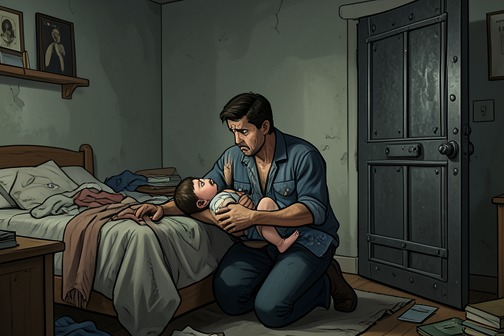
[Crew's strep and scarlet-fever illness](entity:event-recall-event-crew-s-strep-and-scarle-f762d62b5cde) is a turning-point episode in which an apparently ordinary sickness becomes a test of [Hayden Devillier](entity:character-recall-character-hayden-devillier-a8a68fda01ce)'s single-parent responsibility. [Crew](entity:character-recall-character-crew-c866b7e96031)'s worsening condition produces a concrete medical crisis, but the event also clarifies the family rule that governs Hayden's choices: when professional obligations conflict with his son's safety, Crew comes first.
## Causes and Background
Hayden Devillier had never intended to become a father so young. [Crew Devillier](entity:character-recall-character-crew-devillier-dd172bb70e81) was born when Hayden was eighteen, and Crew's mother abandoned him, signed over all rights, and never called to check on him. Hayden therefore became the only parent consistently responsible for Crew, relying on the example of his own mother and grandparents while learning parenthood without an instruction manual. He describes loving Crew completely, while acknowledging that the child's future adolescence will bring more difficult challenges and require him to remain alert and involved.
Crew's asthma had already shaped Hayden's understanding of parental risk. Crew developed asthma at about four, and his allergy to cats made Hayden wary of being away with the band while Crew was young. Hayden feared that an emergency might occur while he was traveling and that he might be unable to reach his son quickly. The illness episode extends that established fear from a known chronic vulnerability into a rapidly changing condition whose seriousness is initially unclear.
## What Happens
Crew first seems ill enough to be taken home, but when he stands he becomes unsteady and nearly collapses. Hayden catches him, notices that his eyes appear ready to roll back, and realizes that Crew is worse rather than better. When Hayden presses Crew's forehead to his cheek, he finds that the boy's skin is burning with fever. Crew says he feels sick and is about to vomit, then vomits over both of them before Hayden can get him fully into the bathroom.
Hayden gets Crew cleaned up and summons [Peri Powell](entity:character-recall-character-peri-powell-271745e9bb04), who arrives while Crew continues vomiting. A washcloth is used to lower his fever, but removing Crew's filthy shirt reveals a strange red, raised rash across his skin. Neither Hayden nor [Peri](entity:character-recall-character-peri-0bddec65ddf4) knows what the rash means, so Peri goes to ask [Nanny](entity:character-recall-character-nanny-d735ff036db7), whose experience with children may provide an answer. The rash changes the apparent nature of the illness: this is no longer simply a fever or an undifferentiated virus but a condition requiring a more informed medical judgment.
Nanny suspects scarlet fever and asks whether the doctor performed a strep test. The earlier test had been negative, but she explains that the result may have come too early and therefore cannot safely rule out the infection. Hayden carries the weak boy downstairs, puts a clean shirt on him, settles him in the truck with a garbage bag, and drives him to the hospital. At the emergency room, the doctor takes one look at Crew and orders another strep test, expecting it to be positive. The second test confirms the infection, and the doctor prescribes antibiotics.
The doctor warns that scarlet fever could become a serious problem if it is not treated quickly, although Crew had not yet displayed the rash during the earlier office visit and the family appears to have caught the condition in time. Hayden accepts the responsibility without hesitation, promising that Crew will be watched. The illness therefore moves through three stages within the scene: presumed minor sickness, alarming physical deterioration, and medically confirmed infection requiring treatment and continued observation.
## Consequences and Aftermath
The episode immediately changes Hayden's professional plans. A major show has been prepared through long practice, and Peri reminds him that the performance is important and that canceling would leave the band to find someone else. Hayden nevertheless decides to cancel because Crew's health overrides the concert. He also refuses to ask [Timbre Simons](entity:character-recall-character-timbre-simons-d6633368e2e1) to take over the obligation, making clear that the emergency is his responsibility rather than a burden he should transfer to her.
Hayden's response is not emotionally simple. Earlier, when Timbre Simons described being endangered alone on a night bus, Hayden reacted with furious fear, listing the weapons and possible violence that could have been involved before pulling her into his arms and apologizing for yelling. Crew's illness produces a related pattern: danger first appears as anger, alarm, and bodily urgency, but effective care requires action rather than accusation. With Crew, Hayden gets the child to the bathroom, calls Peri, consults Nanny, drives to the emergency room, obtains treatment, and prepares to monitor him. The event shows his protectiveness becoming practical parental labor.
The illness also reinforces the contrast between Hayden's public identity as a rock star and his private identity as Crew's father. Touring, rehearsals, and a major performance belong to the world that can demand his presence elsewhere; fever, vomit, rash, antibiotics, and observation belong to the immediate domestic world that cannot be postponed. His decision to abandon the show gives the principle of parental priority a material cost. It is not merely an affectionate declaration but a choice that reorganizes his schedule and places his career temporarily second.
## Narrative Significance
Crew's strep and scarlet-fever illness functions as both a medical plot event and a relationship test. Hayden's bond with Crew was formed under abandonment and sustained through self-reliance, yet the crisis demonstrates that self-reliance does not mean refusing assistance. Hayden accepts help from Peri and Nanny, listens to Nanny's warning about the unreliable early test, and follows the doctor's treatment plan. The family protects Crew through coordinated care rather than through Hayden's solitary effort alone.
The scene also resists treating illness as a moral defect. Crew's dangerous condition is not caused by disobedience or bad character; the danger lies in the body's fever, vomiting, rash, and the possibility that untreated scarlet fever may worsen. The narrative's medical recognition matters because it corrects uncertainty without turning sickness into a metaphor for guilt. At the same time, the physical symptoms transmit fear through the household: Crew's burning skin and weakness make the adults' ignorance visible, while Hayden's fear becomes action that reaches the hospital before the condition escalates.
Within the broader story, the illness confirms the rule that defines Hayden's romantic and professional life: Crew's welfare comes first. It deepens the significance of Hayden and Timbre Simons's developing relationship by showing that [Timbre](entity:character-recall-character-timbre-519069393105) is not asked to compete with Crew or absorb responsibilities that belong to Hayden. It also prepares the emotional logic of Hayden's later family decisions. The crisis ends not with a performance preserved at any cost, but with treatment, surveillance, and a father choosing the vulnerable child whose safety depends on him.
Event 19
Hayden and Timbre become an official couple

[Hayden and Timbre become an official couple](entity:event-recall-event-hayden-and-timbre-becom-bf34ac672b68) when Hayden introduces her as his girlfriend at a seventh-grade football game attended by the Powell family and many parents from the boys’ local football leagues. The moment gives a name to a relationship that has grown through attraction, restraint, explicit consent, and repeated private meetings, while making their commitment visible to the community around them. Its decisive significance lies in the movement from uncertain intimacy to chosen, public partnership: Hayden does not merely bring [Timbre](entity:character-recall-character-timbre-519069393105) to the game; he takes her hand, identifies their relationship, and accepts the responsibilities implied by the label.
## Background: From Attraction to Deliberate Intimacy
The relationship develops against circumstances that make haste dangerous. Hayden is a single father whose life has been organized around [Crew Devillier](entity:character-recall-character-crew-devillier-dd172bb70e81) since [Crew](entity:character-recall-character-crew-c866b7e96031)’s birth; he quit touring, wrote music for other bands, worked as a studio musician at [13 Recordings](entity:location-recall-location-13-recordings-3b2b6850dced), and remained with [Ryan Powell](entity:character-recall-character-ryan-powell-3b917ec6ae55) and [Peri Powell](entity:character-recall-character-peri-powell-271745e9bb04)’s household until Crew was about eight. By the time Hayden decides to recover a personal life, Crew has encouraged him to date, but Hayden’s romantic choices remain inseparable from his parental priorities.
That priority is expressed in Hayden’s repeated instruction to Crew that respect comes first and that “no means no.” He explains refusal as a clear boundary covering anything a girl is uncomfortable with, establishing a moral framework that also governs his relationship with Timbre. When Hayden drives Timbre back to the shelter, he stops in an unlit area away from the building rather than allowing their desire to carry them into a public situation. He tells her that he wants to pursue what began between them but will not do anything that could create a problem, and he asks whether she wants to see where their connection leads. The scene turns desire into negotiation: attraction is acknowledged, but safety and choice determine what happens next.
## The Public Declaration at the Football Game
The football game is deliberately chosen as a test of public life. Hayden recognizes that Timbre needs to become more comfortable being seen with him, and the event gathers the Powell family, local parents, and the boys’ familiar sports community in one place. Because Hayden has never previously brought a woman as a date to a game, their arrival attracts attention even though the surrounding people have no special reason to care about the relationship’s private history.
The declaration begins when Carrie, a woman who has repeatedly flirted with Hayden, approaches them. Hayden reaches back for Timbre’s hand and draws her closer before Carrie can claim familiarity as an opening. When Carrie asks who Timbre is, Hayden answers directly: “This is my girlfriend, Timbre. Timbre this is Carrie.” Timbre responds calmly and offers Carrie her hand, refusing to let the other woman’s snide remark that she must be “something special” define the encounter. Hayden’s physical gesture and verbal identification work together. He protects the relationship from ambiguity, while Timbre participates in its public presentation rather than standing beside him as an unnamed companion.
## Naming the Relationship
After they sit behind the Powell group, Timbre asks whether Carrie is an old friend or an old fling. Hayden assures her that Carrie is only a friend and that her attempts have always met a firm refusal. Timbre then repeats the new label with an arched eyebrow, making clear that the word “girlfriend” has consequences beyond the exchange with Carrie.
Hayden answers by measuring the relationship through its ordinary pattern: they see only each other, spend several nights together each week, and sometimes share a weekend. He asks what they are, recognizing that a relationship repeatedly enacted in private still requires a name when it enters public space. The question echoes Crew’s earlier insistence on understanding what Hayden’s own relationship means. In that parallel, romance is not treated as self-explanatory; it must be explained, accepted, and made legible.
Ryan Powell overhears the exchange and teases Timbre about what she is calling the relationship. Timbre initially suggests that no further discussion is necessary, but Hayden confirms the public introduction and looks to her for a response. She smiles back, and he takes her hand, pleased that they now have a label. The value shift is therefore mutual rather than unilateral: uncertainty becomes definition, and private involvement becomes acknowledged couplehood.
## Consent, Desire, and the Meaning of Commitment
The official relationship is preceded by a pattern of deliberate restraint. When Hayden asks whether he may kiss Timbre after driving her home, he waits for her nod and gives her only a brief kiss, choosing not to escalate because he knows stronger intimacy would make it difficult to leave. The scene presents desire as intense but governable. Later, during their first sexual encounter, Timbre actively asks Hayden to continue and physically draws him toward her, making the encounter a reciprocal act rather than an assumption based on arousal alone.
This pattern sharply contrasts with the transactional arrangement Hayden rejects when a woman offers to be paid to stay with Crew, accept sex on demand, and tolerate Hayden’s other sexual partners and absences. Hayden refuses the arrangement and leaves in anger. His rejection clarifies what official partnership is not: it is not hired service, sexual availability purchased through money, or childcare obtained by exploiting someone’s insecurity. Timbre’s relationship with Hayden is instead built through choice, exclusivity, mutual recognition, and boundaries that remain meaningful even when desire is powerful.
The contrast becomes darker when Timbre is later held captive by [Krissy Thompson](entity:character-recall-character-krissy-thompson-702f2809f8a4) and [Ella Sullivan](entity:character-recall-character-ella-sullivan-0d614f3af0e0). With Timbre’s hands tied behind her back, Ella threatens her with a knife and describes mutilating her face to make her undesirable. [Krissy](entity:character-recall-character-krissy-a3a78bbcbd43) objects not from concern for Timbre’s safety but because the kidnapping is intended to remove Timbre from Hayden’s life so Krissy can reclaim her family. The threat reveals the moral distance between the couple’s consent-centered intimacy and the coercive logic imposed on Timbre by her captors: the relationship that Hayden and Timbre publicly choose is treated by others as an obstacle to possess, erase, or control.
## Narrative Significance
The football-game scene functions as a midpoint transformation in Hayden and Timbre’s romantic arc. Their earlier encounters establish physical attraction, cautious pacing, and explicit consent; the public game supplies the social circumstance in which those private choices must become a shared identity. Carrie’s approach provides an immediate obstacle, but Hayden converts the challenge into an opportunity to state the relationship plainly. The public label also answers Timbre’s insecurity without requiring a grand performance: a hand held in the stands and a direct introduction are enough to make commitment visible.
The event therefore joins romance to family and community rather than separating them. The Powell family is present, the boys’ football world supplies the setting, and [Ryan](entity:character-recall-character-ryan-9c6f1f1eaa2e) and [Peri](entity:character-recall-character-peri-0bddec65ddf4) hear the exchange from nearby. Hayden’s relationship with Timbre is no longer confined to secluded truck rides, shelter entrances, or private nights; it is brought into the everyday social world he shares with Crew and the Powell family. By accepting the designation and returning Hayden’s smile, Timbre moves with him across that threshold. Their official status is not merely a change in vocabulary but a public act of belonging, one that strengthens the bond later placed under threat by Krissy and Ella’s violence.
Event 20
Hayden reveals Crew's origin to Timbre

Hayden reveals [Crew](entity:character-recall-character-crew-c866b7e96031)’s origin to [Timbre](entity:character-recall-character-timbre-519069393105) as a decisive act of intimacy and truth-telling. The conversation explains that Crew is biologically linked to [Krissy](entity:character-recall-character-krissy-a3a78bbcbd43) but was raised by Hayden after Krissy abandoned him, and it reframes Hayden’s life around the choices he made to protect his son. Rather than treating parentage as a simple biological fact, the revelation presents fatherhood as sustained care, sacrifice, and deliberate family-making.
## Causes and Background
Hayden begins the disclosure because he does not want secrets between himself and Timbre. After they have become intimate, he promises to tell her the whole story of how Crew came to be and why Crew is his, explicitly linking honesty to the possibility of their relationship. Timbre responds that she does not want secrets either and assures him that nothing he says will alter how she sees him or Crew. The setting is domestic and unguarded: they gather food from the kitchen, sit at the island with grapes, apples, cheese, and wine, and turn a private conversation into a deliberate act of mutual listening.
Hayden’s account reaches back to his arrival in [Austin](entity:location-recall-location-austin-208e01a2a58e) at eighteen. He came with a guitar, a suitcase, and a truck to find his long-lost cousin [Ryan Powell](entity:character-recall-character-ryan-powell-3b917ec6ae55), following his mother’s assurance that [Ryan](entity:character-recall-character-ryan-9c6f1f1eaa2e) would help him. Ryan took him in, connected him with the band, and became part of the fast-forming circle that included Krissy. Hayden presents his younger self as inexperienced and vulnerable, and the origin story therefore begins not with a conventional romance but with dependence, isolation, and a social environment that failed to protect him.
## What Hayden Tells Timbre
Hayden recounts that he was drinking at a bar where he had played and that the bartenders looked the other way because he was in the band, despite his age. He returned home intoxicated, continued drinking with Krissy, and did not remember having sex with her. He woke alone the next morning and initially thought nothing of it. Timbre identifies the experience as rape, and Hayden confirms that characterization while revealing the complicated aftermath: he believed Krissy had been sober enough to understand the consequences, especially because he had previously rejected her and had even locked his door to keep her away at night.
Krissy later became pregnant and claimed that the baby was Ryan’s from their last time together. Ryan denied paternity, although he continued caring for her, and the uncertainty created conflict with [Peri Powell](entity:character-recall-character-peri-powell-271745e9bb04). When Krissy’s baby was born, the claim could no longer be sustained. Krissy refused to hold the child and would not even give him a name. Ryan arranged a paternity test, and the doctor established through blood types that the baby could not be Ryan’s. Krissy then admitted what she had done to Hayden, confirming that Crew was Hayden’s biological son and that the pregnancy resulted from the assault Hayden had been unable to remember.
The revelation changes the meaning of Crew’s identity. Krissy is his biological mother, but she refuses the ordinary responsibilities of motherhood almost immediately. Hayden, who had been living with her and felt sorry for the infant, assumes the care that she rejects. When Krissy leaves the next morning without looking back, Hayden takes his son home and accepts permanent responsibility for him. The narrative consequently distinguishes biological parentage from parental action: Krissy supplies an origin, while Hayden supplies the continuing life.
## Family, Sacrifice, and Consequences
Hayden initially considers returning home so his mother can help him raise Crew, finding work there and giving up music. Ryan and [Peri](entity:character-recall-character-peri-0bddec65ddf4) prevent that plan from becoming a retreat into isolation. Peri, already raising [Tucker](entity:character-recall-character-tucker-a14ba8644b14), offers to help raise Crew if he is Hayden’s, and Ryan and Peri persuade Hayden to move in with them full-time. Hayden continues traveling with the band for a period, opening for them and writing music, while the household hires a [Nanny](entity:character-recall-character-nanny-d735ff036db7) and functions as a family. The arrangement is unconventional, but it is stable because care is shared rather than left to a single abandoned child or a single overwhelmed parent.
The family later moves into its own house, yet Hayden’s responsibility remains the organizing principle of his life. Crew develops asthma and could have died, prompting Hayden to give up life on the road. He continues writing music with several bands and works as a studio musician, earning enough to provide a good life without touring. The decision is presented not as regret but as a conscious exchange: Hayden loses the touring life, but gains the ability to remain present for Crew. He tells Timbre that he is happy and that he possesses the one thing Krissy could never have—his son.
This history also illuminates Hayden’s broader understanding of responsibility and consent. He teaches Crew that respect is the most important thing in relations with girls and repeatedly explains that no means no: any boundary expressed through discomfort or refusal must register as an unmistakable stop signal. Hayden’s instruction to Crew is especially significant because his own origin was shaped by the violation of consent. The lesson converts traumatic experience into protective parenting, while making clear that fatherhood includes ethical education as well as material care.
## Meaning Within Hayden and Timbre’s Relationship
The disclosure deepens Hayden and Timbre’s relationship by replacing partial knowledge with shared history. Earlier, Hayden approaches intimacy cautiously, tells Timbre that he will not pursue sexual activity in a public place, and asks for her agreement before kissing her. Their physical relationship likewise includes an explicit request from Timbre before intercourse. Against that pattern of negotiated intimacy, his account of Krissy reveals why consent is not an abstract principle for him. It is connected to bodily violation, memory, shame, and the life he built afterward.
The conversation also distinguishes Hayden’s conduct from the exploitative arrangement Krissy later proposes. Krissy is willing to accept payment to stay with Crew, tolerate sex with Hayden, and accommodate his relationships with other women if the arrangement restores her access to the family. Hayden rejects this proposition rather than treating sex or childcare as interchangeable services. His response shows that Crew’s safety and emotional stability cannot be purchased through a temporary partnership with Krissy, and that Hayden refuses to let the person who harmed him define the terms of the family she abandoned.
Timbre’s response gives the confession its relational consequence. She listens without withdrawing and promises that the story will not change how she sees Hayden and Crew. Her acceptance does not erase the violence in Hayden’s past, but it allows him to be known without reducing him to that violence. The revelation therefore functions as both exposition and a test of trust: Hayden risks disclosure, and Timbre answers by recognizing the family created through care rather than judging it by conventional assumptions about origin.
## Narrative Significance
As a recalled event narrated by Hayden during the present relationship, the revelation reorganizes the reader’s understanding of Crew, Krissy, and Hayden at once. Crew’s history is not merely a question of disputed paternity; it is the buried cause of Hayden’s single-parent life, his departure from touring, his dependence on Ryan and Peri Powell, and his fierce commitment to honesty and consent. The account also exposes the contrast between the language of family possession and the labor of family formation. Krissy wants her family back, but Hayden’s history shows that she abandoned the child while he, Ryan, and Peri created the conditions in which Crew could grow up.
The scene’s central value shifts from secrecy to trust and from biological uncertainty to chosen responsibility. Hayden enters the kitchen conversation carrying a nightmare he rarely discusses. He leaves it with Timbre informed about the truth and still aligned with him. The revelation thus marks a movement from solitary protection toward shared intimacy: Hayden no longer guards Crew’s origin alone, and Timbre’s acceptance makes her capable of entering the family story without pretending that its foundations were simple or painless.
Event 21
Hayden and Timbre's mutual love confession

Hayden and [Timbre](entity:character-recall-character-timbre-519069393105)’s mutual love confession marks the moment when their relationship becomes emotionally explicit rather than merely desired, negotiated, or tentatively explored. Hayden’s declaration follows his disclosure that [Crew](entity:character-recall-character-crew-c866b7e96031)’s asthma and the danger it posed led him to abandon life on the road, while Timbre’s answering confession confirms that she accepts both Hayden’s history and the child at the center of his life.
## Causes and Background
The confession grows out of a relationship built through repeated acts of restraint, respect, and negotiated closeness. Hayden teaches Crew that respect is essential and that “no means no,” defining refusal as a clear boundary whenever a girl is uncomfortable. That principle also governs Hayden’s conduct with Timbre. When he wants to kiss her after driving her home, he asks, “For now, I’m going to kiss you instead of spanking. Okay?” and waits for her nod before giving her only a brief kiss. The scene establishes desire as something that must be answered by consent rather than assumed from attraction.
Their developing intimacy is likewise shaped by Hayden’s refusal to exploit Timbre’s precarious circumstances. In the truck, he tells her that although he wants to pursue what began between them, he does not want it to happen in a public place or put either of them in a position that could cause trouble. He admires her effort to save for a deposit and presents their continued relationship as something to discover together, asking whether she wants to see where fate takes them. This makes the later confession the culmination of a pattern: physical attraction has repeatedly been slowed, discussed, and made safer before it is allowed to deepen.
The relationship also stands in sharp contrast to the transactional arrangement Hayden rejects elsewhere. When a woman suggests that Timbre could be paid to care for Crew while Hayden pursued sex with her and other women, Hayden recognizes the arrangement as fundamentally incompatible with the relationship he wants. He refuses the proposal and leaves in anger. His response distinguishes affection, family responsibility, and sexual access from a bargain in which Timbre would be reduced to hired help. The confession therefore arrives after Hayden has already chosen a reciprocal bond over a convenient arrangement.
## What Happens
Before the confession, Hayden tells Timbre why he no longer travels with his band. Crew had asthma and could have died, so Hayden gave up touring and instead wrote music with several bands and worked as a studio musician. He explains that this work provides a good living for the two of them without requiring him to return to the road, and he defines his son as the best thing the woman who abandoned Crew could never have given him.
Timbre responds by kissing Hayden hard and hugging him. Her embrace is also an act of acknowledgment: she tells him that she now knows the whole story, understands that telling it was difficult, and loves Crew. The disclosure removes the burden Hayden has carried around his past and allows the couple to approach intimacy without the same concealment. Their movement to bed follows not as a substitute for the conversation but as its immediate emotional continuation.
Hayden’s perspective makes the change unmistakable. He realizes that Timbre is getting under his skin and that the possibility of a real relationship has been circling his thoughts. Looking at her in the lamplight, he wonders how he found someone who fits so perfectly into his life. He then says, “I love you, Timbre.” Timbre’s face brightens, and she answers, “I love you too, Hayden. I love you, too.” The exchange is brief, symmetrical, and performative: each statement does more than describe feeling, because speaking it openly establishes the couple’s shared understanding of what they are.
The confession is followed by a night in which they continue expressing their love through sexual intimacy. The scene’s physical intensity has been present earlier, including the moment when Timbre actively pulls Hayden toward her and says, “Please, Hayden. Now.” Yet the mutual declaration changes the meaning of that physical connection. Desire is no longer the only force binding them; it is now placed inside an acknowledged emotional commitment.
## Consequences and Aftermath
The next morning confirms that the confession has altered Hayden’s understanding of his own future. He wakes to find Timbre gone from the bed and touches the still-warm indentation where she had been. The night he had dreaded facing because of his backstory has instead become one of the best nights of his life. With the burden of that history relieved, he feels that they can move forward as a couple.
Timbre has not disappeared from his life; she is in the kitchen preparing coffee before work and reminds him that she has to leave. Hayden responds playfully, using the smile associated with his ability to charm women, but the domestic setting gives the aftermath a different texture from their earlier charged encounters. The relationship continues into ordinary morning obligations rather than ending with the confession as an isolated romantic climax. Love is shown as compatible with work, responsibility, and the continuing demands of Crew’s life.
The event also consolidates Timbre’s place within Hayden’s family structure. Her statement that she loves Crew is crucial because Hayden’s decisions are organized around parental priority: he left touring, built a stable livelihood, and accepted the loss of a former identity in order to protect his son. Timbre’s love is therefore not offered only to the man in front of her. It includes the child whose needs determine Hayden’s choices and the history that made those choices necessary.
## Narrative Significance
Structurally, the confession functions as a midpoint transformation from attraction to commitment. Earlier scenes move through charged touches, carefully limited kisses, and explicit discussions of what is safe and acceptable. The confession gives that accumulated tension a name and reverses Hayden’s earlier emotional holding pattern. He had spent years raising Crew, living well enough through studio work, and postponing the recovery of his own romantic life; after telling Timbre the truth, he can imagine both fatherhood and partnership without treating them as competing identities.
The event also makes disclosure itself an act of intimacy. Hayden’s backstory has been a burden, and Timbre’s willingness to hear it, accept it, and respond with love turns narration into relationship-building. The value shift is from guarded possibility to mutual certainty: Hayden’s fear that the past might prevent a future gives way to his conviction that the two of them can move forward together.
Finally, the confession establishes the emotional standard against which later threats and conflicts can be measured. Their bond is founded on reciprocal speech, respect for boundaries, and the rejection of sexual or domestic arrangements based on coercion or unequal exchange. In that sense, Hayden and Timbre’s declaration is not merely a romantic reward after physical desire. It is the scene in which their chosen future becomes legible, with Crew, honesty, consent, and family responsibility all contained within the promise of the couple’s life together.
Event 22
Timbre's kidnapping by Krissy and Ella
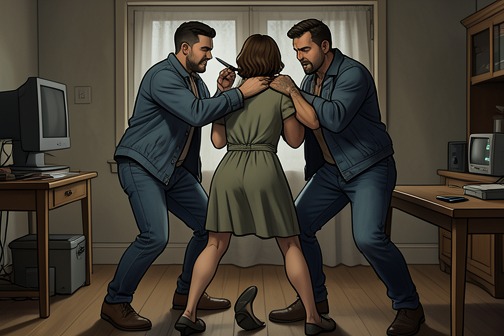
[Timbre's kidnapping by Krissy and Ella](entity:event-recall-event-timbre-s-kidnapping-by-95ef76e3b379) is the decisive crisis in which the private threats surrounding [Hayden Devillier](entity:character-recall-character-hayden-devillier-a8a68fda01ce)'s former relationship become an actual campaign of drugging, abduction, confinement, intimidation, and forced removal. It begins inside [Timbre](entity:character-recall-character-timbre-519069393105)'s home, turns her ordinary domestic routine into a trap, and ends only after she uses the demanded journey itself to reach the authorities. The event places Timbre's safety, [Crew Devillier](entity:character-recall-character-crew-devillier-dd172bb70e81)'s bodily security, and the stability of the new family around Hayden under simultaneous attack.
## Causes and Background
The kidnapping grows out of [Krissy](entity:character-recall-character-krissy-a3a78bbcbd43)'s refusal to accept the changes in Hayden Devillier's life. Krissy sees Timbre as someone who has displaced her from Hayden, Crew Devillier, and the wider circle that includes [Ryan Powell](entity:character-recall-character-ryan-powell-3b917ec6ae55) and [Peri Powell](entity:character-recall-character-peri-powell-271745e9bb04). Her language reveals a possessive logic rather than a legitimate claim: she describes Hayden as her own, calls [Crew](entity:character-recall-character-crew-c866b7e96031) her child, and treats Timbre's place within the household as something that can be removed by force. Ella, the larger and more physically intimidating accomplice, gives that possessiveness a weapon and a method.
The danger is foreshadowed by the repeated concern over Timbre traveling alone at night. Hayden previously reacts with alarm when she rides a bus alone, warning that strangers could force her off with a gun or knife without the driver noticing. He also objects when she takes a bus from Mountain Grove along a busy road, imagining the possibility that someone might stop and abduct her. Those earlier warnings establish both a practical vulnerability and a painful irony: the danger Hayden fears from anonymous attackers eventually comes from people connected to his own history.
The immediate mechanism of the kidnapping is concealed in a familiar object. After returning home from time with Hayden, Timbre notices that her birth-control pills are open on the nightstand. Because Hayden had brought her overnight bag back, she assumes he may have placed the pills there to remind her to take the evening dose. She swallows the pill, then becomes unsteady in the shower, falls against the tile, and collapses while trying to reach the kitchen. Krissy later admits that she repeatedly added a substance to the pill until she thought the amount was sufficient, confirming that the apparent accident was a planned drugging.
## What Happens
Timbre wakes in a bedroom with her hands tied behind her back. Krissy greets her with abuse and explains that she has been watching Timbre as Timbre became close to Krissy's friends, baby daddy, and child. Krissy declares that a homeless woman will not take what she considers hers and threatens to kill Timbre. The kidnapping therefore begins not as a spontaneous confrontation but as a premeditated act of surveillance followed by incapacitation and confinement.
Ella escalates the threat through physical intimidation. She draws a knife, wipes it on her jeans, and holds it against Timbre's cheek while threatening to disfigure her so that no man or woman will want her. When Krissy insists that Timbre must merely be removed from the picture, Ella's violence exposes the unstable alliance between them: Krissy wants control without visible marks, while Ella is willing to turn the abduction into torture. Ella then drags the blade down the front of Timbre's robe, barely cutting the skin before stabbing deeply enough to cause real pain. Krissy stops her because the injury might leave a mark, but the interruption does not lessen the coercion; it shows that even the limits of the violence are determined by the kidnappers.
Krissy's central demand is forced disappearance. Timbre must leave the area entirely, preferably [Texas](entity:location-recall-location-texas-f19b16f8e87c), and stay outside a thousand-mile radius of [Austin](entity:location-recall-location-austin-208e01a2a58e). Krissy and Ella plan to put her on a bus to an unspecified distant place and threaten that returning or even contacting Hayden will bring harm to Crew. The threat against the child is the principal instrument of control. Krissy even proposes carving a permanent mark across Crew's forehead, turning his body into a threatened message to Timbre. Timbre's response is immediate and protective: she pleads that Crew is innocent and did not choose to be born, then decides that she must comply because the two women are capable of hurting both Crew and Hayden.
Timbre's compliance is strategic rather than consenting. She asks how she will survive with nothing, recognizes that she has rebuilt her life before, and agrees to obtain money from a bank or ATM. By accepting the kidnappers' practical demand, she creates a chance to leave the house and reach help. The scene makes her apparent helplessness part of a survival strategy: she is drugged, restrained, threatened, and physically injured, yet she continues gathering information, assessing the captors, and protecting the people they use against her.
Not long afterward, Timbre boards the bus while Krissy and Ella watch. They intend to follow in their car until the bus is outside the city limits, demonstrating that the abduction includes not only confinement but also monitored forced migration. Timbre experiences the journey as a nightmare, but the bus becomes the point at which the kidnappers' control begins to fail. She eventually calls 911 when the bus stops and reports that she has been kidnapped. Police take her to the station in [Amarillo](entity:location-recall-location-amarillo-5421c18aef47) for questioning, where she is confirmed to be safe.
## Consequences and Aftermath
The discovery of Timbre's disappearance transforms the threat into a family emergency. An older man reports that she is at the Amarillo police station, and Hayden immediately offers to retrieve her or put her on a plane. Ryan Powell instead sends the Powell family's plane, turning the extended family's resources into a direct rescue response. The fact that Timbre reaches police on her own matters: rescue is not portrayed as a passive recovery by men who find her, but as the consequence of her decision to use the forced trip to summon authorities.
The reunion at the small Amarillo airport reverses the kidnapping's value structure. The bedroom, knife, bus, and threats have reduced Timbre's freedom and bodily security to almost nothing; the plane, police car, and waiting family restore movement, recognition, and belonging. Hayden runs to her, asks whether she was hurt, and learns that she is fine but has been roughed up. Crew then rushes down from the plane to embrace her. Hayden gathers both of them together and calls them home, making the return not merely a change of location but a reaffirmation of the household Krissy tried to destroy.
The episode also confirms the scale of Krissy and Ella's coercive-control pattern. They combine surveillance, drugging, isolation, insults, restraint, threats of murder, threatened sexual humiliation, a weapon, bodily injury, economic pressure, forced relocation, and threats against a child. The cumulative pattern is more important than any single act: each demand narrows Timbre's choices until leaving Texas appears to be the only way to keep Crew alive. In contrast, Hayden's earlier warnings about buses are protective but also reveal the tension between care and restriction. His concern identifies real risks, whereas Krissy and Ella deliberately manufacture those risks and use them to erase Timbre's autonomy.
## Narrative Significance
As a plot event, the kidnapping is the dark reversal of the safety Timbre has begun to find with Hayden Devillier, Crew Devillier, and the Powell family. Her birth-control pill, previously a private object associated with adult choice and intimacy, becomes the instrument of incapacitation. Her home, previously a small refuge, becomes the place where Krissy and Ella seize control. The bus, earlier associated with vulnerability in Hayden's fears, becomes both the vehicle of expulsion and the route to Timbre's escape through the police.
The event also exposes the difference between biological claims and earned family bonds. Krissy speaks of reclaiming Hayden and Crew as possessions, but the reunion shows the emotional reality of the household: Hayden seeks Timbre's safety, Crew runs to her, and the three return together as a family. Krissy's attempt to restore an old arrangement instead proves how thoroughly her violence has separated her from the trust and care she claims to want.
Finally, the kidnapping forces the novel's romance and family plot into the same life-or-death crisis. Timbre's relationship with Hayden is no longer threatened only by secrecy, class insecurity, or Krissy's resentment; it must survive an attack aimed at dismantling their shared home. Timbre's escape, police report, and return establish the consequences of her resourcefulness, while the family's coordinated response confirms that the chosen family she entered is capable of acting collectively when one member is endangered.
Event 23
The discovery of Timbre's kidnapping

[The discovery of Timbre's kidnapping](entity:event-recall-event-the-discovery-of-timbre-65db3fc340e8) is the turning point at which an intimate household crisis becomes an official criminal investigation. What first appears to be an unexplained absence is made legible through negative evidence: [Timbre](entity:character-recall-character-timbre-519069393105) has not packed, her shoes remain behind, and her phone is still charging. The investigation then connects the orderly pool house to [Krissy Thompson](entity:character-recall-character-krissy-thompson-702f2809f8a4) and [Ella Sullivan](entity:character-recall-character-ella-sullivan-0d614f3af0e0), while later police information confirms that Timbre is alive in [Amarillo](entity:location-recall-location-amarillo-5421c18aef47) after escaping the forced journey imposed on her.
## Causes and Background
The disappearance follows a campaign of coercion rather than a voluntary departure. Timbre is physically incapacitated before the abduction: after struggling to reach the kitchen, she collapses and loses consciousness, only to be awakened by an aggressor insulting her and striking her. When she cannot remain upright, the attacker's control over her body becomes the immediate condition of the kidnapping.
Krissy Thompson and Ella Sullivan then convert captivity into a set of demands. Ella displays a knife, presses it against Timbre's cheek, threatens to scar her, and describes violence as a way to make her undesirable to everyone else. [Krissy](entity:character-recall-character-krissy-a3a78bbcbd43) rejects that particular mutilation only because she wants Timbre removed from the family's life, not because the pair recognize Timbre's autonomy. Krissy orders her to vanish from the [Austin](entity:location-recall-location-austin-208e01a2a58e) area and to leave [Texas](entity:location-recall-location-texas-f19b16f8e87c), specifying that she must remain outside a thousand-mile radius of Austin. The threat is directed beyond Timbre herself: Krissy promises to harm [Crew Devillier](entity:character-recall-character-crew-devillier-dd172bb70e81), whom she calls the child responsible for her problems, if Timbre returns or makes contact.
The coercion also includes economic deprivation and forced dependence. Timbre is compelled to obtain money from a bank or ATM, while Krissy and Ella take most of her savings, purchase a ticket to [Los Angeles](entity:location-recall-location-los-angeles-11eff639bdf5), and leave her with only a small amount for food. Her compliance is therefore a survival strategy under explicit threats, not consent to relocation. The kidnappers ultimately force her onto a bus and plan to follow by car until it is outside the city limits.
## What Happens
The discovery begins when a phone call wakes [Hayden Devillier](entity:character-recall-character-hayden-devillier-a8a68fda01ce). [Peri Powell](entity:character-recall-character-peri-powell-271745e9bb04) asks whether Timbre changed her mind and went to Hayden's house the previous night; Hayden's denial makes the unexplained absence immediately alarming. When he reaches the pool house, he jumps from the moving truck before it has fully stopped and asks whether Timbre has been found. [Ryan Powell](entity:character-recall-character-ryan-powell-3b917ec6ae55) proposes calling the police, while [Peri](entity:character-recall-character-peri-0bddec65ddf4) initially notes that the police may not act for twenty-four hours. The urgency of the household nevertheless overrides that delay.
The family contacts the police as soon as the other children have been loaded into an SUV. Officers arrive quickly, with the family's celebrity status influencing the speed of the response. The household had been asleep behind a gate with alarms set, and its security arrangements had been kept minimal for family reasons; the kidnapping exposes the vulnerability hidden beneath that apparent protection. Officers enter Timbre's pool house while others remain with Peri, beginning a search that treats the domestic space itself as evidence.
Inside, everything looks ordinary enough to suggest that Timbre should simply be at work. The police therefore ask Hayden to identify what is missing: a bag, clothing, shoes, or other items associated with leaving for an extended period. The bed has not been slept in, but the absence of sleep alone does not establish abduction. The decisive contradiction comes from the belongings. Timbre's clothes from her previous stay at Hayden's house remain in the pool house, her only known bag is still there, and even her shoes have not been taken. Hayden insists that she would never leave barefoot in the chilly weather. Her phone is still plugged into the nightstand, and an opened packet of birth control lies beside it. The ordinary objects become a silent record of interruption: Timbre has not prepared to go anywhere; she has been taken from the middle of her life.
Hayden voices the conclusion that someone has taken her, although the officer cautions that the evidence has not yet proved it. Forensic investigators dust the house for fingerprints and find numerous impressions, including those likely belonging to Timbre, Hayden, and [Crew](entity:character-recall-character-crew-c866b7e96031). Two different prints on the medication packet seem unusual because Hayden has not touched its packaging, though pharmacy workers could have done so. The uncertainty delays certainty without reducing the danger; the scene yields traces, but the investigators initially lack a confirmed identity for the intruders.
## Identification and Escalation
The investigation gains its first concrete breakthrough when the police return with a fingerprint hit. The officer identifies one set as belonging to Krissy Thompson. That discovery changes the meaning of Krissy's presence in the family's history: she is no longer merely a troubling figure connected to Crew Devillier, but a person whose prints place her inside Timbre's home during the disappearance. The police then identify another set as belonging to Ella Sullivan, a woman the family does not recognize. Their ignorance of Ella makes the breach more frightening, because it raises the question of how an unknown accomplice entered the protected household.
Ella's record establishes the seriousness of the threat. The officer reports that she has been imprisoned for armed robbery, assault with intent to kill, and several additional crimes. Hayden questions why someone with that history is back on the streets, and the officer attributes the release to overcrowding and time served during the trial phase. Formal law thus supplies a partial explanation but no immediate protection: the criminal record identifies danger only after the danger has entered the home.
The discovery also reveals the scale of the kidnappers' control. Timbre is not simply missing; she has been drugged or otherwise rendered helpless, threatened with a knife, subjected to a deliberate cut across her chest, stripped of her savings, and forced onto a bus under surveillance. The threats against Crew make the coercion relational. Timbre submits because she believes Krissy and Ella are capable of harming an innocent child, and the investigators' search must therefore account for both the missing woman and the family member used as leverage against her.
## Consequences and Aftermath
While the search proceeds in Austin, Timbre remains on a westbound bus, separated from the people she loves and worried about Hayden and Crew. She recognizes that Krissy and Ella have made her dependent on [Caylor](entity:character-recall-character-caylor-54029630275d) once again by taking her savings and sending her away, yet she refuses to accept that forced dependence as the shape of her future. Her thoughts turn toward finding a way to contact Hayden without alerting the kidnappers, showing that the discovery is paralleled by her own effort to recover agency.
The apparent disappearance ends when the bus reaches Amarillo. Timbre calls 911 from the stop and reports that she has been kidnapped. Police take her to the station for questioning and confirm that she is safe. The message reaches Hayden's household through an older man who reports that [Timbre Simons](entity:character-recall-character-timbre-simons-d6633368e2e1) is at the police station in Amarillo; Hayden offers to retrieve her or place her on a plane, and [Ryan](entity:character-recall-character-ryan-9c6f1f1eaa2e) arranges for the family plane to be sent instead.
The reunion reverses the emotional value of the discovery. At the airport, Hayden sees Timbre standing beside a police car and rushes to her, asking whether she has been harmed. Timbre says she is fine, though somewhat roughed up, and immediately asks whether Crew came too. Crew then runs down from the plane to embrace her. Hayden gathers both of them into his arms and calls for them to go home, defining home not merely as a building but as the restored unit that the kidnapping attempted to destroy.
## Narrative Significance
As an event, the discovery joins domestic observation, forensic procedure, and family protection. The untouched phone, unopened travel preparations, missing body, and fingerprints create a progression from suspicion to proof. The story's discourse withholds the full explanation long enough for Hayden and the household to experience the terror of uncertainty, then supplies the kidnappers' identities through material traces before confirming Timbre's survival through her own emergency call.
The event also contrasts protective concern with coercive control. Hayden has previously reacted angrily when Timbre rode buses alone at night or walked near dangerous traffic, warning that strangers could force her from a bus or abduct her without the driver noticing. Those earlier fears become grimly concrete when Krissy and Ella actually compel Timbre onto a bus. Yet the kidnapping is not presented as a consequence of Timbre's ordinary travel choices; it is the result of deliberate criminal control. The contrast makes the investigation's central stakes clear: Timbre's freedom, Crew's safety, and the family's ability to distinguish care from the violence that disguises itself as possession.
The final movement from the silent pool house to the Amarillo police station and then to the waiting plane transforms evidence into reunion. Timbre's rescue does not erase the threats or the physical and emotional ordeal, but it prevents her enforced disappearance from becoming permanent. The discovery therefore functions as both revelation and mobilization: it exposes the crime, activates formal law and family resources, identifies the antagonists, and prepares the family's direct confrontation with Krissy Thompson and Ella Sullivan.
Event 24
Crew learns the truth about his mother

[Crew learns the truth about his mother](entity:event-recall-event-crew-learns-the-truth-a-02408e5020ac) when a police investigation into [Timbre Simons](entity:character-recall-character-timbre-simons-d6633368e2e1)’s disappearance identifies fingerprints from [Krissy Thompson](entity:character-recall-character-krissy-thompson-702f2809f8a4), a woman the adults already know. The discovery turns a hidden name into a family crisis: [Hayden Devillier](entity:character-recall-character-hayden-devillier-a8a68fda01ce) has deliberately kept [Krissy](entity:character-recall-character-krissy-a3a78bbcbd43)’s identity from [Crew](entity:character-recall-character-crew-c866b7e96031), but the investigation makes continued silence impossible. The revelation does not merely add a biological fact to Crew’s history; it forces the family to distinguish between parentage and parenting, secrecy and protection, and an accidental origin and a deliberately sustained bond.
## The Discovery and the Pressure of Secrecy
The disclosure occurs during the search for Timbre Simons. An officer reports that fingerprints found in her house match Krissy Thompson. Hayden immediately recognizes the danger of the name and tells Crew to go to [Tucker Powell](entity:character-recall-character-tucker-powell-8b6a519d06f1)’s room, attempting to keep him outside the adults’ urgent conversation. Crew refuses to leave without an explanation, asking who Krissy is and what she wants with [Timbre](entity:character-recall-character-timbre-519069393105). With [Peri Powell](entity:character-recall-character-peri-powell-271745e9bb04) standing beside him and Hayden pulling him close, Crew is told directly that Krissy is his mother.
The moment exposes how thoroughly Hayden has managed Crew’s knowledge of his own origins. Crew already understands Hayden as his father and has grown up inside the Powell family’s protective circle, but he has never been told his mother’s name. Hayden’s silence was intended to shield him from Krissy and from the painful history attached to her, yet the withheld information returns at the worst possible moment, linked to Timbre’s disappearance and Krissy’s apparent involvement. Crew’s immediate questions are therefore practical as well as emotional: why Krissy was present, why she had not come to see him, and what she wanted with Timbre.
## Hayden Tells the Buried History
After the initial revelation, Crew asks Hayden to explain everything. The conversation takes place in the family room, where [Ryan Powell](entity:character-recall-character-ryan-powell-3b917ec6ae55) and [Peri](entity:character-recall-character-peri-0bddec65ddf4) are seated on the couch and Crew waits on the edge of the coffee table. Hayden recognizes that the information has been delayed for too long and agrees to speak honestly, invoking the promise that he and Crew will never lie to each other.
Hayden explains that [Ryan](entity:character-recall-character-ryan-9c6f1f1eaa2e) broke up with Krissy before leaving for a tour in [Europe](entity:location-recall-location-europe-90be8cc79c46). During the tour, Hayden lived in Ryan’s apartment, while Krissy moved in after being forced out of her own apartment because of a fight. In those circumstances, Hayden and Krissy began a sexual relationship. Hayden confirms to Crew that Crew was conceived through that encounter and admits that Crew was not planned. The explanation makes the biological truth more complicated rather than simpler: Krissy is Crew’s mother, but his conception arose from adult conflict, instability, and choices that Hayden now has to describe to the son he raised.
Crew reacts with anger and hurt, interpreting Hayden’s account as proof that he was an accident. He also challenges the contradiction between Hayden’s advice about sexual protection and Hayden’s own past conduct. His response prevents the revelation from becoming a tidy sentimental disclosure. Crew is not passive while adults define his identity; he questions their responsibility, their hypocrisy, and the meaning of being born from a relationship that was never intended to last.
## Parenting Beyond Biology
Ryan helps complete the account by acknowledging that the adults collectively mishandled the situation. He explains that his relationship with Krissy was already damaged when he left for Europe, that he and Peri eventually accepted the relationship they had long understood between them, and that Hayden was left with a situation he had never wanted. Ryan describes Krissy as deceptive and manipulative but does not use her conduct to erase Hayden’s responsibility; he says Hayden was wrong to let the relationship happen while insisting that Hayden never stopped loving Crew.
The decisive evidence of Hayden’s parenthood is practical rather than biological. Ryan tells Crew that Hayden moved into the hospital room with Krissy to care for the newborn. Hayden fed every bottle, changed every diaper, rocked Crew when he cried, and brought him home to the Powell household. Hayden, Ryan, and Peri learned how to raise Crew together before [Tucker](entity:character-recall-character-tucker-a14ba8644b14) arrived a few weeks later. This history establishes the family as a collective caregiving system in which Hayden’s parental identity was built through repeated acts of labor, presence, and protection.
Hayden confirms Ryan’s account and recalls the bodily intimacy of early parenthood: Crew’s small fingers closing around his own, creating an attachment Hayden felt had bound him ever since. The memory converts the frightening revelation into a reaffirmation of continuity. Crew may have been conceived accidentally, but Hayden’s commitment to him was neither accidental nor temporary.
## Reframing Family and Belonging
The disclosure is set against Hayden’s broader history of parental priority. After Crew’s birth, Hayden quit touring, wrote music for other bands, and worked as a studio musician at [13 Recordings](entity:location-recall-location-13-recordings-3b2b6850dced) so he could provide a stable life for his son. He did not have the money or public life of a rock star, but he made enough for Crew and himself to live well. That decision explains why Hayden has treated Crew as his number one priority and why he has avoided relationships that might disrupt the life they built together.
Crew’s discovery also clarifies the difference between the biological family he has been denied and the chosen family that has raised him. [Assured Distraction](entity:character-recall-character-assured-distraction-5c57863f5da2) functions as Hayden’s family in [Austin](entity:location-recall-location-austin-208e01a2a58e), while Ryan and Peri provide an extended household and shared parental support. Peri’s fierce warning to Timbre Simons that Hayden must not be hurt shows how the band’s loyalty is not decorative background but an active protective structure. Crew himself understands this principle: when Hayden worries that Timbre might reject their attempt to help her, Crew argues that she needs to know what real friends are and that trying is better than regretting that they did not.
The family’s response to Crew’s revelation is therefore not to deny biology but to place it in proportion. Krissy’s identity explains where Crew came from; it does not determine who raised him, who loves him, or where he belongs. Hayden’s promise of honesty allows the family to replace a protective silence with a painful but shared narrative, and the embrace involving Hayden, Ryan, and Peri gives that narrative a visible emotional resolution.
## Consequences and Narrative Significance
Crew learns the truth at a moment when Timbre is missing, Krissy has been connected to the investigation, and the adults are already under pressure to act. The revelation increases the stakes rather than resolving them: Crew must confront the existence of a mother who has been absent from his life while the family works to recover the woman now central to its future. Even after the emotional disclosure, Crew redirects the group toward the practical need to make a plan for Timbre, showing that the truth has shaken him without removing his loyalty or sense of responsibility.
The event changes the family’s understanding of Crew’s past, but it does not break the relationship that matters most. Hayden’s account moves from concealment to confession, from the language of accident to the evidence of lifelong care. The later engagement between Hayden and Timbre, in which Hayden asks Timbre to become his wife and Crew’s mother, completes the event’s redefinition of motherhood within the novel: biological motherhood belongs to Krissy, while the maternal place Crew chooses to build in his present belongs to Timbre. Crew’s revelation thus becomes part of a larger movement from inherited damage toward a consciously formed family.
Event 25
Krissy and Ella's return to the Powell household

[Krissy and Ella's return to the Powell household](entity:event-recall-event-krissy-and-ella-s-retur-6c397734af58) is the decisive confrontation in which [Timbre](entity:character-recall-character-timbre-519069393105)'s disappearance becomes an explicit threat and [Krissy](entity:character-recall-character-krissy-a3a78bbcbd43) attempts to reclaim a place in [Hayden Devillier](entity:character-recall-character-hayden-devillier-a8a68fda01ce) and [Crew Devillier](entity:character-recall-character-crew-devillier-dd172bb70e81)'s family. The event turns a household gathered to plan Timbre's recovery into a scene of competing claims over love, parenthood, residence, and control: Krissy presents herself as a returning mother, while Hayden Devillier, [Ryan Powell](entity:character-recall-character-ryan-powell-3b917ec6ae55), [Peri Powell](entity:character-recall-character-peri-powell-271745e9bb04), and Crew Devillier recognize her arrival as an intrusion rather than a reunion.
## Causes and Background
The return occurs while the household is already responding to Timbre's disappearance. Crew Devillier complains that everyone is crowding him and reminds Hayden Devillier that they have a girl to get back; the group agrees that it needs a plan. Before anyone can proceed, the doorbell rings again, creating a sharp interruption between the family’s urgent concern for Timbre and the arrival of the person Hayden suspects is responsible for her absence.
[Nanny](entity:character-recall-character-nanny-d735ff036db7) opens the door, and Hayden Devillier is visibly stunned by the visitor. [Krissy Thompson](entity:character-recall-character-krissy-thompson-702f2809f8a4) is physically almost unrecognizable to him. He remembers her as beautiful and attentive to her appearance when he last saw her, shortly after she had given birth to Crew Devillier; now her hair resembles dried black straw and she is markedly thin. The contrast makes her return more than a simple appearance by an estranged parent. It presents the damaged, altered figure of someone returning after years away and carrying an old family rupture into the present crisis.
## What Happens
Krissy Thompson enters with [Ella Sullivan](entity:character-recall-character-ella-sullivan-0d614f3af0e0) and behaves as though the Powell household already belongs to her. She moves around the room as if she owns it, greets the assembled Powell family with sarcastic familiarity, and forces a chain of introductions. She identifies Ryan Powell as her former fiancé, Peri Powell as his presumed wife, Hayden Devillier as Ryan Powell’s cousin and the father of her child, and Ella Sullivan as her close companion. The introductions turn the room into a map of old and new relationships, with Krissy positioning herself at its center.
Hayden Devillier asks where [Timbre Simons](entity:character-recall-character-timbre-simons-d6633368e2e1) is, already convinced that Krissy Thompson has something to do with the situation. Krissy initially refers to Timbre Simons with contempt, but Hayden Devillier corrects her and insists on Timbre Simons’s name. Krissy then states that Timbre Simons is gone and that Hayden Devillier will never have to worry about her again. Her laughter and her glance toward Ella Sullivan make the statement sound less like reassurance than a deliberately threatening disclosure. When Hayden Devillier demands to know what happened, Krissy Thompson denies having done anything while she and Ella Sullivan laugh together, leaving the immediate facts deliberately obscured and intensifying the danger.
Krissy Thompson next approaches Crew Devillier and identifies him as her son. She tries to embrace him, but Crew Devillier backs away before she can touch him. Rather than recognizing his refusal, Krissy Thompson treats the encounter as the beginning of a lifelong relationship and tells Hayden Devillier that they will have the rest of their lives to know one another. Crew Devillier rejects the role she is trying to impose on him, saying that he already has an aunt and does not need a mother. When Krissy Thompson tries to touch him again, he moves beside Hayden Devillier, who steps in front of him to shield him from Krissy Thompson or Ella Sullivan.
Krissy Thompson’s claim is not limited to contact with Crew Devillier. She proposes that she, Hayden Devillier, and Crew Devillier become a family, with Ella Sullivan remaining to make the household a family of four. She says that her child will have a father, mother, and aunt. Hayden Devillier rejects the proposal and explains that he already has a girlfriend. Krissy Thompson responds with a crazed look and repeats that Timbre Simons is gone, insisting that she and Ella Sullivan made sure of it. The confrontation therefore joins two objectives: removing Hayden Devillier’s current partner and replacing her with Krissy Thompson in the family structure.
## Parental and Legal Conflict
Hayden Devillier counters Krissy Thompson’s attempted return by invoking the history of her abandonment. He reminds her that after leaving the hospital she signed away all her rights to Crew Devillier and told Hayden Devillier that she wanted nothing to do with him. Hayden Devillier says that the papers are filed with his attorney and that Crew Devillier is no longer hers to worry about. His argument defines parenthood as an established responsibility rather than a claim that can be revived whenever Krissy Thompson chooses.
Krissy Thompson disputes the finality of those documents. She says that she has had years to reconsider them and has consulted her own lawyer, who told her that she may still possess substantial rights. She further argues that she signed the papers while suffering from postpartum depression and that the documents might not withstand legal scrutiny. Her response converts a private history of abandonment into a potential custody dispute. The emotional confrontation thus acquires an institutional dimension: Hayden Devillier relies on written relinquishment and long-term care, while Krissy Thompson relies on biological maternity and a challenge to the circumstances under which she relinquished her rights.
Ryan Powell attempts to redirect the dispute away from Crew Devillier. He offers financial assistance and says that Krissy Thompson can establish herself elsewhere, but he makes clear that she will not take Hayden Devillier. Krissy Thompson answers that she is not trying to take Hayden Devillier; instead, she intends to move in with him and Crew Devillier. This distinction is central to her strategy. She presents possession of the household as a form of family restoration, while the others understand it as an attempt to occupy a home and relationship without consent.
## Consequences and Aftermath
The immediate value of the scene shifts from family security to peril. The household had been united by the shared objective of finding Timbre Simons, but Krissy Thompson’s entrance reveals that the threat may already be inside the family’s domestic space. Her claim that Timbre Simons is gone forces Hayden Devillier to divide his attention between protecting Crew Devillier, confronting Krissy Thompson, and determining what Krissy Thompson and Ella Sullivan have done.
Crew Devillier’s response establishes that biological connection does not automatically create emotional belonging. He refuses Krissy Thompson’s attempted embrace, rejects her description of the future, and physically chooses Hayden Devillier’s side. Hayden Devillier’s protective movement makes the father-son bond visible as an active relationship: he does not merely argue that he has raised Crew Devillier; he places his body between Crew Devillier and the returning claimant. Krissy Thompson’s return consequently confirms the strength of the family Hayden Devillier and Crew Devillier have built while exposing how violently that stability can be challenged.
The event also prepares the armed and legal conflict that follows. Krissy Thompson arrives with Ella Sullivan, refuses to provide a clear account of Timbre Simons’s whereabouts, claims continuing parental rights, and announces an intention to live with Hayden Devillier and Crew Devillier despite Hayden Devillier’s refusal. Her laughter with Ella Sullivan and her repeated insistence that Timbre Simons is gone make the return function as both confrontation and warning. The household must now treat Krissy Thompson not as an estranged mother seeking reconciliation, but as an adversary whose biological claim, legal argument, and possible involvement in Timbre Simons’s disappearance converge in the same room.
## Narrative Significance
As a scene, the return compresses several unresolved histories into one domestic space. Krissy Thompson’s former engagement to Ryan Powell, her abandoned motherhood, Hayden Devillier’s years of single parenting, Crew Devillier’s established loyalties, and Hayden Devillier’s relationship with Timbre Simons all become grounds for conflict at once. The household’s ordinary meaning is overturned: a home associated with protection and chosen family becomes a contested territory in which Krissy Thompson tries to rewrite the past by declaring that the family she left can simply be resumed.
The confrontation is especially significant because Krissy Thompson uses the language of family to justify coercive demands. She speaks of a shared future, a mother for Crew Devillier, and an aunt in Ella Sullivan, but Crew Devillier’s refusal and Hayden Devillier’s rejection expose the difference between family as mutual attachment and family as imposed status. The scene’s decisive revelation is therefore not only that Krissy Thompson and Ella Sullivan have returned. It is that Krissy Thompson intends to replace Timbre Simons, revive a disputed maternal claim, and force entry into a household whose emotional bonds no longer depend on her.
Event 26
Devillier House Armed Standoff
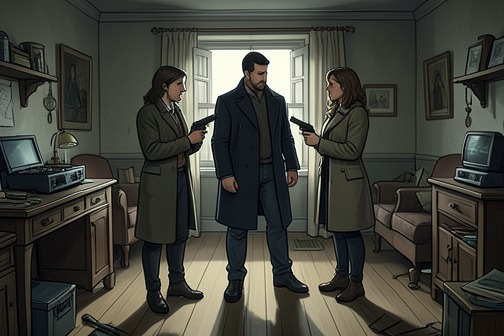
[Devillier House Armed Standoff](entity:event-recall-event-devillier-house-armed-s-55e214de7cb7) is the decisive domestic siege that converts [Krissy Thompson](entity:character-recall-character-krissy-thompson-702f2809f8a4)’s attempt to recover [Crew Devillier](entity:character-recall-character-crew-devillier-dd172bb70e81) into an armed hostage confrontation. At stake are [Crew](entity:character-recall-character-crew-c866b7e96031)’s safety, [Hayden Devillier](entity:character-recall-character-hayden-devillier-a8a68fda01ce)’s authority as his sole parent, and the household’s belief that family claims cannot be enforced through intimidation. The scene brings together the kidnapping plot, the unresolved history of [Krissy](entity:character-recall-character-krissy-a3a78bbcbd43)’s abandonment of Crew, and the protective network surrounding the Devillier family.
## Causes and Background
The standoff grows out of a sustained campaign of coercion rather than a single impulsive threat. Krissy Thompson and Ella have already taken [Timbre Simons](entity:character-recall-character-timbre-simons-d6633368e2e1) and used her isolation, physical weakness, and fear to control her. Ella threatens her with a knife, while Krissy insists that [Timbre](entity:character-recall-character-timbre-519069393105) must be removed so that Krissy can regain access to her family. The threats escalate when they warn that Crew could be permanently scarred if Timbre returns or contacts the household. Their objective is therefore both possessive and strategic: eliminate Timbre as Hayden’s partner, frighten her into silence, and reopen Krissy’s claim to the son she previously relinquished.
The family’s own security practices sharpen the danger. Hayden has repeatedly treated Timbre’s solo nighttime bus rides as life-threatening, warning that an isolated passenger could be forced off a bus by someone carrying a gun or knife. After Timbre disappears, the same protective logic becomes concrete: the household calls the police, whose arrival is aided by the family’s celebrity status, while the home’s alarms, gate, and limited security reveal the tension between ordinary domestic privacy and exceptional danger. A phone left charging, clothes and shoes left behind, and Timbre’s birth-control packet opened in the pool house lead Hayden to conclude that she has been taken, not that she has voluntarily left.
The investigation identifies a direct link to the confrontation when police find fingerprints matching Krissy Thompson. That discovery also exposes a secret to Crew: Hayden has never told him his biological mother’s name. The later encounter thus threatens more than physical safety. It forces the household to confront the concealed history of Crew’s birth, Krissy’s abandonment, and the legal question of whether a signed surrender of parental rights can be challenged years later.
## The Armed Confrontation
The immediate confrontation begins when Krissy Thompson refuses to let Crew Devillier leave her sight and orders him to sit beside her. Hayden Devillier places himself between them, explaining that Crew does not know Krissy and is frightened by her demands, but Krissy rejects any compromise. She and Ella have brought a gun precisely because they expect resistance, and Krissy treats the weapon as leverage for forcing an intimate relationship that cannot be created by command. Her demand that Crew come to her turns the child’s presence into the central hostage condition: she presents access to him as a parental right, while Hayden understands the demand as a direct threat to Crew’s security and emotional boundaries.
## The Armed Confrontation
Krissy Thompson’s demand turns the room into a contest over who may define Crew Devillier’s family and immediate safety. When she orders him to come sit beside her, Hayden Devillier keeps his arms behind him to hold Crew in place and refuses to let the frightened child approach a woman he has never known as his mother. Krissy answers by declaring that Crew will never leave her sight again, while Ella produces the gun they brought because they expected the household to resist. The weapon changes the claim from a disputed question of custody into an armed seizure of authority: Krissy says she wants to know her son, but she seeks that contact through fear, confinement, and the threat of force rather than through consent or lawful process. Hayden attempts to slow the confrontation by offering to let Crew sit with him while he adjusts, yet the compromise leaves the fundamental danger intact. Behind Ella, Mason silently appears and signals Hayden to remain quiet, creating a concealed counterforce within the room before the family’s attempted negotiation gives way to open violence.
The standoff reaches its violent turning point when a loud impact at the back door is followed by several men in black rushing into the room. Hayden Devillier immediately throws himself over Crew Devillier, covering as much of the child as possible and accepting the risk that any gunfire might strike him instead. The struggle seems to last for hours from within the crisis, although it ends within minutes. When the smoke clears, Ella is lying on the floor with blood spreading from her body, and Hayden keeps himself over Crew so that the child will not see the effects of the shooting. [Ryan Powell](entity:character-recall-character-ryan-powell-3b917ec6ae55) covers Ella with a blanket, while Hayden moves Crew toward the kitchen and tells him not to look back. The intervention ends the immediate threat: the SWAT team has Krissy Thompson in handcuffs, and both armed women are no longer able to control the household.
## Resolution and Immediate Aftermath
The armed intervention resolves the standoff, but it does not restore ordinary domestic calm at once. Hayden Devillier carries Crew Devillier to the kitchen and seats him at the breakfast table, using the familiar room to help anchor him after the violence. Crew has followed Hayden’s instructions during the raid, remaining still while his father shields him, yet Hayden fears that shock has taken hold. The household’s protective response therefore continues after the weapons are removed: physical danger has ended, but the child must be kept from seeing Ella’s bloodied body and from being forced into an explanation he is not prepared to receive. Formal authority then resumes the work that the armed women tried to bypass. Police involvement, fingerprint evidence identifying Krissy Thompson, the prior surrender of her parental rights, and her arrest place the family conflict within legal procedures rather than leaving it to Krissy’s claim that she can reclaim Crew through intimidation. The wider consequence is a sharp reversal in the meaning of family power: Krissy arrives insisting that she can recover her son, but the confrontation leaves her restrained, Ella incapacitated, Crew under Hayden’s protection, and the household turning toward the recovery of Timbre Simons rather than submission to the kidnappers’ demands.
## The Hidden Family Claim
The standoff also exposes the buried legal and emotional conflict behind the weapons. When police identify fingerprints from Timbre Simons’s pool house as belonging to Krissy Thompson, the adults recognize the name immediately, while Crew Devillier does not: Hayden Devillier has deliberately withheld the identity of Crew’s biological mother. Krissy then asserts that she signed away her rights after leaving the hospital but now believes those documents may be invalid because she was suffering from postpartum depression. Hayden counters that the papers were filed with his attorney and that Krissy relinquished responsibility for Crew. Her claim therefore collides with both the established structure of Crew’s upbringing and the child’s lack of any relationship with her. The confrontation makes clear that Krissy’s language of recovering her family cannot be separated from her earlier abandonment, her attempt to erase Timbre from Hayden’s life, and her use of Crew as the object through which she seeks to regain power.
## Rescue and Narrative Significance
The standoff’s resolution also redirects the plot toward Timbre Simons’s recovery. While Crew Devillier is kept occupied upstairs with [Tucker Powell](entity:character-recall-character-tucker-powell-8b6a519d06f1), an older man reports that Timbre is at the police station in [Amarillo](entity:location-recall-location-amarillo-5421c18aef47) after calling 911 when the bus stopped and reporting that she had been kidnapped. Her survival does not erase the danger she endured, but it changes the household’s immediate objective from defending the home to bringing her back safely. Ryan Powell offers to send the family plane, extending the same network of family resources that helped contain the armed threat. In this sequence, formal institutions and private protection finally work together: police questioning places Timbre within an official investigation, the SWAT team removes Krissy Thompson’s immediate power, and the Powell family assumes responsibility for her return. The crisis therefore ends not with reconciliation or recognition between Krissy and Crew, but with separation from the aggressors, the preservation of Crew’s safety, and the restoration of Timbre to the family Krissy tried to destroy.
## Rescue and Narrative Significance
The standoff’s resolution redirects the plot toward Timbre Simons’s recovery. While Crew Devillier is kept occupied upstairs with Tucker Powell, an older man reports that Timbre is at the police station in Amarillo after calling 911 when the bus stopped and reporting that she had been kidnapped. Her survival does not erase the danger she endured, but it changes the household’s immediate objective from defending the home to bringing her back safely. Ryan Powell offers to send the family plane, extending the same network of family resources that helped contain the armed threat. In this sequence, formal institutions and private protection finally work together: police questioning places Timbre within an official investigation, the SWAT team removes Krissy Thompson’s immediate power, and the Powell family assumes responsibility for her return. The crisis therefore ends not with reconciliation or recognition between Krissy Thompson and Crew Devillier, but with separation from the aggressors, the preservation of Crew’s safety, and the restoration of Timbre to the family Krissy Thompson tried to destroy.
The standoff’s resolution redirects the plot toward Timbre Simons’s recovery. While Crew Devillier is kept occupied upstairs with Tucker Powell, an older man reports that Timbre is at the police station in Amarillo after calling 911 when the bus stopped and reporting that she had been kidnapped. Her survival does not erase the danger she endured, but it changes the household’s immediate objective from defending the home to bringing her back safely. Ryan Powell offers to send the family plane, extending the same network of family resources that helped contain the armed threat. In this sequence, formal institutions and private protection finally work together: police questioning places Timbre within an official investigation, the SWAT team removes Krissy Thompson’s immediate power, and the Powell family assumes responsibility for her return. The crisis therefore ends not with reconciliation or recognition between Krissy Thompson and Crew Devillier, but with separation from the aggressors, the preservation of Crew’s safety, and the restoration of Timbre to the family Krissy Thompson tried to destroy.
## Rescue and Narrative Significance
The standoff’s final turn redirects the plot from defending the Devillier household to recovering Timbre Simons. While Crew Devillier remains upstairs with Tucker Powell, an older man reports that Timbre is safe at the police station in Amarillo after calling 911 when the bus stopped and telling officers that she had been kidnapped. Her survival does not undo the danger or coercion she endured, but it gives the family a concrete next action. Ryan Powell offers to send the family plane for her, extending the private resources that have already supported the household’s response while official institutions investigate the crime. The sequence therefore closes the armed crisis through cooperation between police procedure and family protection: the SWAT team has removed Krissy Thompson’s immediate power, the police have located Timbre, and the Powell family turns toward bringing her home. There is no reconciliation between Krissy Thompson and Crew Devillier; instead, the confrontation ends with the aggressors separated from the child, Crew kept under Hayden Devillier’s protection, and Timbre’s return becoming the household’s next measure of safety.
## Rescue and Narrative Significance
The standoff’s final turn redirects the plot from defending the Devillier household to recovering Timbre Simons. While Crew Devillier remains upstairs with Tucker Powell, an older man reports that Timbre is at the police station in Amarillo after calling 911 when the bus stopped and reporting that she had been kidnapped. Her survival does not undo the danger or coercion she endured, but it gives the family a concrete next action. Ryan Powell offers to send the family plane for her, extending the private resources that have supported the household’s response while official institutions investigate the crime. The crisis therefore closes through cooperation between public authority and family protection: the SWAT team has removed Krissy Thompson’s immediate power, the police have located Timbre, and the Powell family turns toward bringing her home. There is no reconciliation between Krissy Thompson and Crew Devillier; instead, the confrontation ends with the aggressors separated from the child, Crew kept under Hayden Devillier’s protection, and Timbre’s return becoming the household’s next measure of safety.
## Rescue and Narrative Significance
The standoff’s final turn redirects the plot from defending the Devillier household to recovering Timbre Simons. While Crew Devillier remains upstairs with Tucker Powell, an older man reports that Timbre Simons is at the police station in Amarillo after calling 911 when the bus stopped and reporting that she had been kidnapped. Her survival does not undo the danger or coercion she endured, but it gives the family a concrete next action. Ryan Powell offers to send the family plane for her, extending the private resources that have supported the household’s response while official institutions investigate the crime. The crisis therefore closes through cooperation between public authority and family protection: the SWAT team has removed Krissy Thompson’s immediate power, the police have located Timbre Simons, and the Powell family turns toward bringing her home. There is no reconciliation between Krissy Thompson and Crew Devillier; instead, the confrontation ends with the aggressors separated from the child, Crew Devillier kept under Hayden Devillier’s protection, and Timbre Simons’s return becoming the household’s next measure of safety.
## Institutional and Familial Resolution
The standoff ends by shifting authority away from Krissy Thompson’s gun and back toward coordinated protection. The SWAT team takes Krissy into custody, while Ella remains incapacitated after the shooting; neither woman can impose her version of family through force. Hayden Devillier’s protection of Crew Devillier is physical and immediate, but the aftermath also invokes formal safeguards: police investigate the pool house, identify Krissy through fingerprints, and confront the legal significance of the papers she signed surrendering her parental rights. The household’s private resources complement that official response rather than replacing it. Once an older man reports that Timbre Simons is at the police station in Amarillo after calling 911 when the bus stopped, Ryan Powell offers the family plane to bring her home. The crisis consequently closes on two recoveries at once: Crew remains with the father who has raised him, and Timbre’s return becomes the next step in repairing a household attacked through kidnapping, intimidation, and a false claim to familial entitlement.
Event 27
Timbre Simons Kidnapping

[Timbre Simons Kidnapping](entity:event-recall-event-timbre-simons-kidnappin-535b38431f9c) is the decisive rupture in [Timbre Simons](entity:character-recall-character-timbre-simons-d6633368e2e1)’s life with [Hayden Devillier](entity:character-recall-character-hayden-devillier-a8a68fda01ce) and [Crew Devillier](entity:character-recall-character-crew-devillier-dd172bb70e81): a violent abduction that converts domestic security into captivity, forces [Timbre](entity:character-recall-character-timbre-519069393105) into an imposed exile, and exposes the extent of [Krissy Thompson](entity:character-recall-character-krissy-thompson-702f2809f8a4)’s threat to the Devillier household. The event is driven by control rather than negotiation, but Timbre’s submission is not consent; it is a survival response shaped by the danger directed at [Crew](entity:character-recall-character-crew-c866b7e96031) and Hayden.
## Causes and Background
The kidnapping grows out of Krissy Thompson’s hostility toward Timbre and the relationships Timbre has formed in [Austin](entity:location-recall-location-austin-208e01a2a58e). [Krissy](entity:character-recall-character-krissy-a3a78bbcbd43) treats Timbre as the person responsible for her own losses and uses that resentment to justify a campaign of removal. [Ella Sullivan](entity:character-recall-character-ella-sullivan-0d614f3af0e0) participates as her accomplice, making the attack a coordinated act rather than an isolated confrontation. The women’s objective is not merely to frighten Timbre or drive her temporarily away. They intend to erase her presence from the region and sever her access to Hayden Devillier and Crew Devillier.
The assault begins after Timbre collapses in a physically helpless state. Wearing the thick terry robe Hayden bought for her, she makes her way toward the kitchen while still wet, supporting herself against the walls. She cannot open the refrigerator, cannot locate or use her phone, and finally slides down beside the cabinet before losing consciousness. The scene places the ordinary object associated with Hayden’s care—the robe—against the sudden loss of bodily control, making the transition from intimacy to captivity immediate and stark.
When Timbre wakes, she is met with verbal abuse and physical handling. Someone strikes her in the face and demands that she wake up; a hand grips her arm roughly and pulls her upright, though she cannot remain standing. The attackers therefore establish control before presenting their demands. Timbre is not entering a disputed conversation with equal power: she is being revived, restrained, and confronted while disoriented and unable to defend herself.
## Coercion and Forced Exile
Krissy states the central demand with explicit geographic terms. Timbre must vanish completely, leave the area, and go anywhere outside a thousand-mile radius of Austin; Krissy insists that [Texas](entity:location-recall-location-texas-f19b16f8e87c) itself is no longer safe for her. The proposed solution is a bus to an unspecified, distant place, followed by continued surveillance until Timbre is well beyond the city limits. The threat is designed to make disappearance appear voluntary while leaving Timbre no meaningful choice.
The coercion depends on threats against Crew Devillier as well as Timbre. Krissy warns that any return to Austin or Texas, or even any attempt to make contact, will bring harm to Crew, whom she describes as the child at the center of her problems. Timbre understands that the attackers are capable of carrying out the threat. Her concern is therefore not limited to escaping her own physical danger; she is calculating how to prevent violence against an innocent child and against Hayden Devillier. The kidnapping weaponizes family attachment, using Timbre’s love for Crew and Hayden as the means of compelling her obedience.
The attackers also attack Timbre’s dignity, suggesting that she can survive only by using her body to obtain support from others. This sexualized humiliation is part of the control system: it attempts to redefine her as disposable and isolate her from the home and relationships she has built. Timbre nevertheless recognizes that she has started over before and could do so again. Her willingness to imagine rebuilding elsewhere does not lessen the violence of the demand; it shows her separating the practical problem of survival from the emotional necessity of protecting Crew and Hayden.
The physical threat becomes unmistakable when the larger woman drags a knife down Timbre’s robe. The blade travels along the sleeve and then across the opening at the front, between her breasts. At first it barely breaks the skin, drawing a line of blood, but the woman then pushes it in far enough to cause real pain. This staged escalation mirrors the verbal threats: the attackers demonstrate that they can increase the damage whenever Timbre resists. Timbre responds by agreeing to leave and asking only to be taken to a bank or an ATM so she can obtain the means to live.
## Timbre’s Survival Strategy
Timbre’s compliance is presented as an active protective choice under coercion. She agrees to the conditions because she believes Krissy and Ella are sufficiently unstable and dangerous to injure Crew and Hayden. Her internal priority is clear: preserving their safety comes before preserving her own location, comfort, or relationship. The decision to leave therefore carries the tragic appearance of abandonment while functioning as self-sacrifice.
Soon afterward, Timbre boards the bus while Krissy and Ella watch. They plan to follow in their car until the bus is outside the city limits, confirming that the forced migration is part of the abduction rather than a release. Timbre experiences the journey as a nightmare and expects, impossibly, to wake from it. The bus becomes the mechanism of her removal and the visible proof that the attackers have converted their threat into action: Austin, Hayden, and Crew are behind her, while the destination remains imposed and unknown.
## Discovery and Rescue
The kidnapping’s immediate aftermath is defined by uncertainty. After Krissy Thompson is taken into custody and Ella Sullivan is transported by ambulance with a gunshot wound to the shoulder, Krissy still refuses to say what happened to Timbre Simons. The household is therefore left with the most terrifying possibility unresolved: Timbre may be alive, but no one knows where she has been taken or whether the threats have become lethal. Hayden Devillier must continue searching even after the armed confrontation has ended, because the arrest of one perpetrator does not itself restore Timbre’s freedom.
The decisive break comes when a detective reports that Timbre is at a police station in [Amarillo](entity:location-recall-location-amarillo-5421c18aef47). She had called 911 when the bus stopped and identified the journey as a kidnapping, prompting police to take her in for questioning. The call reverses the attackers’ intended erasure. Krissy had tried to force Timbre into disappearance, but Timbre used the first available institutional point of contact to make the crime visible and secure her own recovery. Her action also confirms that boarding the bus had never been voluntary; the authorities understand the trip as forced removal rather than an ordinary departure.
Hayden immediately offers to travel for Timbre or arrange a flight, but [Ryan Powell](entity:character-recall-character-ryan-powell-3b917ec6ae55) tells him that the Powell family plane will be sent instead. The response turns the family’s resources toward retrieval, replacing the kidnappers’ imposed transportation with a deliberate journey home. When the plane circles the small airport in Amarillo, Hayden sees Timbre standing beside a police car. The sight carries the emotional force of a return from uncertainty: she is no longer hidden, unreachable, or controlled by Krissy Thompson and Ella Sullivan.
## Reunion and Restoration
Timbre moves toward the aircraft at first quickly and then at a dead run. Hayden meets her on the steps, kisses her, and checks her body for injuries, asking whether the attackers hurt her. Timbre answers that she is fine, though somewhat roughed up. The exchange acknowledges both survival and damage: the kidnapping has not left her untouched, but it has not destroyed her ability to return to the people who were threatened in order to control her.
Crew Devillier is present on the plane and waits until Hayden and Timbre have been reunited before revealing himself. When Timbre calls to him, he jumps from the top step and runs into her embrace. Hayden then wraps his arms around both of them. The physical arrangement matters because the kidnapping had attempted to separate the three members of their household by turning Crew into a hostage and Timbre into an exile. Their embrace visibly reverses that design, restoring the family unit through touch before any larger explanation can be given.
The return is completed in Hayden’s invitation to go home. Timbre, Hayden, and Crew do not merely leave the airport; they reclaim the meaning of home that the abduction had threatened to destroy. Their shared departure marks the movement from captivity back into chosen belonging, while the police presence behind Timbre preserves the legal reality that this restoration follows a crime, not a simple romantic reunion.
## Consequences and Significance
The kidnapping produces legal consequences for both attackers. Krissy Thompson leaves in the back of a police car and faces a long prison sentence. Ella Sullivan leaves in an ambulance after being shot in the shoulder. Their fates establish that the assault has crossed from private hostility into criminal violence, and that the danger to Timbre, Hayden, and Crew has been answered by formal intervention rather than private retaliation alone.
For Crew, the event also changes the limits of what can remain hidden. He now knows that Krissy is his biological mother, the woman who gave birth to him, even though she has not acted as his mother and may never occupy that role in his life. The kidnapping therefore exposes a family truth at the same time that it demonstrates the destructive consequences of Krissy’s claim upon the past. Crew’s knowledge is painful, but it is no longer something Hayden and Timbre can preserve through silence.
At the level of plot, Timbre Simons Kidnapping combines captivity, forced migration, threatened family violence, and rescue. Its central value shift moves from safety and belonging to bodily danger, isolation, and uncertainty, then back toward security with a lasting cost. Timbre’s call to 911 is the event’s crucial assertion of agency: although the kidnappers control her body, route, and immediate choices, they do not control the story’s final direction. By naming the crime, she creates the path by which the police, Hayden Devillier, Ryan Powell, and the wider family can find her.
The event also clarifies the difference between obedience and surrender. Timbre obeys because Krissy Thompson threatens Crew, not because she accepts Krissy’s authority or abandons Hayden Devillier. Her forced departure is an act of protection under impossible conditions, and her return exposes the moral failure of interpreting survival behavior as consent. The final image of Timbre, Hayden, and Crew leaving together transforms the bus’s earlier movement away from Austin into its opposite: a passage back toward a home defended by family, law, and mutual attachment.
Event 28
Timbre's Rescue and Return

[Timbre's Rescue and Return](entity:event-recall-event-timbre-s-rescue-and-ret-8c9a5afbeb22) is the decisive recovery sequence following [Timbre Simons](entity:character-recall-character-timbre-simons-d6633368e2e1)'s kidnapping. It begins when the family learns that she has reached an [Amarillo](entity:location-recall-location-amarillo-5421c18aef47) police station and ends with her return to the people who have become her home: [Hayden Devillier](entity:character-recall-character-hayden-devillier-a8a68fda01ce) and [Crew Devillier](entity:character-recall-character-crew-devillier-dd172bb70e81). The episode joins formal police intervention to the Powell family's private resources, and its emotional climax is not merely [Timbre](entity:character-recall-character-timbre-519069393105)'s physical safety but the restoration of the family bond that her disappearance threatened.
## Causes and Background
Timbre's rescue is made necessary by a kidnapping carried out by [Krissy Thompson](entity:character-recall-character-krissy-thompson-702f2809f8a4) and [Ella Sullivan](entity:character-recall-character-ella-sullivan-0d614f3af0e0). The danger becomes undeniable when Hayden Devillier finds that Timbre's clothes and shoes remain in the pool house, along with her phone still plugged in and her opened birth-control packet. He identifies these abandoned belongings as evidence that she would not have left voluntarily. Earlier, the kidnappers had rendered Timbre helpless enough to collapse and lose consciousness, making her disappearance a matter of coercion rather than an uncertain departure.
The crisis also exposes the wider history surrounding Crew Devillier. Police find fingerprints in Timbre's house that identify Krissy Thompson, a person the adults already know but whose connection to Crew Devillier has been withheld from him. [Krissy](entity:character-recall-character-krissy-a3a78bbcbd43) is his biological mother, although Hayden Devillier explains that she signed away her parental rights after leaving the hospital. Krissy challenges the legal force of those papers by claiming that postpartum depression affected her judgment and that her lawyer believes she retains rights. Her attempt to reclaim access to Crew Devillier therefore threatens both Timbre's safety and the stable parent-child life Hayden Devillier has built with him.
## What Happens
The family calls the police immediately after the other children are taken to the SUV. Officers arrive quickly, aided in part by the family’s celebrity status, while the household’s security arrangements are scrutinized: the family had been asleep behind a gate with alarms set, yet security was kept deliberately limited for the children’s sake. The police search the pool house, investigate the missing-person scene, and later report that Timbre Simons is at the Amarillo police station. She had called 911 when the bus stopped and told authorities that she had been kidnapped. Although the police bring her in for questioning, they confirm that she is alive and physically safe enough to make a statement.
[Ryan Powell](entity:character-recall-character-ryan-powell-3b917ec6ae55) immediately turns the family’s resources toward her return, insisting that there is no need for Hayden Devillier to travel alone because the Powell family will send its plane. The rescue is therefore both institutional and familial: the police preserve the investigative process and prepare to take testimony, while Ryan Powell supplies rapid transportation. The detective explains that Timbre will need to make a formal statement and that her testimony may help put the two kidnappers away. Her voice is consequently essential to the legal aftermath; rescue does not erase the crime or replace her account with the family’s assumptions.
Crew Devillier insists on going to Amarillo as well. Hayden Devillier had expected to retrieve Timbre himself, but Crew Devillier’s desire to accompany him makes the return a shared family act. [Peri Powell](entity:character-recall-character-peri-powell-271745e9bb04) and [Nanny](entity:character-recall-character-nanny-d735ff036db7) remain with the other Powell children during the turmoil, containing the household disruption while Hayden Devillier and Crew Devillier leave for the airport. The family’s support network thus operates on several levels at once: police manage the criminal investigation, Ryan Powell arranges the aircraft, and Peri Powell and Nanny protect the children who remain behind.
When the plane circles the small airport in Amarillo, Hayden Devillier sees Timbre standing beside a police car. She runs toward the aircraft as soon as it lands, and Hayden Devillier hurries down the steps to meet her. He embraces and kisses her, then checks her body for signs of further harm. Timbre reports that she is fine, though she has been roughed up. Her immediate concern is whether Crew Devillier has come, confirming that the rescue reunites not only lovers but the emotional unit formed between Timbre and the child.
## Consequences and Aftermath
Crew Devillier descends from the plane and embraces Timbre. Hayden Devillier then wraps his arms around both of them, converting the reunion into a three-person restoration. The final invitation is to go home, followed by the explicit naming of that home as belonging to all of them. This wording gives the rescue its deepest consequence: Timbre is not simply returned to a residence after a dangerous interruption; she is returned to a chosen family whose domestic identity now includes her.
The event also clarifies the different kinds of protection operating in the story. Timbre’s own call to 911 demonstrates decisive survival action under pressure, while the police provide recognition, questioning, and the possibility of prosecution. The Powell family contributes transportation, coordination, childcare, and emotional shelter. Hayden Devillier’s protective response is intense and personal, but it does not replace Timbre’s testimony; the formal process still depends on her account of what happened. The episode therefore links care with agency rather than treating rescue as the end of Timbre’s participation.
## Narrative Significance
In narrative terms, the return reverses the value shift created by the kidnapping. Timbre has moved from safety into captivity, from presence into unexplained absence, and from domestic belonging into forced isolation. Her appearance beside the Amarillo police car reverses those losses one by one: she is found, confirmed alive, physically recovered, and brought back into contact with Hayden Devillier and Crew Devillier. The scene’s movement from police station to family plane to shared embrace gives the reversal a clear spatial form.
The event also completes a pattern of assistance that has developed across the story. [Caylor](entity:character-recall-character-caylor-54029630275d) has previously protected and supported Timbre as a roommate, [Jenna](entity:character-recall-character-jenna-65f88e27192a) has warned her about the dangers around the shelter, and Hayden Devillier, Ryan Powell, and Peri Powell have worked to secure her a safer job and residence despite her reluctance to accept help. By the time of the kidnapping, that network has become a functioning family structure. Timbre’s rescue proves its practical value while preserving the central tension between her self-reliance and the necessity of accepting trustworthy support.
Most importantly, the rescue changes the meaning of the household. Before Timbre’s disappearance, the pool house represents safety offered to someone recovering from homelessness and financial hardship. During the investigation, it becomes the scene of violated security, marked by the belongings she was forced to leave behind. After the Amarillo reunion, home is restored as a shared promise rather than merely a protected building. Timbre’s return therefore closes the immediate crisis while confirming the story’s larger movement from precarious survival toward chosen family, mutual protection, and a future claimed together.
Event 29
Hayden and Timbre's Valentine's Day Engagement

[Hayden and Timbre's Valentine's Day Engagement](entity:event-recall-event-hayden-and-timbre-s-val-09e46804a636) is the culmination of a relationship shaped by poverty, danger, guarded independence, and deliberate acts of care. On [Valentine's Day](entity:time-recall-time-valentine-s-day-a6e29ad615f4), Hayden turns a private love story into a public family promise: he asks [Timbre](entity:character-recall-character-timbre-519069393105) to become his wife and [Crew](entity:character-recall-character-crew-c866b7e96031)’s mother, and she accepts. The proposal’s decisive significance lies in its language of inclusion. Timbre is not merely being offered romance with Hayden; she is being invited into the life Hayden and Crew have built together, with Crew participating as an equal emotional stake in the future.
## Causes and Background
The engagement grows from Timbre’s prolonged instability and the network that gradually keeps her from facing it alone. After graduating from [West College](entity:location-recall-location-west-college-aa5defef027f), she moved to [Austin](entity:location-recall-location-austin-208e01a2a58e) expecting the city to provide a good job, but the crowded market for university graduates left her unable to establish the life she had planned. She eventually needed a roommate to afford a safer part of the city, and [Caylor](entity:character-recall-character-caylor-54029630275d) became a crucial source of practical protection and companionship. His care, and the vigilance of his friends when she returned late at night, show how safety had already become a collective rather than purely individual concern.
That support network became more important after Timbre entered the shelter system. [Jenna](entity:character-recall-character-jenna-65f88e27192a) warned her that the shelter was tolerable only temporarily and that the surrounding streets were unsafe, especially for someone returning late from work. Hayden reacted not simply with romantic concern but with urgent protective responsibility, arguing that Timbre needed both a safer residence and a job. [Peri](entity:character-recall-character-peri-0bddec65ddf4) proposed finding a place where Crew could spend time around Timbre, allowing Hayden to observe how the two responded to one another. [Ryan](entity:character-recall-character-ryan-9c6f1f1eaa2e) then identified the solution that would make the arrangement suitable for Crew as well. The eventual offer of the [Powell family pool house](entity:location-recall-location-powell-family-pool-h-e5b64ae2bac7) therefore emerges from a chain of practical interventions rather than from a single rescue gesture.
Timbre initially resisted the arrangement because she did not want to live off Hayden’s family. The reassurance that she was not imposing, that the pool house generally stood empty, and that the Powells were happy to help reframed assistance as belonging rather than charity. Hayden’s desire for her presence was also treated as sufficient reason for the family to welcome her. That change in meaning is essential to the engagement: Timbre moves from surviving through self-reliance toward accepting a home in which care is mutual and openly affirmed.
## The Valentine’s Day Setting
Three months after the rescue and return home, the proposal begins as an elaborate date. Hayden, Timbre, and Crew travel in a stretch limousine, taking the long route from the lake to downtown. Timbre and Crew inspect the vehicle because it is a first for both of them; Hayden drinks champagne with her while Crew has ginger ale. At the restaurant, a doorman receives them, a live singer performs, and the nearly empty room appears to have been prepared specifically for the occasion.
The apparent intimacy of the restaurant conceals a larger gathering. When Hayden and Timbre round the partition, Timbre sees the members of [Assured Distraction](entity:character-recall-character-assured-distraction-5c57863f5da2) and their wives waiting for them. [Keeton MacDonald](entity:character-recall-character-keeton-macdonald-414ed7a59a93), the band’s lead singer, summons the couple to the dance floor. His slow love song, already familiar to Timbre because it had gone platinum as both a single and part of the album, supplies a performance of romantic certainty before Hayden speaks. The music turns the proposal into a carefully staged communal event, while the partition creates a brief threshold between the expected date and the family celebration hidden behind it.
The scene also places Timbre at the center of a chosen community. Keeton and [Chandler](entity:character-recall-character-chandler-c255230cb856), [Gunner](entity:character-recall-character-gunner-969f7dd09793) and [Lily](entity:character-recall-character-lily-96089ba009e2), [Carter](entity:character-recall-character-carter-a01efa8905bf) and [Halo](entity:character-recall-character-halo-4042ec9b5503), and Ryan and Peri are all present, making the engagement an affirmation witnessed by the extended Austin family Hayden has assembled through music and friendship. The setting combines celebrity spectacle with domestic intimacy: Timbre arrives feeling like a celebrity on a red carpet, yet the people waiting beyond the partition are there not as an anonymous audience but as the relationships that have sustained Hayden and Crew.
## The Proposal and Acceptance
After Keeton finishes singing, the assembled guests applaud. Timbre looks across the room, uncertain whether the performance requires a bow, and then discovers Hayden kneeling before her. The romantic choreography shifts immediately into a family ritual when Hayden calls Crew to him and Crew kneels as well. This second kneeling is not ornamental. It establishes that the proposal concerns the three of them and that Crew has a voice in the household he hopes to share with Timbre.
Hayden recalls their first meeting, when Timbre stood drenched in street water, and says that she nevertheless appeared to him as the most beautiful woman he had ever seen. He describes fate repeatedly bringing them together before he understood that he needed her beside him. He then grounds the proposal in the bond between Timbre and Crew, explaining that seeing how naturally they took to each other showed him that she belonged in both their lives. When Hayden begins to ask whether she will do them the honor of making her his wife, Crew corrects the pronoun from “I” to “we,” insisting that the request belongs to both of them.
Crew’s intervention gives the proposal its defining structure. Hayden promises to treasure every minute with Timbre, while Crew’s presence makes the promise parental as well as romantic. The question is not only whether Timbre will marry Hayden, but whether she will accept a place as Crew’s mother. Timbre answers by looking at both of her men and nodding. Her acceptance is physical before it is verbal: a tear rolls down her cheek as Hayden removes a platinum band set with an emerald-cut diamond, slides it onto her finger, and kisses the ring before kissing her.
## Consequences and Aftermath
The room erupts in cheers and good wishes, and the guests join Hayden and Timbre on the dance floor. The public celebration confirms that their engagement is supported by the same network that helped Timbre survive homelessness, obtain work, and enter the Powell family’s domestic world. Peri’s earlier practical welcome, Ryan’s problem-solving, the protection offered by friends, and the care provided by [Nanny](entity:character-recall-character-nanny-d735ff036db7) during the crisis all become part of the emotional background against which the engagement is witnessed.
The proposal also completes a movement from precarious isolation to shared home. Timbre once measured safety by whether a roommate and his friends would watch out for her, and she later feared that accepting the Powell family’s housing made her dependent. At the restaurant, dependence is no longer the governing vocabulary. Hayden publicly names her as necessary to his and Crew’s lives, Crew actively claims her as a future mother, and the gathered community ratifies that claim through its presence.
In structural terms, the engagement functions as the romance’s grand gesture and its promise of a happy-ever-after future. It does not erase the earlier hardship or the danger that required rescue; instead, it answers those experiences with an explicit commitment to permanence. The pool house offered temporary shelter, but the proposal offers a durable identity within a family. Hayden, Timbre, and Crew leave the scene not as three people temporarily gathered by crisis, but as a family choosing to remain together.
Event 30
Timbre's Pregnancy Announcement
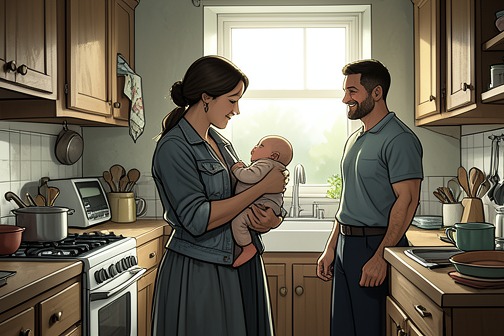
[Timbre's Pregnancy Announcement](entity:event-recall-event-timbre-s-pregnancy-anno-86e35eb25c0d) is the domestic turning point in which [Timbre Simons](entity:character-recall-character-timbre-simons-d6633368e2e1) reveals that the family she has formed with [Hayden Devillier](entity:character-recall-character-hayden-devillier-a8a68fda01ce) and [Crew Devillier](entity:character-recall-character-crew-devillier-dd172bb70e81) is about to grow. The announcement converts private pregnancy into a shared family fact, and [Crew](entity:character-recall-character-crew-c866b7e96031)'s astonished joy makes the change legible not as an isolated romantic development but as the creation of a new household structure built on truth, inclusion, and anticipation.
## Causes and Background
The revelation follows a relationship shaped by deliberate restraint and explicit negotiation. Hayden's life had long been organized around parental responsibility: after leaving touring, he worked as a studio musician at [13 Recordings](entity:location-recall-location-13-recordings-3b2b6850dced) and supported Crew rather than returning immediately to the life he had once led. His relationship with [Timbre](entity:character-recall-character-timbre-519069393105) therefore develops alongside his obligations as a father, not outside them. Even their earliest physical intimacy is framed by limits. When Hayden asks to kiss Timbre, he asks for permission first, and after receiving her nod he keeps the kiss brief because he knows that wanting more could carry them beyond the boundary they had chosen.
That attention to consent remains part of the relationship's foundation. Hayden tells Timbre that he does not want their attraction to lead to anything in a public place that might cause trouble, while also acknowledging her difficult circumstances and admiring the work she is doing to save money for a deposit. The pregnancy announcement consequently arrives after intimacy has been treated as something to be discussed, bounded, and respected rather than assumed. The contrast is sharpened by the coercive proposition elsewhere in the story in which a woman is asked to accept paid childcare, sex on demand, and Hayden's freedom to sleep with other women; Hayden rejects that arrangement and leaves in anger. Timbre's pregnancy belongs to the opposite moral framework: a relationship that has become a family through mutual choice rather than purchase or pressure.
## What Happens
The scene begins when Timbre identifies a toast as the right occasion for her news. Hayden, Crew, and the surrounding group initially expect an ordinary celebratory gesture, but she announces that the three of them have a huge job ahead. When Hayden wonders whether she wants to move, Timbre clarifies that she loves their home and instead says they may need to add on to it. The house thus becomes the first physical image of the pregnancy's consequence: the existing family will remain together, but its space must expand.
Timbre then addresses Crew directly, asking how he would feel about a little sister or brother joining their family of three. His response is immediate and overwhelming. He first interprets the news as receiving a mother and a sibling at the same time, then jumps up, circles the table, and hugs Timbre from behind. His excitement turns toward the future as he talks about becoming a big brother and imagines all the things he can teach the child. The pregnancy is therefore presented through Crew's emotional reclassification of Timbre: she is not merely Hayden's partner, but the mother he believes he is gaining.
Crew still needs confirmation that the revelation is true. He asks Hayden whether Timbre is telling the truth about something so important. Hayden answers by invoking the household rule that there will never be lies between them. This response makes honesty more than reassurance in the scene; it is the principle that authorizes the family's new form. Crew then repeats the announcement to the others, proudly declaring that he is getting a mother and a brother, while Timbre quietly notes that the baby could be a girl. His hopeful assumption supplies the scene's final note of innocence and anticipation without diminishing the larger fact that a new child is coming.
## Consequences and Aftermath
The announcement changes the meaning of the home. Timbre's statement that they may need to add on to it turns pregnancy into an architectural and collective problem, one that belongs equally to all three people already living as a family. Hayden's response is not presented as withdrawal or alarm; his attention remains fixed on Timbre as the emotional significance of her revelation becomes clear. The household's future is imagined through accommodation rather than replacement: the home is loved, the family remains intact, and additional room will make the new member possible.
Crew's reaction also establishes the pregnancy as an event of belonging. He does not hear only that a baby will arrive; he hears that Timbre's place in his life has become maternal and that his own identity will change into that of a big brother. His physical movement from the table to Timbre's embrace makes the transition immediate, while his repeated questions and public retelling show how urgently he wants the adults to recognize the truth. The family's congratulations extend the private revelation into communal acknowledgment.
The scene's governing rule is Hayden and Crew's no-lies promise, which Timbre also follows. That rule links the pregnancy to the book's broader emphasis on trust and acceptance of help. Hayden once treated parental priority as the reason to suspend his own romantic life; here, family expansion does not erase that priority but gives it a larger, shared form. Timbre's pregnancy becomes evidence that Hayden can pursue love without abandoning responsibility, and that Crew can be included in adult truths rather than protected through concealment.
## Narrative Significance
As a romance event, the announcement functions as a commitment beat after attraction, consent, and sexual intimacy have already moved the relationship beyond uncertainty. The decisive value shift is from a stable family of three to a family facing a new obligation and a new promise. The news raises the stakes of the relationship while also confirming its emotional security: the couple's future is no longer merely something they may explore, but something that will include another child and require practical changes to their home.
The scene also reverses the book's darker images of threatened family possession. [Krissy](entity:character-recall-character-krissy-a3a78bbcbd43)'s demand to remove Timbre from the picture so she can have her family back treats family as something that can be reclaimed through exclusion and coercion; Timbre's announcement defines family through welcome, truth, and growth. Against that earlier threat, Crew's joy is a quiet but powerful answer. He does not lose his place when Timbre becomes a mother figure or when another child is expected. Instead, he is given a larger role, a new identity, and a future he can openly celebrate.
Finally, the announcement extends the story's consent ethic beyond sexual encounters into family life. Hayden teaches Crew that respect is fundamental and that no means no; he then applies the same insistence on truth and respect to the household's emotional structure. Timbre chooses when and how to disclose the pregnancy, Crew is told directly, and Hayden confirms that the family will not be built on lies. The event therefore closes the arc of intimacy by presenting its most consequential outcome as a jointly witnessed, truth-bearing act of family formation.